Product image supplied by the brand
In this guide
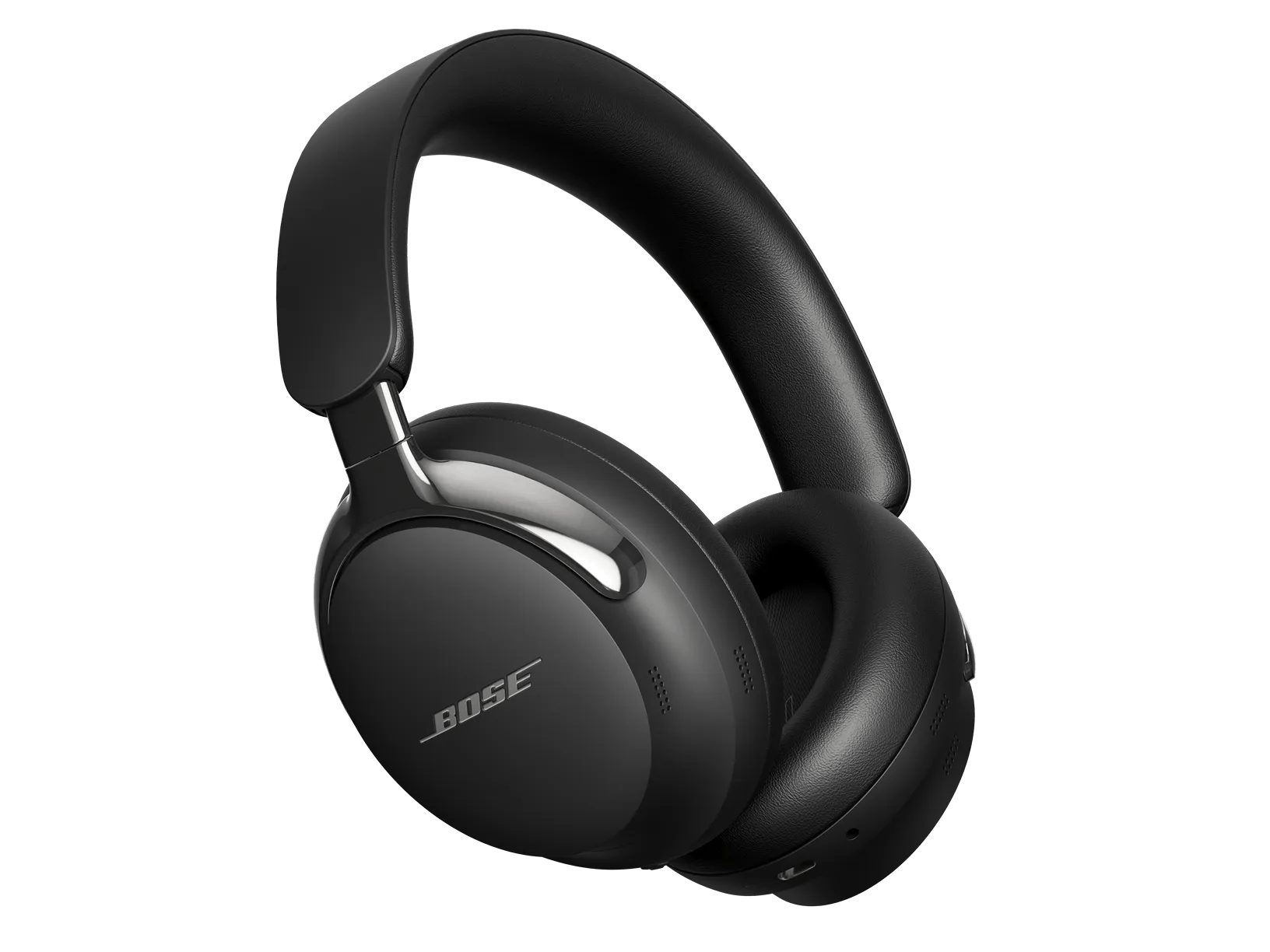
Bose Australia lists the QuietComfort Ultra Headphones (2nd Gen) in Black at A$699.95, in stock, with no struck-through price; Amazon Australia sells the same Black pair at A$698, dispatched and sold by Amazon AU. In the box: the headphones, a carry case, a 3.5 mm-to-2.5 mm audio cable, a 99 cm USB-C cable and a safety sheet, with the power adaptor explicitly left out. Bose's headline additions for this generation are lossless audio over USB-C, a new Cinema Mode for video, and an ActiveSense that smooths spikes of noise in Aware Mode.
Sony's WH-1000XM6 is the other half of the decision. Both claim up to 30 hours with cancelling on. The separation sits where the spec sheets say something: Bose has Cinema Mode and USB-C audio, while Sony publishes SBC, AAC, LDAC and LC3 and an approximate 254 g.
Our verdict
Buy it when lossless USB-C audio, Cinema Mode and aptX Adaptive from a Snapdragon Sound phone are the point; a listener who only streams and wants LDAC or AAC documented finds both on Sony's WH-1000XM6 spec sheet.
- A good fit for
- A commuter or flyer who wears headphones for hours, takes calls on them, watches video on the move, and has a Snapdragon Sound-certified Android phone for aptX Adaptive.
- We would skip it if
- You want a published codec for an iPhone or a non-Snapdragon Android, plan to sweat or walk in the rain in them, or only need quiet on the train.
Reasons to consider it
- Lossless USB-C audio at 16-bit/44.1 kHz or 48 kHz that keeps playing while the headphones charge over the same cable
- aptX Adaptive from Snapdragon Sound-certified devices with a lower-latency gaming mode, on Bluetooth 5.4, with two devices connected at once
- 45 hours with cancelling off and 30 with it on, a full charge in up to 3 hours, and a 15-minute top-up rated for up to 3 hours
The compromises
- No IP rating: Bose's FAQ says to avoid situations where they may get wet
- Bose publishes no full codec list, no decibel figure for the cancelling and no driver size
- 0.26 kg by Bose's spec against Sony's approximate 254 g, and no power adaptor in the box
What we have not verified: How much quieter this generation runs than the first, or than the Sony, is a claim, not a number: neither the product page nor the owner's guide prints a decibel figure or a method. One published lab measurement of cancelling depth would move this verdict more than any specification above it.
The things in this guide
A closer look at the products, who they may suit, and what to check before buying.
Bose QuietComfort Ultra Headphones (2nd Gen)
Ten microphones feed the cancelling and CustomTune; Bluetooth 5.4 carries aptX Adaptive from Snapdragon Sound sources with a lower-latency gaming mode; two devices stay connected at once; and 45 hours with cancelling off covers long-haul days, from a full charge of up to 3 hours.
Before you buy: No water or sweat rating, no decibel number behind the best-cancelling claim, and no documented hi-res codec for a phone that is not Snapdragon Sound-certified.
Price checked 5 November 2026. Retailer prices can change.What the second generation actually adds
Bose credits this generation with its best cancelling yet, an ActiveSense that smooths spikes of noise in Aware Mode, an all-new Cinema Mode, and immersive audio for both music and films. The owner's guide sets out the modes behind those words: Quiet for full cancellation, Aware with ActiveSense, Immersion for full cancellation plus immersive audio that follows your head, and Cinema for full cancellation plus fixed immersive audio, alongside up to seven custom modes.
The wired side is where the generation is least ambiguous. Over USB-C the headphones take lossless audio at 16-bit, 44.1 kHz or 48 kHz from a compatible source and keep playing while they charge on the same cable. CustomTune plays a tone through each cup to tailor the sound to your ears.
What Bose does not put a number on is the part the marketing leads with. No page prints a decibel figure, an improvement over the first generation, or the driver size. The additions a buyer can verify on paper are the lossless wired input, the video mode and the power-saving behaviour; the rest is a claim with no baseline beside it.
Ten microphones, four for calls, and no published number
The cancelling hardware Bose documents is a microphone layout: one inside and four outside each ear cup, ten in total. Four of them, two per cup, handle calls according to the guide. The specification lists adjustable noise cancelling, active noise cancelling and echo reduction. None of Bose's three documents attaches a decibel figure, a percentage or a test method to any of it: the buyer is paying for a parts count and a superlative.
30, 23 and 45 hours, and a codec list that stops at aptX
The guide prints three battery numbers: up to 30 hours with cancelling on and immersive audio off, 23 with both on, and 45 with both off, from Bose's April 2025 testing. A charge from empty takes up to 3 hours, longer if you keep listening, and a 15-minute top-up is rated for up to 3 hours. The wall adaptor is the one item Bose leaves out, so the charger already in your drawer belongs in the price.
Wireless runs on Bluetooth 5.4 with a 9 m range and the A2DP, HFP, AVRCP and Low Energy profiles. On a Snapdragon Sound-certified device the pair switches to aptX Adaptive automatically, and a gaming mode lowers latency. Multipoint keeps up to six devices in the list, two connected at once. No SBC, AAC or LDAC entry appears in Bose's documents, so on an iPhone or a non-Snapdragon Android the published codec story ends at the Bluetooth profiles.
0.26 kg, removable cushions and no water rating
Bose lists the headphones at 4.5 by 16.0 by 20.5 cm and 0.26 kg, or 0.48 kg in the case. Sony prints an approximate 254 g for the WH-1000XM6; because Bose rounds to ten grams, the gap cannot be stated more exactly. The materials are plastic, aluminium and protein leather, with removable cushions.
Bose's FAQ answers the water question with a bare no: no IP rating, and avoid situations where they may get wet. Cleaning runs to a dry or water-dampened cloth with no cleaning products. Taken off and laid flat or put in the case, they disconnect after 3 seconds; left in any other position, after 10 minutes.
A$699.95 at Bose, A$698 at Amazon, a one-year warranty plus the ACL
Bose Australia lists Black at A$699.95 with a 30-day return policy and a price match promise; Amazon Australia sells it at A$698, sold and dispatched by Amazon AU, so the two channels sit A$1.95 apart. Amazon's listing names a one-year manufacturer warranty, which sits on top of the guarantees under the Australian Consumer Law rather than replacing them.
Against the Sony, the documented difference is in features: lossless USB-C input, Immersion and Cinema modes and aptX Adaptive with Snapdragon Sound on the Bose, against Sony's published list of SBC, AAC, LDAC and LC3.
Where the second generation loses its argument
Skip them for anything wet. No IP rating and an explicit warning against getting them wet make these headphones for desks, trains and long flights, not the gym or a rainy walk. A listener who only wants quiet on the commute and uses neither films nor wired audio is paying for features that will sit unused.
Skip them as well when codec paperwork matters. An iPhone or a non-Snapdragon Android gets no published hi-res codec here, where Sony documents SBC, AAC, LDAC and LC3 on the WH-1000XM6. A buyer with a Snapdragon Sound phone who wants Cinema Mode and USB-C audio, on the other hand, gets exactly the features this generation adds.
How we put this together
Built from the product pages and listings below, without test scores or results we have not measured. Specifications and prices change, so check the original page for the exact model, current price, delivery, and returns.
- Bose Australia: QuietComfort Ultra Headphones (2nd Gen) product page (opens in a new tab)
- Bose Australia: Black variant data (store product API) (opens in a new tab)
- Bose: QuietComfort Ultra Headphones (2nd Gen) Owner's Guide (PDF) (opens in a new tab)
- Amazon Australia: Bose QuietComfort Ultra Headphones (2nd Gen), Black (ASIN B0FDKR293G) (opens in a new tab)
- Sony Australia: WH-1000XM6 specifications (opens in a new tab)