Product image supplied by the brand
In this guide
A baby with a blocked nose cannot blow it, so the job falls to a tool: the rubber bulb, an electric pump, or the Swedish oddity where the carer draws the snot out through a tube with their own breath. That last one is NoseFrida the SnotSucker, and the disposable filter in its middle is what makes the idea bearable.
In Australia the NoseFrida came through Amazon on 5 November 2026 in two ways: A$35.99 from the marketplace seller DeepKoala, dispatched from Amazon's Australian warehouse, or A$30.97 from Amazon US through the Global Store. Both are the US pack with one aspirator and four hygiene filters. Three things decide whether it belongs in the house: how the suction works, what the filter habit asks of you, and when the bulb or the saline drops already on the shelf are enough.
Our verdict
For a congested baby who fights the rubber bulb, the A$35.99 NoseFrida is the aspirator to try first: the carer's breath sets the suction, through a filter, with nothing inside the nostril. Skip it if mouth suction is a deal-breaker.
- A good fit for
- Parents of babies whose blocked nose gets in the way of feeding or sleep, who want suction they can ease or strengthen mid-pull rather than one fixed squeeze.
- We would skip it if
- Carers who cannot get comfortable with mouth suction, homes where saline drops and wiping the outside of the nose already work, and anyone counting on a change-of-mind return.
Reasons to consider it
- Suction strength adjusts in the moment because the carer's breath is the pump
- A disposable hygiene filter sits between nose and mouthpiece by design, and four come in the box
- The blue nasal tube, red mouthpiece and filter cap go on the dishwasher's top rack
The compromises
- The filter has to be changed every use, and keeping that habit is on you; an Australian refill price was not established
- The tube seals against the outside of the nostril, so a squirming baby breaks the seal and the pull
- The locally dispatched offer is non-returnable for safety reasons, and the cheaper Global Store import carries Amazon's warning that the manufacturer's warranty may not apply
What we have not verified: Frida describes its filters as clinically proven to stop mucus and germs reaching the mouthpiece; the work behind that phrase is the maker's to show, and no independent source for it turned up. Only Amazon offers were read for this version, so the price at Australian baby and pharmacy retailers, and the price of a filter refill pack here, are not established.
The things in this guide
A closer look at the products, who they may suit, and what to check before buying.
NoseFrida the SnotSucker
Suction the carer controls breath by breath, a filter between nose and mouth, and nothing inserted into the nostril, for A$35.99 locally dispatched with four filters.
Before you buy: Runs on disposable filters changed every use, mouth suction is the whole mechanism, and the locally dispatched offer could not be returned for change of mind.
Your breath is the pump, and that is the feature
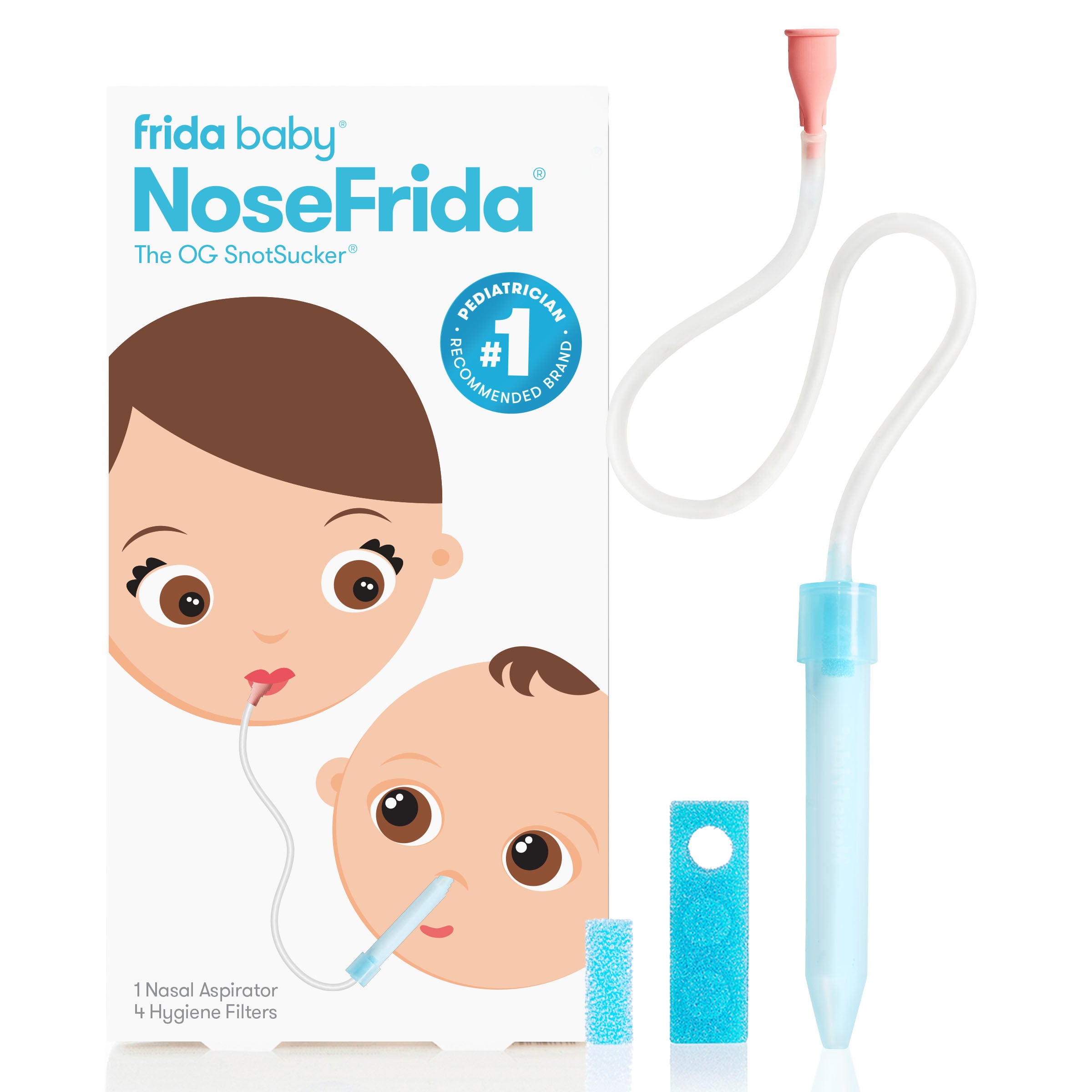
The device is three parts: a blue nasal tube that rests against the outside of the nostril — Frida's instructions put it there, never inside — a filter cartridge, and a long clear tube ending in a red mouthpiece. The carer draws air through the line by mouth; snot moves from the nose towards the filter and stops there. Nothing goes into the nostril, so nothing scrapes or pinches.
A human pump changes the experience. A rubber bulb gives one fixed squeeze and has to be squeezed again; an electric unit runs a motor at its own pace. Here the pull starts gentle and strengthens only as fast as you breathe in, and the carer can stop mid-pull. Frida's listing says the tube forms a seal against the nostril for gentle suction, which is also its weak point: a baby who turns away breaks the seal.
One filter per use, with no local refill price settled
Four filters arrive with the aspirator, and Frida's instruction is a fresh one every use. The company calls them clinically proven to stop mucus and germs reaching the mouthpiece — a maker's claim, and the whole hygiene logic of the device rests on taking it seriously rather than reusing one filter for a week. Four filters are four uses, so a refill supply is part of the purchase from the start.
Cleaning completes the routine. The blue nasal tube, the red mouthpiece and the filter cap go on the dishwasher's top rack, and the listing says to clean the long clear tube with 70% isopropyl alcohol. No Australian price for a refill pack was established on 5 November 2026, so check refill availability before relying on the four in the box.
Saline and a wipe come first; the aspirator is the second step
The Australian Government's Pregnancy, Birth and Baby service starts somewhere simpler: wipe away any mucus you can see at or near the outside of the nostril, then use saline drops or spray, and ask a doctor, child health nurse or pharmacist to show you how. It warns that decongestant medicines meant for older children and adults should not be given to babies unless a doctor prescribes them.
That is where the NoseFrida fits. For mild, occasional stuffiness, saline and a tissue may be all a baby needs. When thick mucus keeps coming back at feed time or bedtime, a few drops to loosen it followed by a slow, steady pull is the routine the aspirator was built for, with the filter making repeat pulls cleaner.
Two Amazon offers, two sets of terms
The locally dispatched offer was A$35.99 from DeepKoala, a marketplace seller, shipped from Amazon's Australian warehouse. Amazon marks it non-returnable for product-safety reasons, though a damaged or faulty unit may still be entitled to a remedy. The alternative was A$30.97 from Amazon US through the Global Store, A$5.02 cheaper, under Amazon's separate international terms and with the warning that the manufacturer's warranty may not apply.
Both sit on the same listing: the US pack with one aspirator and four filters, GTIN 00851877006134. For an item around A$30, the warranty difference matters less than delivery time and whether refills can be had from the same channel.
Where the tool stops
An aspirator clears the front of the nose; it does not treat what causes the congestion. Pregnancy, Birth and Baby lists the signs that need a doctor: only one side of the nose blocked or running, bleeding from one side, mucus that smells bad, swelling after a fall, or symptoms that affect feeding. A baby under three months with a fever over 38°C needs urgent medical attention.
The rest is fit. Children who can blow their own noses, and carers firmly against mouth suction, have simpler answers. For the stretch in between, the NoseFrida costs about A$31 to A$36 to find out, and the four filters in the box are enough to know.
How we put this together
Built from the product pages and listings below, without test scores or results we have not measured. Specifications and prices change, so check the original page for the exact model, current price, delivery, and returns.
- Amazon Australia: Frida Baby NoseFrida the SnotSucker (opens in a new tab)
- Frida: NoseFrida the SnotSucker product page (US) (opens in a new tab)
- Pregnancy, Birth and Baby (Australian Government): Runny or blocked nose in babies (opens in a new tab)