Product image supplied by the brand
In this guide
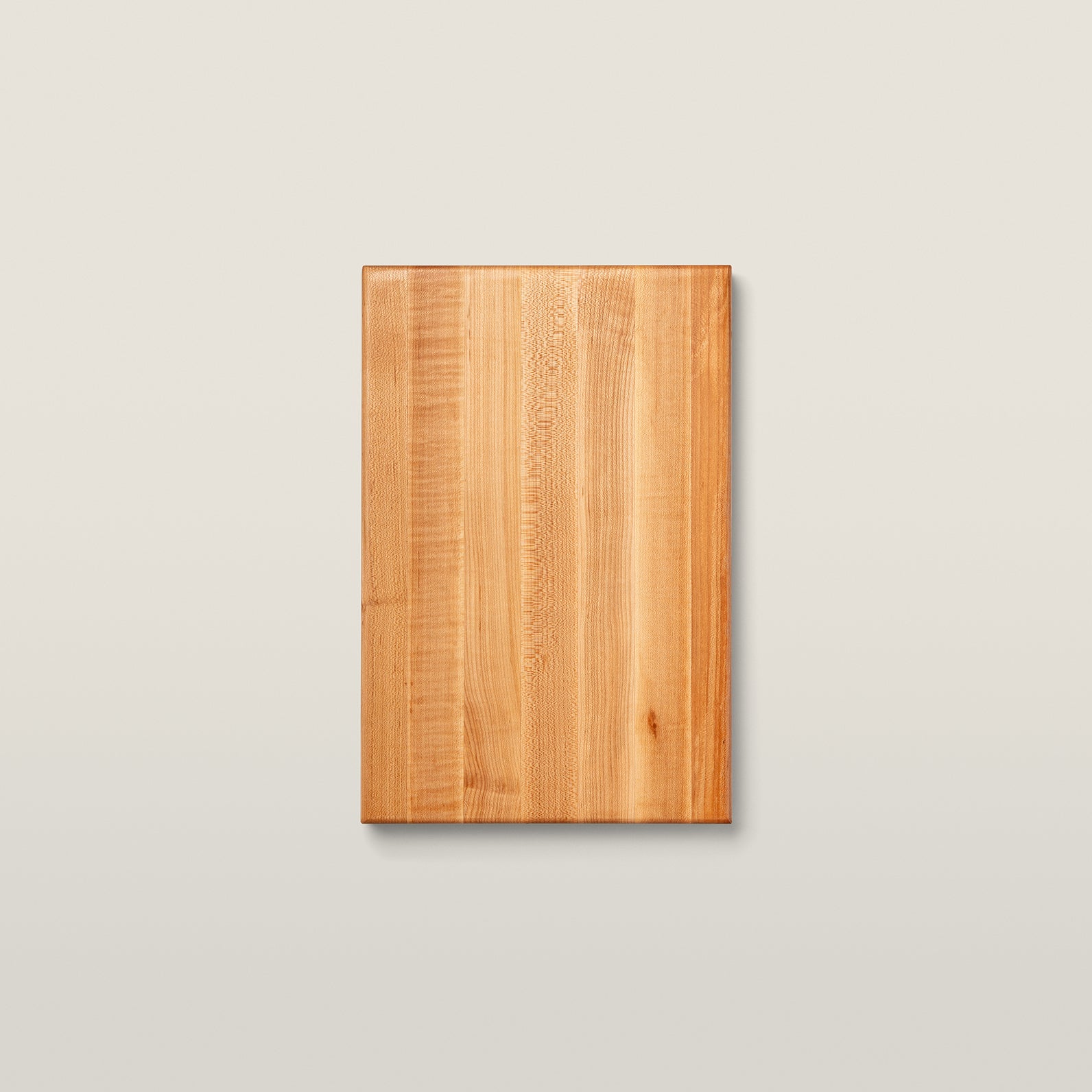
The John Boos R01 is the smallest of the three R-series boards: a reversible 46 × 30.5 cm slab of edge-grain Northern hard rock maple, 3.8 cm thick and about 4.5 kg, with finger grips routed into the short ends and an oil finish as shipped. Boos says the boards are made in the USA with domestic and imported materials. In Australia the listing that carries model number R01 sits in Amazon Australia’s Global Store at A$166.48, shipped and sold by Amazon Germany, on 5 November 2026.
Two questions decide whether that price makes sense: why wood at all, and what this wood asks of its owner. The import adds a third. Boos’s one-year warranty is written for buyers in the United States, so an Australian buyer relies on Amazon and the Australian Consumer Law rather than the maker.
Our verdict
Buy the R01 at A$166.48 if a thick maple board is worth monthly oiling, hand-washing and an import without Boos’s warranty behind it; skip it if the dishwasher or zero upkeep is the point.
- A good fit for
- Cooks who prep most days on one board, want 3.8 cm of maple under the knife and will run the monthly oil-and-cream routine without reminders.
- We would skip it if
- Skip it if the board must survive the dishwasher, if monthly oiling will not happen, or if you want the maker’s warranty behind the purchase.
Reasons to consider it
- Reversible edge-grain Northern hard rock maple, 3.8 cm thick and about 4.5 kg by Boos’s 10 lb figure, with finger grips and NSF certification
- The Wisconsin wood-versus-plastic study found clean wood absorbed bacteria within three to ten minutes and cut recoverable counts by at least 98 percent at heavy contamination
- Boos publishes the whole care routine before purchase, and its own oil-and-cream set was listed on Amazon Australia at A$64.04 on the check date
The compromises
- Mystery Oil on every surface at least monthly with overnight penetration, plus hand-washing and immediate drying; Boos says never the dishwasher
- The set of one 473 ml (16 oz) oil and one 148 ml (5 oz) cream adds about 38 percent to the board price, and Boos prints no mileage for either
- Boos’s one-year defect warranty is limited to buyers in the United States, and the Global Store page warns the manufacturer warranty may not apply
What we have not verified: How long a 473 ml bottle and a 148 ml tube last under the monthly routine is not published, so A$64.04 is the entry cost of the care kit, not a yearly figure. The wood-versus-plastic evidence is a 1994 laboratory study on generic boards, not on the R01. Global Store offers can change seller and price without notice.
The things in this guide
A closer look at the products, who they may suit, and what to check before buying.
Maple Edge-Grain Reversible Cutting Board (R01)
A$166.48 at Amazon Australia buys a reversible 46 × 30.5 × 3.8 cm, roughly 4.5 kg NSF-certified maple board with finger grips, shipped from Amazon Germany through the Global Store.
Before you buy: Boos asks for oil on every surface at least monthly and hand-washing only, the oil-and-cream set was another A$64.04 on the day, and Boos’s warranty does not extend to Australian buyers.
Price checked 5 November 2026. Retailer prices can change.What A$166.48 buys, and who ships it
Boos builds the R-series as one 3.8 cm (1½-inch) edge-grain slab in three sizes: the R01 at 46 × 30.5 cm, the R02 at 51 × 38 cm and the R03 at 61 × 46 cm. All three are Northern hard rock maple, reversible, with recessed finger grips and an oil finish, and the line carries the NSF mark. Boos lists the R01 at 10 lb, which is about 4.5 kg, heavy enough to stay where it is put on the bench.
On Amazon Australia the matching listing names model R01 and UPC 662969010010 and sits in the Global Store, shipped and sold by Amazon Germany at A$166.48. The page warns that imports may differ from local products and that the manufacturer warranty may not apply, and it leaves delivery cost and the tax-inclusive total to the checkout. Check both lines in the basket before paying.
Wood versus plastic, and what the evidence supports
The microbiology case for wood comes from a 1994 University of Wisconsin study. Ak, Cliver and Kaspar contaminated new and used plastic and wooden boards on purpose. On plastic the bacteria stayed recoverable for minutes to hours and multiplied overnight at room temperature. On clean wood the inoculum usually vanished into the surface within three to ten minutes, and at heavy contamination the recoverable count still fell by at least 98 percent. Oiling the wood changed little, and the authors concluded plastic is not shown to be more sanitary.
Official guidance is less romantic. The US Department of Agriculture’s food-safety service treats wood and nonporous boards as equally acceptable, calls plastic easier to clean, and says any board should go once its grooves are hard to clean. The NSF mark adds a third-party materials and sanitation check under NSF’s food-equipment standards. Together they support a narrow claim: wood is not the hygiene gamble it is made out to be, and plastic’s real advantage is that it can go in the machine.
The care this board demands
Boos’s care sheet sets a floor: at least once a month, more often with heavy use or a dry house, an even coat of Mystery Oil on every surface, not just the cutting face, left overnight and wiped down in the morning, without over-oiling. Board Cream, a beeswax-and-oil blend, goes on as the barrier step. Daily care is a scraper, mild soap and water, and drying straight away.
The sheet rules out standing liquids, razor-edged cleavers and serrated knives, and the dishwasher. That ban is not only the maker’s caution: the USDA notes laminated boards, which an edge-grain block of glued maple strips is, may crack and split in a machine wash. Light scratches come out with #200-grit paper worked along the grain, and Boos expects the board to be flipped so both faces share the wear.
What the oil and cream add
Boos’s own MYSCRM set, one 16 oz (473 ml) bottle of Mystery Oil and one 5 oz (148 ml) tube of Board Cream, was listed at A$64.04 in Amazon Australia’s results on 5 November, against a typical price of A$68.32. Bought separately the cream alone was A$56.28 and the single oil bottle had no featured offer, so the set is the sensible way in.
A$64.04 beside a A$166.48 board puts the care kit at roughly 38 percent of the board price on day one. Boos prints no mileage for either container under the monthly all-surfaces routine, so treat the set as the entry ticket rather than a yearly cost: a board used daily will need a second bottle sooner than one brought out on weekends.
The warranty gap, and who should skip it
Boos warrants its products against manufacturing defects for one year from purchase or delivery, but only for boards bought from Boos or an authorised seller in the United States, and only for the original purchaser or gift recipient there. An R01 shipped from Amazon Germany to Australia sits outside those terms, which is what the Global Store’s own warning says. A faulty board goes back to Amazon, with the Australian Consumer Law behind the claim.
Decide by kitchen. Cooks who prep most days and will really oil monthly get a heavy maple surface that stays planted under the knife. Households that need the dishwasher, or that rush raw-chicken clean-up on weeknights, are better served by a plastic board for those jobs, which the USDA guidance treats as fully acceptable. Anyone unwilling to oil monthly should keep the board they already have.
How we put this together
Built from the product pages and listings below, without test scores or results we have not measured. Specifications and prices change, so check the original page for the exact model, current price, delivery, and returns.
- Amazon Australia: John Boos R01 listing (ASIN B00063QBF4) (opens in a new tab)
- John Boos: Maple Cutting Boards, 1-1/2" thick (R-Board series) (opens in a new tab)
- John Boos: Boos Block Care and Maintenance (opens in a new tab)
- John Boos: Warranty Policy (opens in a new tab)
- Amazon Australia: search results for Boos Block Mystery Oil (opens in a new tab)
- Ak, Cliver & Kaspar: Cutting Boards of Plastic and Wood Contaminated Experimentally with Bacteria (Journal of Food Protection, 1994; PubMed abstract) (opens in a new tab)
- US Department of Agriculture, Food Safety and Inspection Service: Cutting Boards (opens in a new tab)
- NSF: Food Equipment Standards (opens in a new tab)