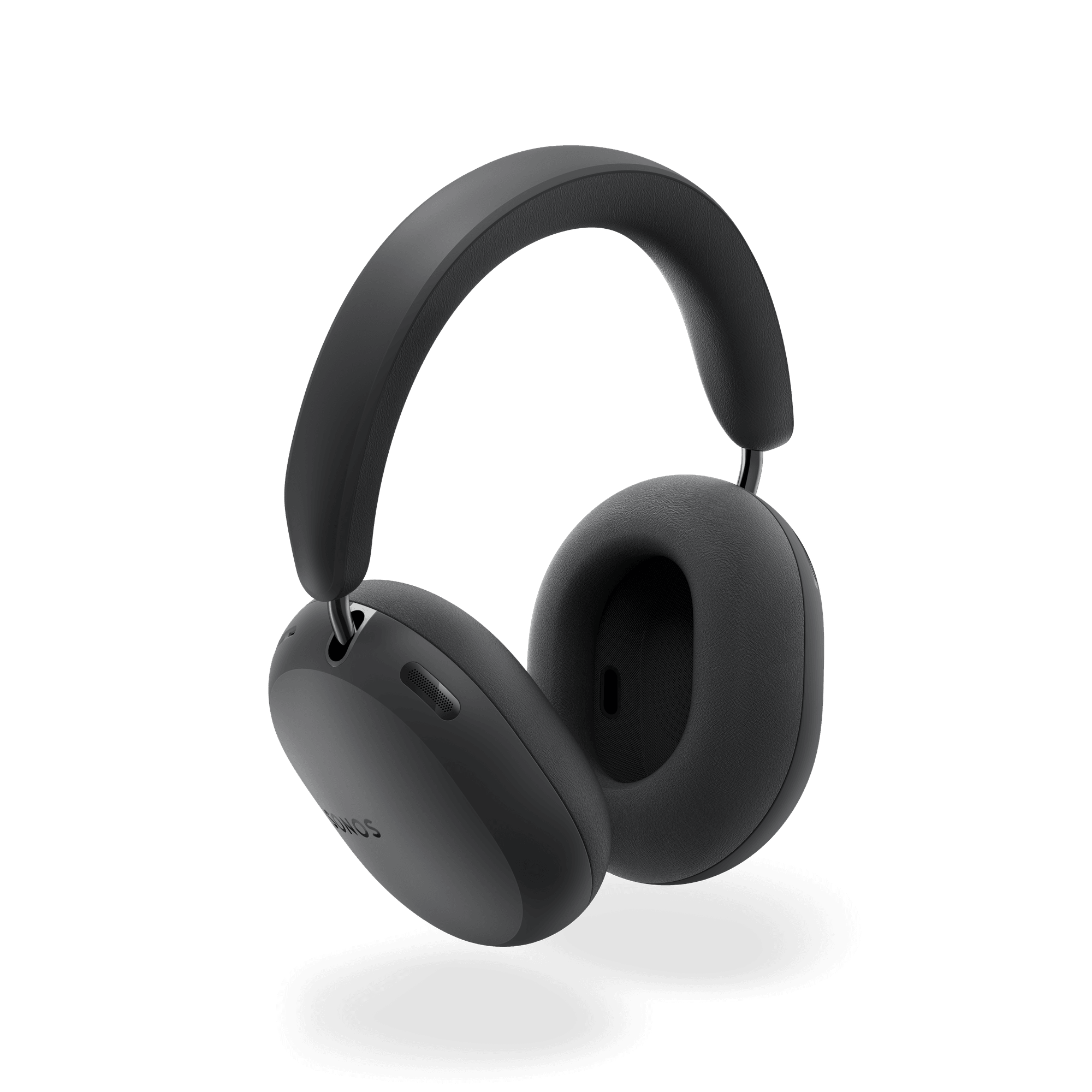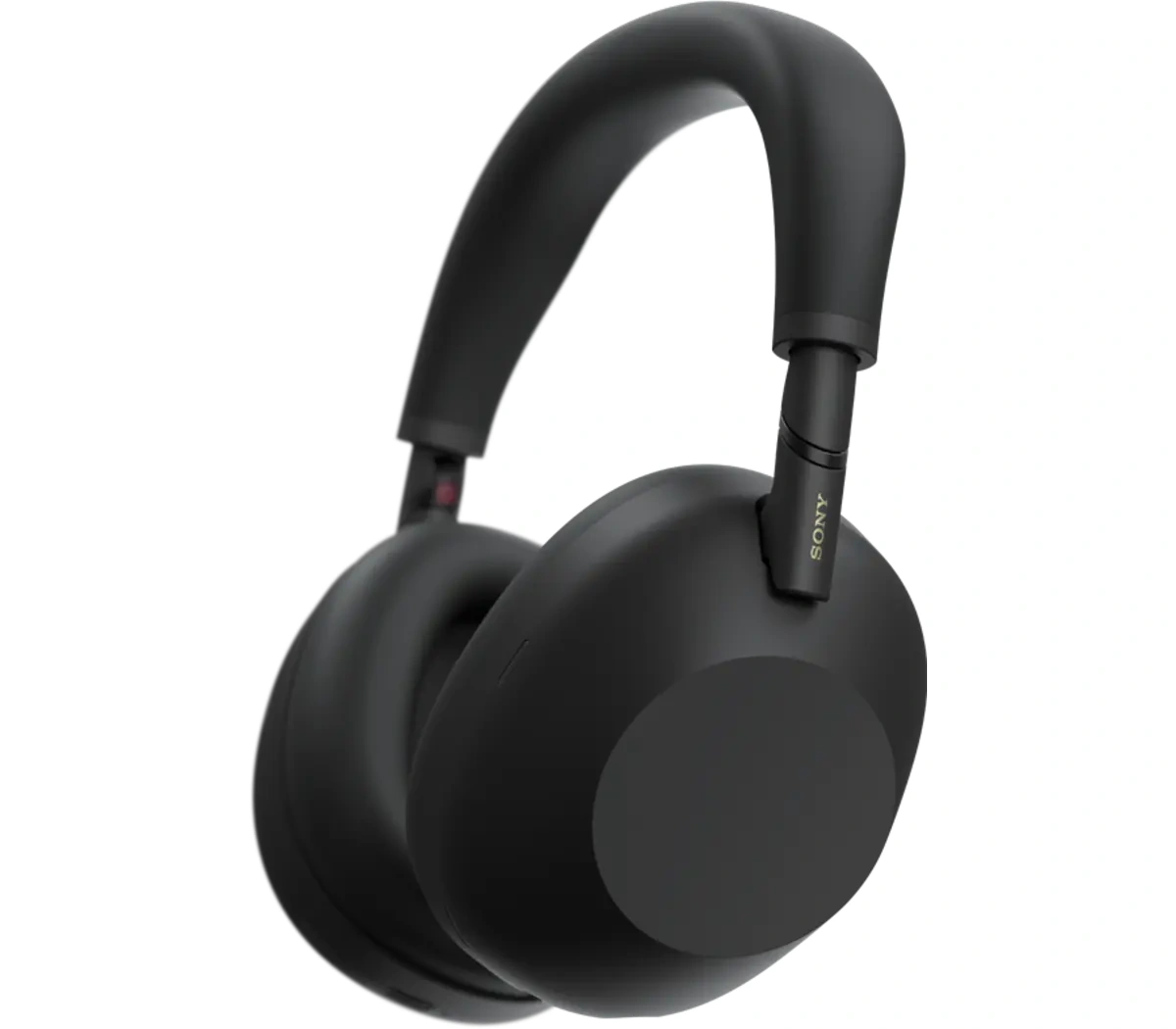
Product image supplied by the brand
In this guide
Sony Australia sells the WH-1000XM6 in six colours: Black, Midnight Blue, Platinum Silver, Sand Pink, Sandstone and Olive Gray. It lists the black pair (model WH1000XM6/BME) at $699.95, in Australian dollars including GST, and JB Hi-Fi has it at $698. The box holds a hard case, a 1.2 m headphone cable and a 20 cm USB-A to USB-C cable, and no charger. Sony's headline parts are a QN3 noise-cancelling processor it says is seven times faster than the QN1 in the WH-1000XM5, and an array of 12 microphones that the processor drives in real time.
Two other pairs frame the decision. The soundcore Space One has an RRP of $169.99 on Amazon.com.au, where AnkerDirect AU sells it and Amazon dispatches it, with three microphones and a rated 40 hours of cancelling on a charge. The Apple AirPods Pro 3 is an in-ear pair that JB Hi-Fi lists at $429, with 8 hours of cancelling. Two hours a day on a train, a flight or in an open-plan office is where the differences between the three stop being academic.
Our verdict
Buy it if you wear headphones for hours a day and want Sony's most adaptive cancelling at $699.95 ($698 at JB Hi-Fi); for quiet on a budget the Space One, RRP $169.99, runs longer on a charge.
- A good fit for
- A commuter, flyer or open-office worker who wears headphones two or more hours a day, takes calls on them, and wants Sony's 12-microphone adaptive cancelling and LE Audio.
- We would skip it if
- You listen mostly in quiet, or a Space One is already on your shelf and a premium of about $530 for the last notch of cancelling is hard to justify.
Reasons to consider it
- A 12-microphone array run by the QN3 processor, which Sony says is 7 times faster than the QN1 in the WH-1000XM5, with an Adaptive NC Optimizer that adjusts to air pressure and how you wear them
- SBC, AAC, LDAC and LC3 over Bluetooth 5.3, multipoint to two devices, and a hard case and a 1.2 m headphone cable supplied
- 30 hours of music with noise cancelling on and 40 with it off, and a short charge that JB Hi-Fi rates at 3 hours of playback from 3 minutes on a USB-PD charger
The compromises
- Battery with cancelling on is 30 hours on AAC, SBC and LC3 but 26 on LDAC, against 40 for the Space One; the flagship runs shorter on the figure people plan a long flight around
- No charger is supplied and the lead supplied is a 20 cm USB-A to USB-C cable, so the 3-minute quick charge needs a USB-PD charger bought separately
- At $699.95 the XM6 costs about 4.1 times the Space One's RRP, and both fold and both connect to two devices, so the gap does not buy a longer feature list
What we have not verified: How much quieter the 12-microphone array is than the Space One's 3 microphones in a real cabin is unknown: the Sony pages checked quote no decibel figure or method. Sony Australia's warranty term and the soundcore warranty in Australia were not read; JB Hi-Fi's one-year manufacturer warranty is the only Australian term on record here.
The things in this guide
A closer look at the products, who they may suit, and what to check before buying.
WH-1000XM6
A 12-microphone array with the QN3 processor and an Adaptive NC Optimizer, SBC/AAC/LDAC/LC3 over Bluetooth 5.3, multipoint, and 30 hours of music with cancelling on (26 on LDAC), in a closed over-ear at 254 g with a hard case and a 1.2 m cable in the box.
Before you buy: The battery is shorter than the Space One's 40 hours with cancelling on, no charger is supplied, the manufacturer warranty at JB Hi-Fi is one year, and no decibel figure shows how much quieter the 12-microphone array really is.
Price checked 31 October 2026. Retailer prices can change.Twelve microphones against three
Sony's case for the WH-1000XM6 rests on two things it publishes: the QN3 processor, which it says runs seven times faster than the QN1 in the WH-1000XM5, and an array of 12 microphones that the processor adjusts in real time. An Adaptive NC Optimizer follows outside noise, air pressure and how the headphones sit on your head. The soundcore Space One is described by its maker as three microphones with AI enhancement, so the array is where the specifications of the two pairs sit furthest apart.
What Sony does not publish, on the pages read, is a decibel figure or a test method. Twelve microphones against three is an argument from parts with no measurement beside it. Any real difference would show up in a loud, crowded cabin, which is also the one place a specification sheet cannot settle it.
30 hours with cancelling on, 26 on LDAC, and a charger to buy
JB Hi-Fi lists 30 hours with cancelling on and 40 with it off. Sony's help guide splits the same cell by codec: AAC, SBC and LC3 reach 30 hours with cancelling on, but LDAC falls to 26 hours with cancelling and 36 without. Use the figure for the codec you will actually stream. A full charge takes about 3.5 hours, and the Space One is rated at 40 hours with cancelling on.
JB Hi-Fi quotes 3 minutes of charging for 3 hours of playback, and adds that the USB-PD charger needed for it is not supplied. The cable supplied is a 20 cm USB-A to USB-C lead, so a wall charger is a separate purchase. On a standard 5 V/1.5 A source, Sony's help guide puts the same 3 minutes at about an hour of playback.
Two stores, one price, and a one-year manufacturer warranty
Sony Australia lists the black pair at $699.95 including GST and JB Hi-Fi at $698, so the choice of store moves the price by under $2. The Space One has an RRP of $169.99 on Amazon.com.au, sold by AnkerDirect AU and dispatched by Amazon. That leaves a gap of $529.96 against Sony's own store and $528.01 against JB Hi-Fi, and the XM6 costs about 4.1 times as much.
JB Hi-Fi lists the manufacturer's warranty as one year, and Sony Australia's page names its Standard Warranty without a term in the part read. The Space One's Australian warranty was not read, so no comparison of the two is made. The ACCC describes the consumer guarantees as automatic, with any warranty an extra promise on top, and lists what a product cost among the questions for judging acceptable quality, so on a $699.95 pair the one-year term is not the whole of your cover.
Against the in-ear option, a different job
The AirPods Pro 3 is a different shape for a different day. Apple rates it at up to 8 hours of listening with cancelling on, and JB Hi-Fi lists it at $429. The XM6 runs 30 hours with cancelling on and rests over the ear, with no heart-rate sensor or other health feature. One pair that has to cover a commute and a long flight leans toward the 30-hour figure.
The in-ear pair slips into a pocket, where the XM6 travels in its hard case and weighs 254 g on the head. Anyone who wants one device for the office and for workouts with heart-rate tracking is not really choosing between these two, because covering both jobs means buying both.
When the cheaper pair is the better buy
Skip the XM6 if most of your listening is in a quiet room. Both pairs fold and connect to two devices, so at a desk the difference comes down to clamping force, weight and the microphone array, none of which does much in silence. For someone working from home or listening to albums at night, about $530 buys cancelling with little to cancel.
Battery settles it for a second group. The flagship's 30 hours with cancelling on, or 26 on LDAC, are 10 to 14 hours short of the Space One's 40. The case for the higher price rests mostly on the 12-microphone array, and that is the part Sony puts no number on. Until a decibel figure or an independent cabin test turns up, the premium is easier to defend as a comfort and build decision than as a measured gain in quiet.
How we put this together
Built from the product pages and listings below, without test scores or results we have not measured. Specifications and prices change, so check the original page for the exact model, current price, delivery, and returns.
- Sony Australia: WH-1000XM6 product page (opens in a new tab)
- JB Hi-Fi: Sony WH-1000XM6 headphones, black (opens in a new tab)
- Amazon.com.au: soundcore Space One, Jet Black (opens in a new tab)
- Sony Electronics (US site): WH-1000XM6 product page (opens in a new tab)
- Sony: WH-1000XM6 specifications (support) (opens in a new tab)
- Sony: WH-1000XM6 Help Guide, Available operating time (opens in a new tab)
- Sony: WH-1000XM6 Help Guide, Supported codecs (opens in a new tab)
- Sony: WH-1000XM6 Reference Guide (PDF) (opens in a new tab)
- soundcore: Space One product page (global store) (opens in a new tab)
- Apple Australia: AirPods Pro 3 technical specifications (opens in a new tab)
- JB Hi-Fi: Apple AirPods Pro 3 (opens in a new tab)
- ACCC: Consumer rights and guarantees (opens in a new tab)