Product image supplied by the brand
In this guide
A taste test is a report of one set of palates on one day, with a dose, a water temperature and a brew time that the write-up rarely records. Read a week later by someone with different water and a different grinder, it describes a cup that cannot be repeated. That is why this site does not run them, and why a published flavour ranking is better read as a note about the tester than about the tool.
What a maker publishes is more useful, because it is a variable rather than a verdict. Two tools on Australian shelves are read here for the number each lets a buyer hold still: the AeroPress Original for its chamber capacity, A$79.95 from AeroPress Australia, and Hario's V60 Drip Scale for its weighing intervals. Water temperature, the third variable, is covered as a kettle setting. None of them promises a better cup; each lets the same cup be made twice.
The things in this guide
A closer look at the products, who they may suit, and what to check before buying.
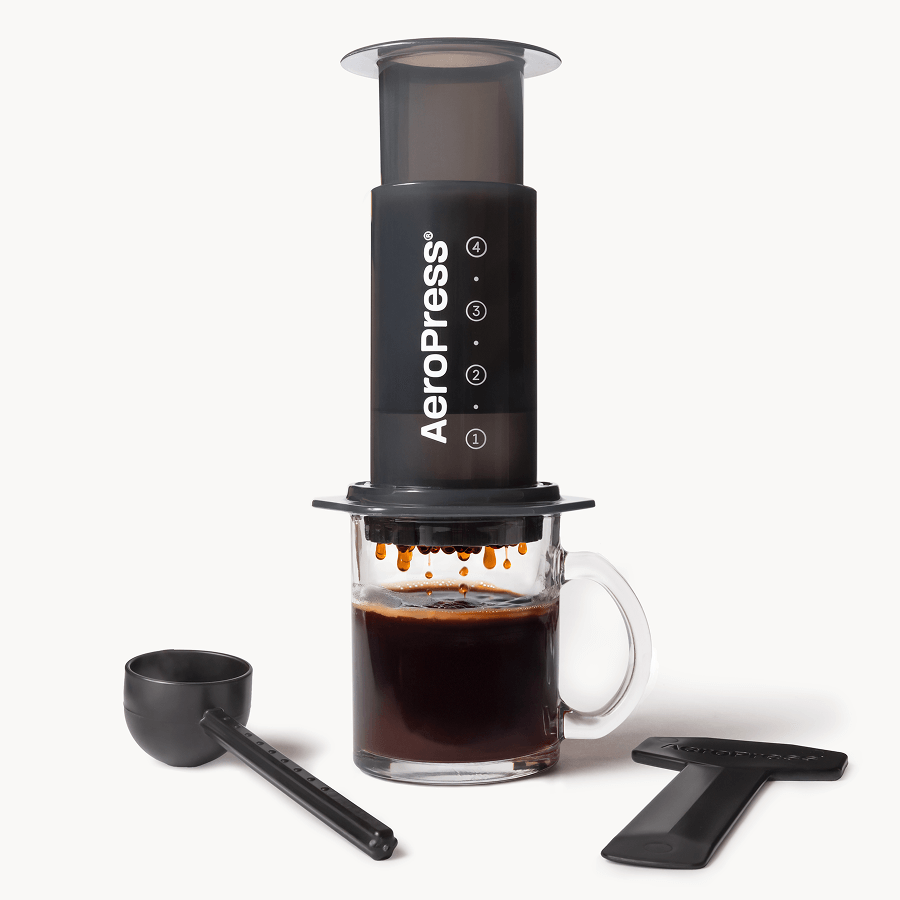
Original Coffee Maker
AeroPress Australia sells the Original at A$79.95 with a stated 10 oz chamber, about 300 mL or one to two cups, and a stated capacity is the first variable a home brewer can repeat: the same water into the same chamber every time.
Before you buy: The page prints a capacity, a medium-fine grind and top-rack dishwasher safety, but no dose in grams and no steep time, and one feature tile on the same page says 2-4 cups; the recipe is still the buyer's to write down.
Price checked 31 October 2026. Retailer prices can change.V60 Drip Scale
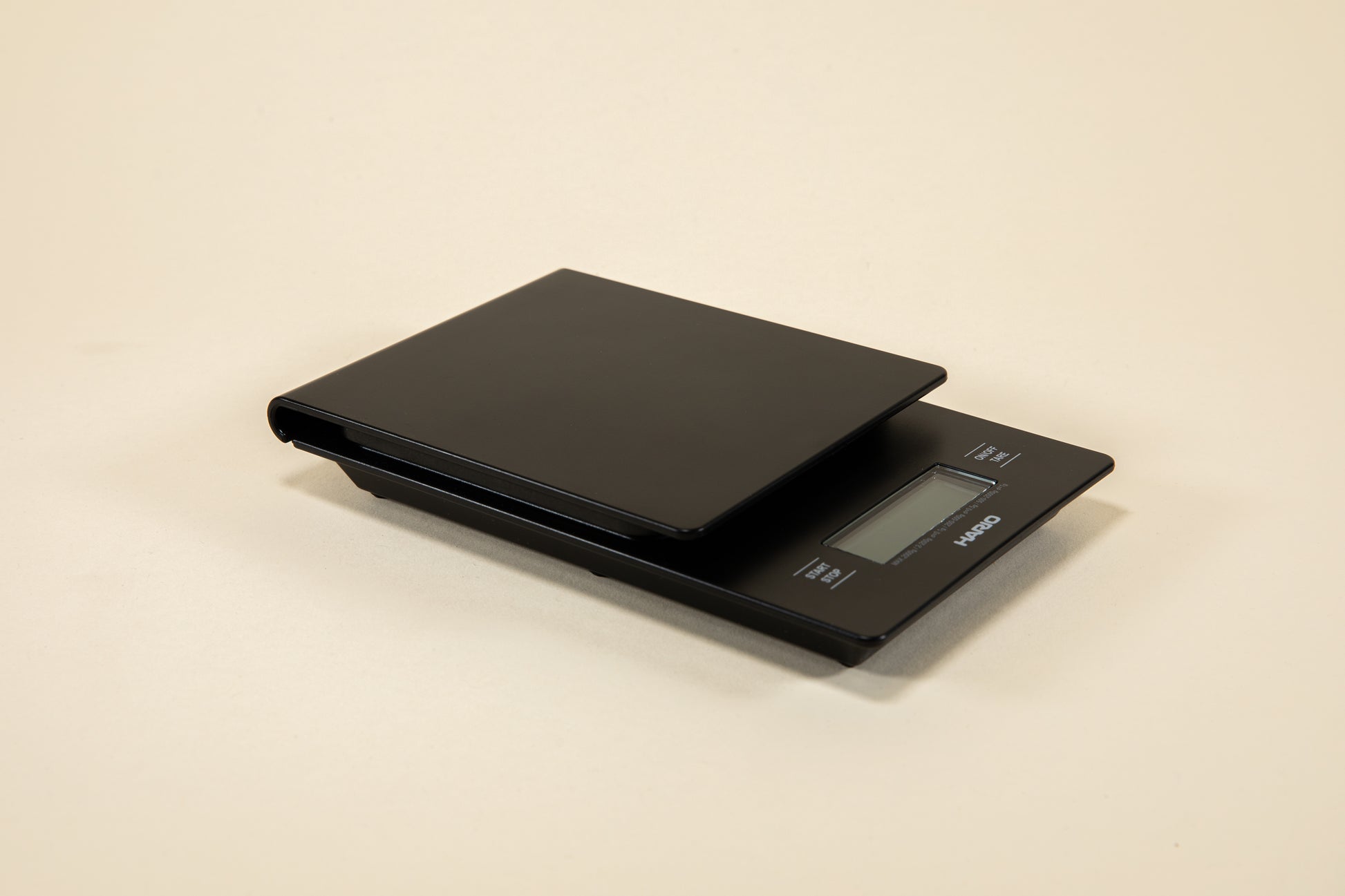
Hario publishes intervals of 0.1 g from 2 to 200 g, 0.5 g from 200 to 500 g and 1 g up to 2,000 g, with a built-in timer, so dose, water and time are read off one device and copied the next morning.
Before you buy: Hario sells no Australian version; on 5 November the Amazon Australia offers were a marketplace seller at A$78.78 and an Amazon US import, where the maker warranty may not apply. The fine 0.1 g range ends at 200 g.
Price checked 5 November 2026. Retailer prices can change.A taste test records the verdict and loses the variables
The trouble with a published taste test is not that the tasters are wrong; it is that the conditions are gone. The cup was made with a particular water, a grinder set a particular way, a dose and a temperature that seemed obvious at the time and never made it into the result. A reader gets the ranking and none of the inputs, and cannot reproduce the winning cup or the losing one.
This site does not run taste tests for that reason, and it does not borrow other people's. What it can do is read what a maker prints about the tool itself, because a published capacity or weighing interval is a variable the buyer controls, not a judgement the buyer has to trust. Held steady, those numbers let a person make the same cup twice and decide which of two versions they preferred.
Capacity: the AeroPress states 10 oz and nothing about taste
AeroPress Australia sells the Original at A$79.95 and states a 10 oz chamber, about 300 mL, one to two cups, plus top-rack dishwasher safety and a one-year warranty. A chamber with a stated capacity is a batch size that does not drift: the same volume of water goes in tomorrow as today, and a brewer who wants to change one thing at a time has already fixed the first.
What the page does not print is a dose in grams or a steep time. Its FAQ asks for a medium-fine grind, a shake to level the grounds and a slow pour, and it claims the press brews and cleans in two minutes, a figure for the whole routine. One feature tile on the same page says 2-4 cups, which contradicts the 10 oz line. The grind and the vessel are settled; the grams and the minutes are the buyer's to write down beside the 10 oz.
Temperature: a kettle setting, not a guess
Water temperature is the variable a taste test most often leaves out, because the tester filled a kettle and poured. A kettle with a set point removes the omission: Fellow's Stagg EKG Pro, for one, publishes a range of 40 to 100 °C on its US page. That page also lists a 110 to 120 V model for the US and Canada, which does not suit Australian 230 V sockets, so a buyer here needs a kettle sold for local mains.
The number is a setting, not a measurement. A selectable temperature says nothing about how close the water gets to it or how long it holds there in the unit on the bench, and Fellow publishes a range, not a tolerance. What a set point does is let two cups be made at the same displayed temperature, which is enough to find out whether temperature was the thing that changed.
Dose and time: the Hario scale publishes its intervals by range
Hario's V60 Drip Scale publishes what most kitchen scales do not: its interval changes by range, 0.1 g from 2 to 200 g, 0.5 g from 200 to 500 g and 1 g from 500 to 2,000 g, on a 120 by 190 mm platform 29 mm high with a timer on the same face. A 15 to 20 g coffee dose sits in the fine range; a pour-over's 250 to 300 g of water has crossed into the 0.5 g steps.
That boundary is the reason to read the spec rather than the marketing: precise where the dose lives, coarser where the water lives, and for most home brewing half-gram water steps do not matter. Hario sells no Australian version. On 5 November Amazon Australia's featured offer was a marketplace seller at A$78.78 dispatching in four to five days, and the Amazon US import offer warns the maker warranty may not apply. Hario also says the scale is not water resistant.
When a taste test is the right thing to want
Skip this reading when the question is about the coffee rather than the tools. Beans differ, roasts differ, and no chamber, kettle or scale changes that; a buyer choosing between two bags is right to want somebody's palate on the record. The tools above hold the method still so the beans can be compared fairly, and that is all they do.
Skip the tools as well when the routine already works. Someone who makes a cup they like every morning without weighing anything has no variable to fix, and A$80 for a press plus about A$80 to A$90 for an imported scale does not answer a question nobody is asking. Fix a variable when a cup has gone wrong and the reason is unknown.
How we put this together
Built from the product pages and listings below, without test scores or results we have not measured. Specifications and prices change, so check the original page for the exact model, current price, delivery, and returns.
- AeroPress Australia: AeroPress Coffee Maker - Original (opens in a new tab)
- Hario USA: V60 Drip Scale Black, VSTN-2000B (opens in a new tab)
- Amazon Australia: Hario V60 Drip Scale, Black (New Model) (ASIN B08VRSZVN4) (opens in a new tab)
- Fellow: Stagg EKG Pro electric kettle (US) (opens in a new tab)