Product image supplied by the brand
In this guide
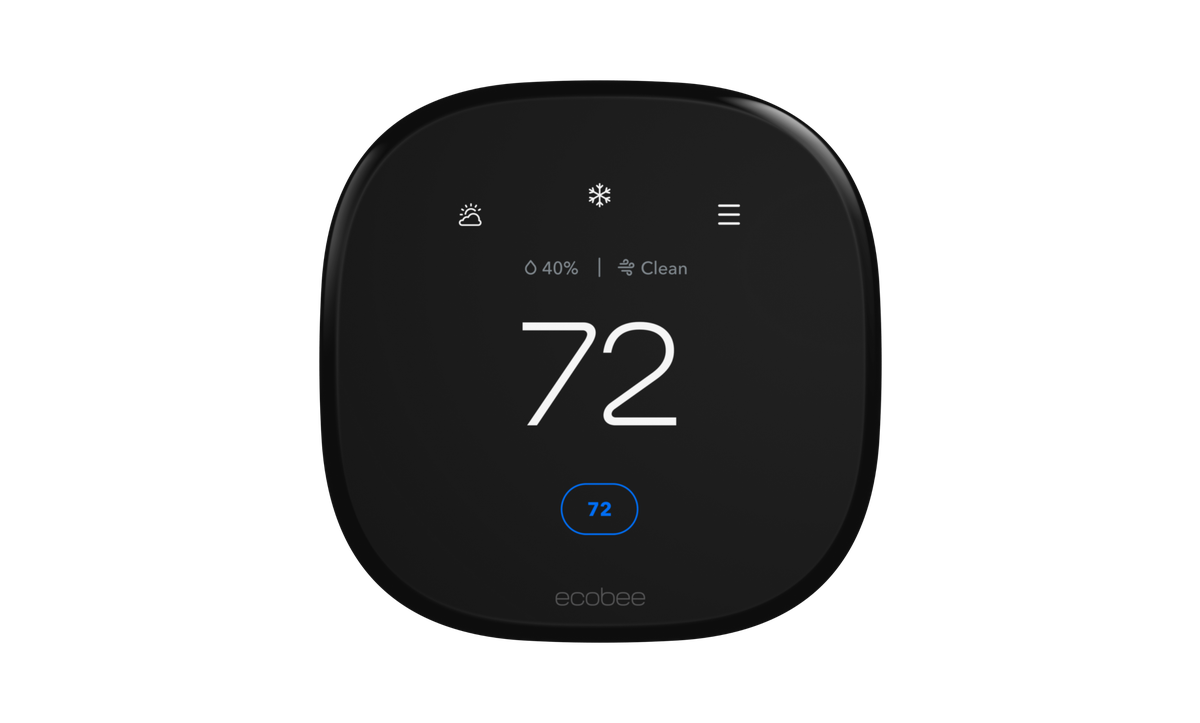
ecobee's Smart Thermostat Premium is the $329.99 top of the company's current Canadian line, above the $249.99 Smart Thermostat Enhanced and the $179.99 Smart Thermostat Essential; every price here is in Canadian dollars. On 2026-10-15 the ecobee.com/en-ca product page showed it with an active Add to bag, free shipping, and no discontinuation or previous-model marker. The package carries the thermostat, a mounting plate, a trim plate, wire labels, screws and drywall anchors, a Power Extender Kit, and one SmartSensor with a detachable stand and an adhesive wall mount.
The purchase decision usually starts with a different price: $179.99 for Google's Nest Thermostat, which Google's own comparison says is not compatible with a Nest Temperature Sensor at all. A room that runs cold can be answered with a second thermostat, with a sensing change, or with duct work, and only one of those is what this device sells. The four extras over the Nest — the included sensor, the air-quality reading, the security hub, and the built-in Alexa — divide cleanly into hardware and a monthly plan.
Our verdict
Buy the $329.99 Smart Thermostat Premium when one room's temperature should drive the cycle and your system is 24 VAC with a C wire or room for the included Power Extender Kit. Its security features cost $7 a month.
- A good fit for
- A single-zone house where one or two rooms run hot or cold against the hall, on a 24 VAC furnace or heat pump with a C wire or the included Power Extender Kit.
- We would skip it if
- A house with even temperatures, 120/240 V electric baseboard heat or a millivolt system, or a two-wire heat-only control with no spare conductor; also anyone who will not pay $7 a month for security features.
Reasons to consider it
- One SmartSensor is in the box and its reading is averaged into whichever Comfort Settings you tick, so a bedroom can end a heating call instead of the hallway; ecobee sells extra sensors only as a $119.99 two-pack.
- The box also includes the mounting plate, trim plate, wire labels, screws and drywall anchors, and a Power Extender Kit that ecobee sells separately for $32.99, so a missing C wire does not add hardware cost on this model.
- ecobee states a three-year limited warranty on the thermostat and the SmartSensor, against a one-year standard warranty on Google's Nest Thermostat, and the Premium is wired 24 VAC with no batteries to replace.
The compromises
- Arming from the app or thermostat keypad, the activity feed, smoke-alarm listening and 30-day event history for one camera sit in Smart Security Plus at $7 a month or $70 a year; the siren and guest PINs the Premium page advertises also need a subscription, and the free Core tier keeps motion detection and door and window alerts.
- Air quality is a relative sensor reading volatile organic compounds and estimating CO2 from them; ecobee's support article describes no particulate measurement. It alerts when readings turn poor and reminds you about the filter.
- The Power Extender Kit cannot be used on heat-only or dual-transformer systems, so a boiler or a two-wire heat-only thermostat needs a C wire, a new conductor, or third-party parts before the features matter.
What we have not verified: ecobee's up to 26% and $388 a year rest on its own April 2021 analysis of customers across North America, built on a US$1,091 average heating-and-cooling spend shown as $1,490.52 in Canadian dollars, with no Canada-only breakdown; the ecobee-published Demand Side Analytics report, also North American, measures eco+ adding about 5% to 6% over thermostat-only use. A house already running setbacks should read both as ceilings. Whether this generation ever adds Matter certification is also open, since ecobee's Canadian product page names Apple Home, Alexa, Google Assistant and SmartThings but no Matter.
The things in this guide
A closer look at the products, who they may suit, and what to check before buying.
ecobee Smart Thermostat Premium
$329.99 on 2026-10-15 buys a wired 24 VAC thermostat with one SmartSensor in the box, per-comfort-setting sensor averaging, Follow Me, a VOC-based air-quality reading, Apple Home and Alexa support, and a limited three-year warranty.
Before you buy: The advertised security features need a Smart Security plan from $7 a month, the air-quality sensor is relative rather than lab-grade and measures no particulates, the Power Extender Kit will not rescue a heat-only or dual-transformer system, and ecobee lists no Matter certification.
Price checked October 15, 2026. Retailer prices can change.What $329.99 puts on the wall, and what a second room adds
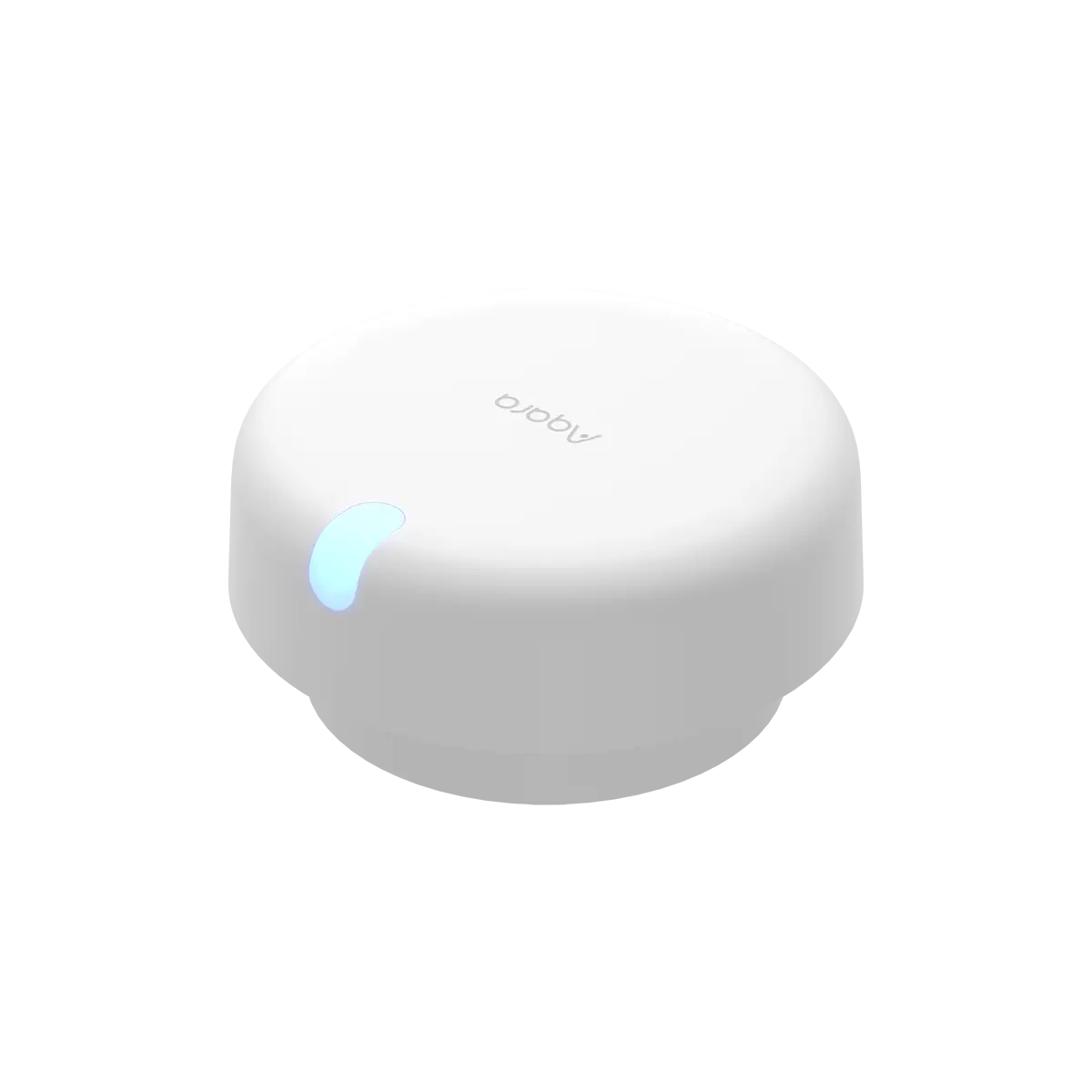
One SmartSensor ships with the Premium, and ecobee sells its sensors in Canada only as a two-pack at $119.99, so the included one is worth roughly $60. A two-room temperature problem can therefore be answered without buying a second thermostat and its wiring. Each ecobee account takes up to 32 sensors, they communicate on 915 MHz rather than Wi-Fi, and ecobee places them up to 60 feet (18 m) from the thermostat. A CR2477 cell is rated at up to five years, so the ongoing expense is a coin cell rather than a subscription.
The rest of the box is installation hardware, not accessories. Besides the thermostat and its mounting plate there is a trim plate, wire labels, screws and drywall anchors, and a Power Extender Kit. ecobee sells that kit separately for $32.99 and includes it with every current model except the Essential and Lite, so a house with no C wire does not pay again here. ecobee.com ships free in Canada and accepts returns within 30 days for a full refund.
The sensor changes the number the thermostat averages
Participation is the mechanism that matters. For each Comfort Setting — Home, Away, Sleep, or one you build — you tick which sensors count, and the thermostat averages only those readings. The built-in sensor can be left out, so a bedroom sensor can drive the overnight setpoint while the hallway is ignored. A sensor entering or leaving the average is phased in over 30 minutes instead of stepping the temperature.
Follow Me weights the sensors in rooms with recent activity, but only among the sensors already ticked for the active Comfort Setting, so it refines the average rather than adding rooms on its own. The practical result is that a SmartSensor can be the input that ends a heating call, not just a remote display. Google's comparison table puts the Nest Thermostat on the far side of that line: it is not compatible with a Nest Temperature Sensor at all.
Air quality here means VOCs and an estimate of CO2
ecobee's support documentation is narrower than the marketing. The Premium measures volatile organic compounds with a relative sensor, then estimates CO2 from the correlation between VOCs and CO2 in exhaled breath; it does not measure CO2 directly and describes no particulate counter. Readings land in Poor, Fair or Clean, judged against the range the sensor has seen in the home over the past four days.
Calibration is automatic and typically finishes within an hour, though it can take up to eight. The ordinary response to a poor reading is an app alert with tips, usually opening a window, changing the furnace filter or adding a ventilator, which the Premium can control when it is compatible. Filter-change reminders are the other concrete output, and ecobee's optional filter delivery starts from $18 with free shipping to the US and Canada. The useful signal is a change after cooking, cleaning or a sealed-up weekend, not a number to compare between two homes.
The security hub, and the $7 line between free and useful
The radar in the thermostat doubles as a motion and occupancy sensor, and ecobee's free Core plan covers motion detection and door and window alerts from contact sensors. The features that make it a security system sit one tier up in Smart Security Plus at $7 a month or $70 a year: arming and disarming from the app or the thermostat keypad, the activity feed, smoke-alarm listening and 30-day event history for one camera. The Premium page also ties the automatic siren and guest PINs to a subscription.
Advanced at $14 a month, or $140 a year, lifts the camera cap. Professional monitoring is a separate add-on that works with Plus or Advanced: $7 a month for smoke-alarm response or $14 a month for break-ins and smoke, and ecobee says it is not available in Calgary or Saskatoon. Door and window contact sensors list at $79.99 for a two-pack. Scheduling, sensor averaging and Home Energy Reports need no plan; ecobee lists enhanced eco+ under Plus. Google's Nest Thermostat has no comparable security tier.
24 VAC first: the wiring decides before the features do
The Premium is a 24 VAC thermostat powered through C and Rc, with no batteries. ecobee rates it for conventional furnaces and air conditioners at two heating and two cooling stages, heat pumps at two heating stages plus two stages of auxiliary heat, boilers, PTACs and fan coil units with up to three fan speeds, plus one one-wire or one two-wire accessory for a humidifier, dehumidifier, HRV or ERV, with a second accessory only through a Pro setup. Zone boards need no special configuration.
The included Power Extender Kit covers a missing C wire in most four-wire installs, but it cannot be used on heat-only or dual-transformer systems; a boiler needs a C wire or a third-party part, and a two-wire heat-only thermostat needs a new conductor, an isolation relay or a common maker. High-voltage baseboard and electric furnaces (120 or 240 V, L1/L2) are not compatible, though ecobee says a professional can sometimes add a 240 V/120 V-to-24 V step-down transformer. Millivolt wall heaters, proprietary and solid-fuel systems, equipment with three or more stages, and inverter or VRF mini-splits are not directly compatible either.
Enhanced at $249.99, Essential at $179.99, and a three-year warranty
Dropping to the $249.99 Smart Thermostat Enhanced saves $80 and keeps the radar occupancy sensor, the 4-inch 540-by-540 screen and the Power Extender Kit, but its specifications name temperature, humidity, radar occupancy and proximity sensors with no air-quality sensor, and its box holds no SmartSensor. It also controls a one-wire accessory where the Premium takes a one- or two-wire accessory, and caps heat pumps at two stages of heat with one stage of auxiliary. The $179.99 Essential gives up the radar and reads only temperature and humidity, and it sells the Power Extender Kit and the $19.99 trim kit separately.
ecobee states a three-year limited warranty on the Premium, the Enhanced and the SmartSensor; the Enhanced page adds five years when a Pro installs it, a term the Premium page does not mention. The Premium has a built-in speaker with Alexa Built-in, and Siri works through a paired HomePod or HomePod mini. ecobee's product page names Apple Home, Alexa, Google Assistant and SmartThings but does not list Matter, while Google's Nest Thermostat is Matter certified.
Where the 26% and the $388 actually come from
The savings headline comes with its own footnote. ecobee's up to 26% and up to $388 a year trace to an internal analysis from April 2021 of customers across North America: ecobee takes an average heating-and-cooling spend of US$1,091, shown as $1,490.52 in Canadian dollars, multiplies it by 26%, and states the result as up to US$284 or $388 Canadian. The page adds that savings vary with energy use and location, and that the percentage is measured against a hold of 72°F (22°C), a baseline a house that already sets back its thermostat does not share.
The separate evidence comes from ecobee's own newsroom and is not Canada-specific either. A Demand Side Analytics report found eco+ users saving 5% more energy than thermostat-only users in summer 2020, in line with 6% the year before, across North America, and time-of-use customers cutting 7% to 23% of cooling costs. Those percentages describe an added software layer over an existing smart thermostat, not a guarantee from buying the hardware.
When the $179.99 Nest Thermostat is enough
Google's entry model lists at $179.99 on the Google Store in Canada. It is Matter certified, takes power from HVAC wiring with two AAA backups, and carries a one-year standard warranty, with a three-year warranty of good working order stated for Quebec, against ecobee's three. Its limits are the mirror image of the Premium's features: no remote temperature sensor, no air-quality reading, no built-in voice assistant, and no security hub to subscribe to.
So the Nest is the right pick when the hallway or living-room reading is already the one you care about, when nobody edits the weekly schedule from the wall, and when the imbalance is airflow rather than sensing — a remote sensor changes which room the thermostat believes, not how much air reaches that room. If the schedule is set once in the app and the hallway reading is fair, the Nest costs $150 less at list price, and the remote sensor at the centre of the Premium's case would have nothing to correct.
How we put this together
Built from the product pages and listings below, without test scores or results we have not measured. Specifications and prices change, so check the original page for the exact model, current price, delivery, and returns.
- ecobee Canada: Smart Thermostat Premium product page (opens in a new tab)
- ecobee Canada: SmartSensor 2-pack (opens in a new tab)
- ecobee Support: What types of HVAC systems are ecobee thermostats compatible with? (opens in a new tab)
- ecobee Support: SmartSensors: Sensor Participation (opens in a new tab)
- ecobee Support: SmartSensor: Follow Me (opens in a new tab)
- ecobee Support: Indoor Air Quality Sensor FAQs (opens in a new tab)
- ecobee Canada: Smart Security subscription (opens in a new tab)
- ecobee Canada: Thermostat Accessories (opens in a new tab)
- ecobee Canada: All ecobee products (opens in a new tab)
- ecobee Canada: Smart Thermostat Enhanced product page (opens in a new tab)
- ecobee Canada: Smart Thermostat Essential product page (opens in a new tab)
- ecobee Support: ecobee Thermostat PEK Compatibility (opens in a new tab)
- ecobee Support: My heat-only system only has two or three wires. Am I compatible with ecobee? (opens in a new tab)
- ecobee Support: Is the ecobee compatible with zone boards? (opens in a new tab)
- ecobee Support: Are ecobee smart thermostats compatible with Inverter/VRF heat pump systems? (opens in a new tab)
- Google Store Canada: Nest Thermostat (opens in a new tab)
- Google Store Canada: Nest Thermostat tech specs (opens in a new tab)
- ecobee Canada: ecobee Air Filters subscription (opens in a new tab)
- ecobee Canada Newsroom: New evaluation report proves ecobee smart thermostats save (opens in a new tab)