Product image supplied by the brand
In this guide
Shokz sells the OpenRun Pro 2 in the UK for £169, in Black, Black Mini, Orange and Orange Mini, plus a Kipchoge edition at the same price and two TCS London Marathon editions at £179. The black pair has the code S820-ST-BK-UK-170, the store had it in stock on 5 November 2026, and it carried no struck-out price: £169 is the price, not a markdown. On Amazon.co.uk the same black pair, sold by SHOKZ Store and dispatched by Amazon, also showed £169 when re-read on 6 November.
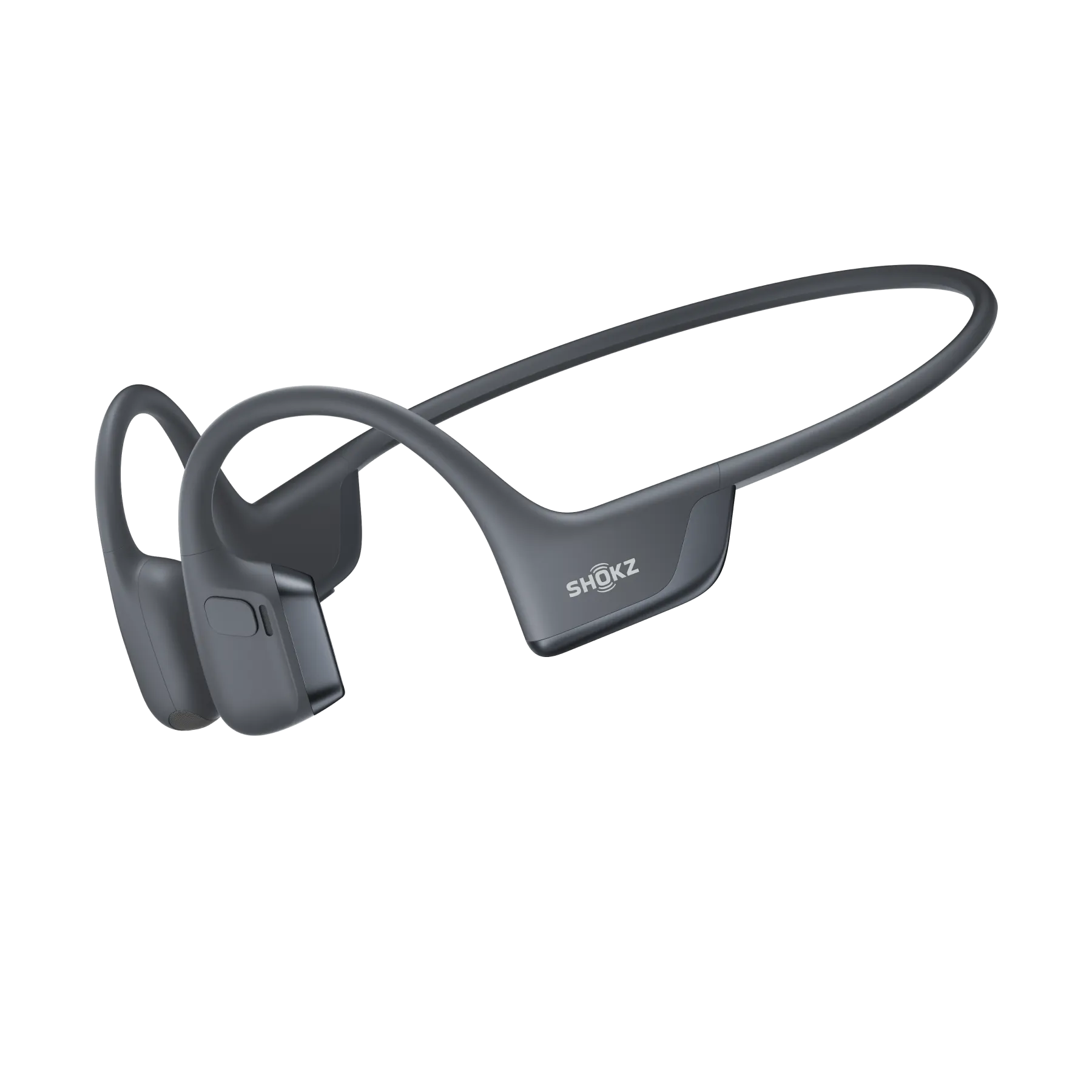
What separates this pair from everything else on the shelf is that it does not go in the ear. A bone-conduction driver sits on the cheekbone in front of the ear and an air-conduction driver stops short of the canal, and neither closes it. You hear the music and the road at once, which is the point and also the limitation. Shokz's UK ladder makes the choice narrow: the OpenRun is £129.95, this pair is £169, and the first-generation OpenRun Pro that American buyers still see at $159.95 is not listed on the UK store at all.
The UK page also settles two things the American one leaves open. It dates the 12-hour figure to 75 per cent volume in a temperature-controlled room, and it puts a number on Quick Charge — five minutes for 2.5 hours. Both are maker claims with a stated test, which is more than the US page offers.
Our verdict
At £169 the OpenRun Pro 2 is for runners and riders who want the traffic in the mix: 12 hours at 75 per cent volume, IP55, a second driver for bass. It cannot make a train quiet.
- A good fit for
- A road runner, rider or hill walker who wants music and the street at the same time, sweats through rain, and will wear a band across the head rather than put anything in the ear.
- We would skip it if
- You want quiet on a plane or an open-plan office. Only a sealed in-ear with noise cancelling does that, and sealing is the one thing this design gives up on purpose.
Reasons to consider it
- DualPitch pairs a bone-conduction driver on the cheekbone with an air-conduction driver outside the ear, and the second one exists for bass the bone driver cannot move
- Shokz's UK page states the condition the American page leaves out: 12 hours at 75 per cent volume in a 25±2°C room, and a 5-minute top-up for 2.5 hours
- £169 in black, orange, both band sizes and the Kipchoge edition, with a 24-month warranty and 30 days to send it back if the fit is wrong
The compromises
- Nothing seals, so a bus, a lorry or the gym's own speakers arrive with the track; the louder you push it, the more bass the air driver leaks to the person beside you
- IP55, while the cheaper £129.95 OpenRun carries IP67; Shokz's UK FAQ still rules out the sea, a sauna and a shower for this pair
- Two fixed band sizes and no adjuster, a rubber flap over the USB-C port that Shokz says needs extra pressure, and a carrying bag in the box where the American store lists a carrying case
What we have not verified: Shokz publishes no leakage figure and no maximum-volume runtime, so the 12 hours is a 75 per cent figure and nothing more. The 96.5 per cent noise-reduction claim on the UK page comes from a simulated street crossing with an SNR improvement of about 29 dB, not from a recorded ride. The single-band £129.95 OpenRun is the only cheaper Shokz on the UK store; the first-generation OpenRun Pro the American site still sells has no page there, so the $20 step that American buyers weigh does not exist here.
The things in this guide
A closer look at the products, who they may suit, and what to check before buying.
OpenRun Pro 2 Open-Ear Sport Headphones
£169 buys two drivers instead of one, 12 hours at a stated 75 per cent volume, a five-minute top-up for 2.5 hours, IP55 to IEC 60529 and a 30.3 g band, with 30 days to change your mind and a 24-month warranty.
Before you buy: IP55 is the lower rating in Shokz's own range here, nothing seals the canal, and the box holds a carrying bag where the American store lists a carrying case.
Price checked 6 November 2026. Retailer prices can change.What arrives for £169, and what does not
The carton holds the headphones, a USB-C cable, a carrying bag and the product box. That bag is the first difference a British buyer will notice: Shokz's American page lists a carrying case, and the UK page lists a bag. Nothing in the box goes into a wall socket, so the charger is yours to supply; Shokz recommends 5V at 1A and warns against anything above 15V.
The colour run is shorter than the American one. Black and Orange appear in both band sizes, and Shokz adds a Kipchoge edition at £169 and two TCS London Marathon editions at £179. The Silver, Blue and Lunar White pairs sold in the US are not on the UK store. The band itself is one loop of nickel-titanium inside a silicone frame, with no adjuster, which is why Standard and Mini are chosen at checkout and cannot be changed later.
There is one fewer step below it than American buyers get. The OpenRun sits at £129.95 with 8 hours, IP67 and 26.4 g, and the first-generation OpenRun Pro — $159.95 in the US, with 10 hours and the same IP55 — has no page on the UK store. So the UK decision is £129.95 or £169, a £39.05 gap rather than the $20 one.
The open ear is the product and the compromise
There is no mode to switch into awareness, because the canal was never closed. A bus pulling out, a van passing close on a narrow lane, the gym's own playlist: all of it arrives under the music. For a runner on an unlit road that is the feature being paid for. For a passenger on a train it is the reason to buy something else.
The cost shows up as volume. On a quiet towpath the limit is the battery; beside a dual carriageway the street sets the level, and the app's EQ presets become a way of pushing bass rather than of tuning it. The air driver sits outside the ear with nothing to contain it, so the louder the street the more low end escapes towards whoever is next to you. Shokz describes the pair as leak-free; no measurement on either page supports the word.
Why there are two drivers, and what the second one changes
Bone conduction works by moving the skull, which is why it survives a canal full of water and why bass is the harder half for it. DualPitch keeps that driver for mids and highs and adds an air-conduction unit outside the ear for the low end. Shokz's UK page describes a custom algorithm splitting the signal between the two, with the bone driver carrying clarity and the air driver carrying what the page calls surging bass.
The UK page also lists four presets — Standard, Vocal, Bass Boost and Treble Boost — plus two slots of your own. It does not name the Classic mode that the American page presents as the way to hear the older bone-only sound, so a British buyer cannot rely on that demonstration. What the second driver cannot do is close the gap to a sealed pair: a driver inside a closed cup moves far more air than a band resting against a cheekbone, and no preset changes that.
Twelve hours, with the condition finally printed
Shokz's UK footnote is unusually specific: 12 hours with the volume at 75 per cent, playing WAV files in a room held at 25±2°C, every other feature at default. That is a real operating point rather than a best case, and it still leaves the maximum-volume runtime unpublished. Quick Charge now has a figure too — five minutes for 150 minutes of SBC playback under the same conditions — where the American page gives none.
The water rating is IP55 to IEC 60529: dust protected and safe against low-pressure jets. Shokz is explicit that this covers rain and sweat and not the sea, a sauna or a shower, and that the rating fades with wear. The charging advice is the practical part: dry the port before connecting, do not plug in straight after a sweaty session, and push the silicone cover back down afterwards. Shokz's American FAQ adds that the cover sometimes needs more pressure than expected to seat, which makes it the one part of the rating a buyer can get wrong.
Bluetooth is 5.3 with a stated 10-metre range, and the pair holds two devices at once through multipoint. The microphone claim is a 96.5 per cent reduction in ambient noise, from a simulated street crossing with about 29 dB of signal-to-noise improvement; the wind test was a rider at 25 km/h on a closed road with no wind. Neither is a recording of a real commute, and Shokz's own troubleshooting lists a muffled microphone as a known result of sweat in the mesh.
The 30 days are the fitting room
Two band sizes, chosen once, decide where the bone driver lands on the cheekbone, and that contact point is the whole acoustic coupling. Shokz publishes a head-circumference guide rather than an adjuster. The two fit questions the specification does not answer are glasses — the hooks pass over the temple — and a helmet, whose rear cradle wants the same space behind the head as the band.
The UK store gives 30 days to return the pair for a refund and a 24-month warranty, against 45 days and two years on the American store. Thirty days is comfortably longer than the 14-day cancellation right that applies to any online order under UK consumer law, and it is the window in which to test both fit cases. Separately, a fault that appears within six months has to be repaired or replaced by the retailer whether or not the warranty has run out.
On Amazon.co.uk the seller is SHOKZ Store and the listing shows Amazon's own return terms, 30 days from receipt with the usual holiday extension, so at the same £169 the channel changes the returns route rather than the cover. The statutory rights run against whichever seller took the money.
When £129.95 is the better buy, and when nothing open is
The OpenRun at £129.95 gives up four hours of playback, the air driver and two generations of bone conduction (eighth against tenth), and takes on IP67 and a lighter 26.4 g frame. Anyone who mostly runs in the rain, or who has never been bothered by thin bass, is paying £39.05 for a second driver they will not notice. Anyone who has tried bone conduction and found it hollow is the customer this pair was built for.
Quiet is the case no setting can answer. A flight, a train carriage or a shared office needs a sealed in-ear with noise cancelling, and that pair gives up the traffic awareness that makes the Shokz worth carrying. Covering both means owning both; no open band does the sealing half. Swimmers should look at the OpenSwim Pro in Shokz's UK range rather than at either OpenRun, since neither is rated for immersion.
One last check before ordering: the Kipchoge edition costs the same £169 as the standard pair, and the two London Marathon editions cost £10 more. Nothing in the specification separates them, so the standard black or orange pair is the value.
How we put this together
Built from the product pages and listings below, without test scores or results we have not measured. Specifications and prices change, so check the original page for the exact model, current price, delivery, and returns.
- Shokz UK: OpenRun Pro 2 product page (opens in a new tab)
- Amazon UK: SHOKZ OpenRun Pro 2 Bone Conduction Sports Headphones, Black (B0D2HKCMBP) (opens in a new tab)
- Shokz UK: OpenRun product page (opens in a new tab)
- Shokz UK: store product range (opens in a new tab)
- GOV.UK: Accepting returns and giving refunds, the law (opens in a new tab)