Product image supplied by the brand
In this guide
Google Store UK sells the Fitbit Charge 6 for £139.99, in Obsidian / Black, Porcelain / Silver and Coral / Champagne Gold aluminium at one price. It is the Fitbit band that carries the radios cheaper trackers leave out: built-in GPS with GLONASS, NFC for Google Wallet and the Bluetooth heart rate profile that feeds a treadmill or bike a live pulse. The Inspire 3 lists at £84.99 on the same store, and its spec sheet shows none of the three; it offers Connected GPS, which borrows the phone's.
The figures below come from Google's UK store pages for both bands, Google's battery and ECG help pages, its returns page and its UK warranty text. Heart rate, ECG, blood oxygen, skin temperature and sleep features are quoted as Google states them, and Google's footnotes mark them as not intended for medical purposes. Nothing here is medical advice.
Our verdict
Buy it at £139.99 if you run or ride without a phone and want pace, Maps and tap-to-pay on a band. If not, the Inspire 3 at £84.99 covers steps, sleep and heart rate for £55 less.
- A good fit for
- Runners, cyclists and gym users on Android 11 or iOS 16.4 who want built-in GPS, heart rate broadcast to compatible machines and Google Wallet on the wrist, without moving to a full smartwatch.
- We would skip it if
- You want a 10-day battery, refuse a Google Account, or are buying for irregular rhythm notifications, which Google's UK pages do not confirm.
Reasons to consider it
- Built-in GPS plus GLONASS and NFC for Google Wallet, neither of which appears on the Inspire 3's UK spec sheet, plus Google Maps turn-by-turn directions on the wrist.
- Multipurpose electrical sensors for the ECG and EDA Scan apps, on top of optical heart rate, SpO2, skin temperature variation, ambient light and a 3-axis accelerometer.
- Heart rate can be shown on compatible exercise machines over the Bluetooth heart rate profile, and Google claims up to 60 percent more accurate tracking during vigorous activity such as HIIT.
The compromises
- Google's battery page cuts the 7-day claim to up to 3 days with the always-on display and up to 5 hours with continuous GPS; SpO2 tracking also needs more frequent charging.
- YouTube Music controls need a paid YouTube Music Premium subscription, and the detailed Stress Management breakdown and Gemini coaching sit behind Google Health Premium, which the store terms put at £7.99 a month after the trial.
- Google's help page lists the United Kingdom for the ECG app on the Charge 6, but the ECG excludes people under 22 or with other known arrhythmias; irregular rhythm notifications, SpO2 and skin temperature carry country notes on the UK pages that do not name the UK.
What we have not verified: Google's ECG help page lists the United Kingdom for the Charge 6, but the UK store page and the irregular rhythm help page read for this guide never say whether irregular rhythm notifications, SpO2 and skin temperature are switched on for UK accounts, and that is the item most likely to change the verdict for anyone buying for those sensors. Battery, GPS and heart rate figures are Google's claims. The two-year warranty is a voluntary manufacturer's warranty from Google's UK warranty text, which sits beside statutory rights. Google Store is the only UK seller read, so £139.99 is Google's own price and not a market range.
The things in this guide
A closer look at the products, who they may suit, and what to check before buying.
Fitbit Charge 6
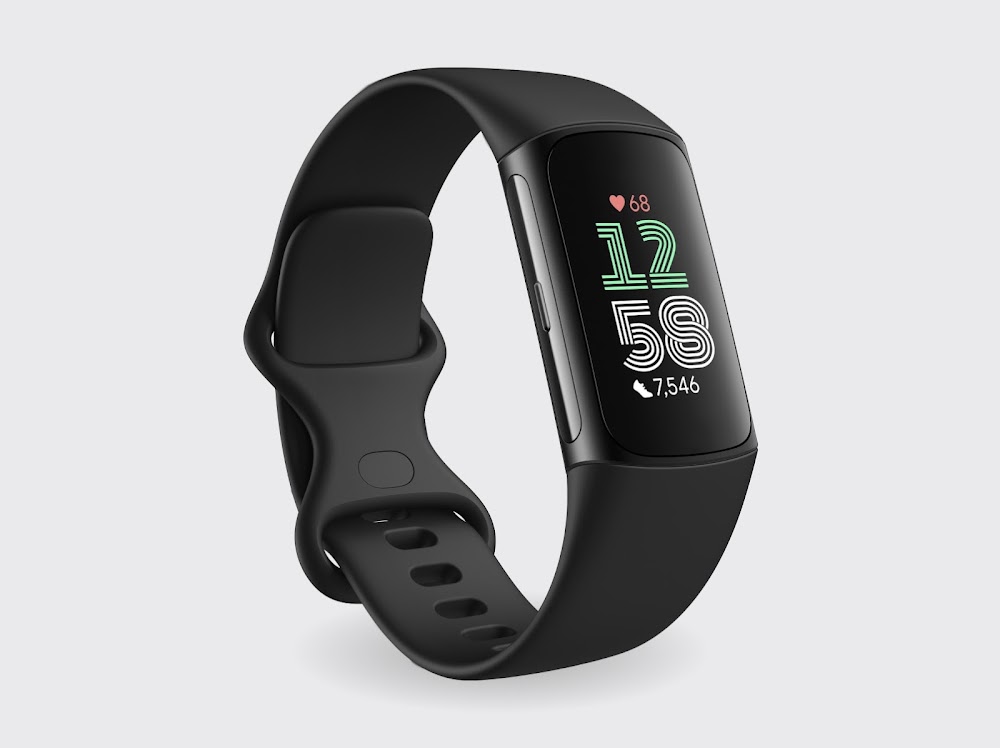
Google's only Fitbit band with onboard GPS, NFC payments, Maps directions and ECG and EDA electrodes, sold with both band sizes and a charging cable, and able to broadcast heart rate to compatible gym machines.
Before you buy: Battery drops to roughly 5 hours with GPS on, YouTube Music control needs its own paid subscription, coaching renews at £7.99 a month after the trial, and the pages read do not confirm irregular rhythm notifications for the UK.
Price checked 17 October 2026. Retailer prices can change.The £139.99 hardware, as Google specs it
The tracker body is 36.73 mm long, 23.09 mm wide and 11.20 mm thick, and weighs 30 g, with an AMOLED colour touchscreen under Corning Gorilla Glass 3 and a side button Google calls the navigation button. Radios are Bluetooth and NFC. The battery is lithium-polymer with a stated two-hour charge from empty. Memory holds seven days of minute-by-minute motion data, 30 days of daily totals and heart rate at one-second intervals during tracked exercise. Google promises at least two years of security updates after the device is last sold on the Google Store.
The box holds the tracker, a silicone loop-and-peg Infinity band in small (130 to 170 mm wrist) and large (170 to 210 mm) sizes, and a charging cable. Setup needs the Google Health app on Android 11 or iOS 16.4 or newer, a Google Account and internet access, with syncing quoted at up to 30 feet over Bluetooth LE. Replacement Infinity bands list at £19.99, Sport bands at £24.99, the Adjustable Stretch band at £29.99 and vegan or Horween leather bands at £59.99 each.
Sensors and health features, with the country notes Google attaches
Google's sensor list: an optical heart rate monitor, a 3-axis accelerometer, built-in GPS + GLONASS, red and infrared sensors for SpO2, a device temperature sensor that reports skin temperature variation in the app, a vibration motor, an ambient light sensor, NFC, and multipurpose electrical sensors compatible with the ECG app and EDA Scan app. Google calls it its most accurate heart rate on a tracker yet and claims up to 60 percent more accurate tracking during vigorous activity such as HIIT, adding that physiology, device placement and movement affect results.
Google's ECG help page lists the United Kingdom among the countries where the Google ECG app runs on the Charge 6, so the ECG sensors are not dead hardware for a UK buyer. The other health lines are less settled: the irregular rhythm help page gives no country list, the SpO2 line says not available in all countries, the skin temperature note says not available in all markets, and none of the UK pages read names the UK. The ECG footnote also excludes people under 22 or with other known arrhythmias and says rhythm data is recorded only while you are still or asleep. Google labels all of these features as not for medical purposes.
GPS, gym equipment, and what they do to the seven-day claim
Built-in GPS is the headline addition over the Inspire 3: Google says you get pace and distance on the wrist with no phone, and the Google Health app draws a workout intensity map of pace and heart rate zones along an outdoor route. Google Maps gives turn-by-turn directions during runs or rides. Heart rate broadcast works with select treadmills, bikes and other machines that support the Bluetooth heart rate profile, and Google says more are coming.
Battery is where those radios collect their fee. The store and specs pages say up to 7 days, from mid-2023 testing in California on pre-production hardware at default settings. Google's battery page gives up to 3 days with the always-on display and up to 5 hours of continuous built-in GPS, and the specs page adds that SpO2 needs more frequent charging. The same page says the Charge 6 can borrow the phone's GPS to save battery, at the cost of carrying the phone. Google publishes no figure for an hour of GPS a day, so a runner should expect something between those numbers.
Fifty-five pounds more than the Inspire 3
Google Store UK lists the Inspire 3 at £84.99 and the Charge 6 at £139.99, a £55 gap. Both list optical heart rate, red and infrared SpO2 sensors, a device temperature sensor, an ambient light sensor and an AMOLED screen, both ship with small and large bands, and both offer Google Health Premium. The Inspire 3 carries a longer battery claim, up to 10 days against 7, and comes in Midnight Zen, Lilac Bliss and Morning Glow.
The £55 buys what the Inspire 3's sheet does not list: built-in GPS and GLONASS, NFC for Google Wallet and the electrical sensors for the ECG and EDA Scan apps, in a 30 g body against 17.69 g. The Inspire 3 has Connected GPS, which shows pace and distance only while the phone comes along. If you will use built-in GPS, Wallet or the gym broadcast, the Charge 6 is the Fitbit band that has them. If your list stops at steps, sleep, SpO2 and heart rate, the Inspire 3 covers it for less and charges less often.
Water rating, returns and the warranty
Google states the Charge 6 is designed to comply with a water protection rating of 5 ATM under ISO 22810:2010 when manufactured, and the spec page says water resistant to 50 metres. It then lists what that does not mean: it is not waterproof, resistance fades with wear, repair or drops, it is meant for shallow water, and it should not meet high-velocity or high-temperature water. Some Charge 6 bands are not water resistant at all, so a swap to a leather band changes the answer.
The Google Store return page says most items can be returned within 15 calendar days after the day you receive them, and names no UK-specific term. On warranty, Google's Hardware Warranty Centre sends Fitbit hardware bought on or after 11 July 2023 in the United Kingdom to a limited warranty that runs two years from original purchase from Google or an authorised reseller. Google calls it a voluntary manufacturer's warranty that sits beside your statutory rights; it covers hardware only, and excludes consumable parts such as batteries unless the failure comes from a defect in materials or workmanship.
When to skip the Charge 6
Skip it if battery life is the number you care about. Google puts the Charge 6 at up to 7 days against 10 for the Inspire 3, and the features that justify the price, GPS and the always-on display, pull that down to 5 hours and 3 days. Skip it if you will not use a Google Account or install the Google Health app, because setup requires both, and if your phone runs anything older than Android 11 or iOS 16.4.
Leave it if irregular rhythm notifications are the draw: Google's help page says only that they are available in select locations, with no country list, and the UK store page does not name the UK. The ECG app is different, since Google lists the United Kingdom for it on the Charge 6, though it excludes people under 22 or with known arrhythmias. Treat ECG, SpO2 and rhythm alerts as non-medical, as Google does. If you want music on the wrist, budget for YouTube Music Premium too. If none of GPS, Wallet, Maps or gym heart rate broadcast will get used, the Inspire 3 at £84.99 does the rest.
How we put this together
Built from the product pages and listings below, without test scores or results we have not measured. Specifications and prices change, so check the original page for the exact model, current price, delivery, and returns.
- Google Store UK: Fitbit Charge 6 overview (opens in a new tab)
- Google Store UK: Fitbit Charge 6 tech specs (opens in a new tab)
- Google Store UK: Fitbit Inspire 3 overview (opens in a new tab)
- Google Store UK: Fitbit Inspire 3 tech specs (opens in a new tab)
- Google Health Help Centre: Extend your Fitbit device's battery life (opens in a new tab)
- Google Store Help: About the Google Store return policy (opens in a new tab)
- Google Hardware Warranty Centre: Fitbit-branded hardware purchased on or after 11 July 2023, United Kingdom (opens in a new tab)
- Google Health Help Centre: What is the Google ECG app? (opens in a new tab)
- Google Health Help Centre: Irregular rhythm notifications (opens in a new tab)
- Google Store UK: Fitbit Charge 6 and Charge 5 band accessories (opens in a new tab)