Product image supplied by the brand
In this guide
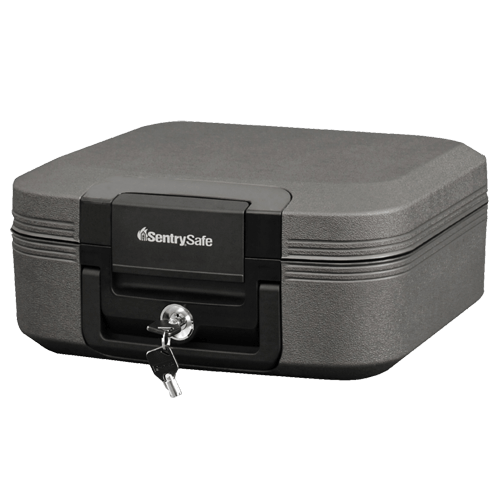
Smoke alarms and extinguishers get the attention, but the fire-safety purchase people actually regret skipping is the boring one: a place for passports, property deeds and the backup drive that holds every photo since 2011. The CHW20221 is SentrySafe's small answer — an insulated chest built to sit through the first half hour of a fire and 72 hours of the flood that sometimes follows.
SentrySafe's own page prints the ratings plainly and the price imprecisely: a $50–$100 band with no fixed number anywhere. So the ratings carry the purchase case here, measured against what a real house fire does in its first hour, up to the point where a heavier safe is the only sensible buy.
Our verdict
SentrySafe's CHW20221 is the right first container for passports, deeds and backup drives. UL Classified for half an hour at 1550°F, ETL-verified against 72 hours of water, 20.4 lb with a handle. Skip it if theft protection is the actual requirement: the tubular key lock is a privacy latch, not security.
- A good fit for
- A household whose irreplaceable papers and small drives need to survive a fire's first half hour, and whose members want to carry them out the door in one grab.
- We would skip it if
- Anyone protecting cash, jewelry or anything a thief would want — the ratings cover fire and water, and the lock will not argue with a pry bar — and any collection bigger than 0.28 cubic feet.
Reasons to consider it
- UL Classified to protect contents for half an hour at 1550°F (843°C)
- ETL verified against flood damage for 72 hours
- In-lid straps, a top handle, and 20.4 lb that sit still on a shelf
The compromises
- Every protection promise ends at the rating window — there is no overtime
- The tubular key lock deters a curious guest more than a burglar
- 0.28 cubic feet holds a drawer's worth: passports, drives and certificate folders fit, bulk does not
What we have not verified: SentrySafe's page ties its ETL verification to the 72-hour water rating and lists digital-media protection without stating what stands behind it; no after-fire replacement policy for this model shows up on the page either. Both details could change the value math and neither is verified here. The maker's $50–$100 band is the only price on record, since no fixed number exists to track.
The things in this guide
A closer look at the products, who they may suit, and what to check before buying.
Fire/Water Chest · 0.28 cu ft (CHW20221)
Verified half-hour fire and 72-hour water ratings in a handled box a household can carry out during an evacuation.
Before you buy: Protection ends at the rating window, the lock is for privacy, and no fixed price exists — only the maker's $50–$100 band.
Price checked September 14, 2026. Retailer prices can change.Two letters and a clock
The fire rating is the headline: UL Classified to keep the inside below destructive temperatures for half an hour in a 1550°F blaze. Read the rating as a window: thirty minutes of protection during which a house fire either moves past or consumes everything. Documents that matter usually survive their first half hour inside this chest; nothing is promised for hour two.
The second rating is water, and it matters more than most buyers expect: fires get fought, and a chest that survives flames then sits in spray and runoff for days has failed its job anyway. The ETL verification covers 72 hours of flood exposure, and SentrySafe lists tablets, phones and external drives among the protected contents, a claim the page makes without showing the verification terms behind it.
A chest is not a safe
The tubular key lock exists to keep children out and casual hands off, and SentrySafe's own copy calls it a privacy lock — the correct mental model is a latch on a medicine cabinet, not a vault door. Cash, jewelry and anything resaleable belong somewhere with bolts and real steel; this chest's job is surviving disaster, not deterring people.
What the form factor does well is disaster planning's second act: 0.28 cubic feet, 20.4 pounds, and a carrying handle mean the box participates in an evacuation instead of being abandoned. In-lid straps hold passports flat; the whole container moves from closet to car in one trip. A bolted safe protects better and goes nowhere — for the first thirty minutes, portability is a feature worth more than weight class.
Shopping a box with no price tag
SentrySafe's page prints a range — $50 to $100 — and no fixed number, which is unusual and, in its way, candid: this model sells through many retailers, and the maker declines to print a single number. The practical approach is to shop the ratings, confirming any listing is the CHW20221 with both the UL fire classification and the ETL water verification intact before buying.
The rest of the cost picture is simple. There are no consumables, no subscription, no maintenance beyond keeping a spare key somewhere sensible — losing the tubular key turns a fire chest into a locked box, and the contents stop being grab-and-go.
The line where a chest stops being enough
Step up when any of three things is true. If the paperwork no longer fits — 0.28 cubic feet holds passports, certificates and drives, not a business's records — a larger rated safe is the answer. If the threat assessment includes theft rather than disaster, steel weight and bolt-down mounting matter more than fire minutes. And if the household wants protection beyond half an hour, longer-rated models exist at the next price tier.
For the rest, the sequence is the plain one: alarms first, extinguisher second, and this chest third — the purchase that settles where the documents you rebuild your life with end up: the drawer that burned, or the box you carried out.
How we put this together
Built from the product pages and listings below, without test scores or results we have not measured. Specifications and prices change, so check the original page for the exact model, current price, delivery, and returns.
About our shopping links