Product image supplied by the brand
In this guide
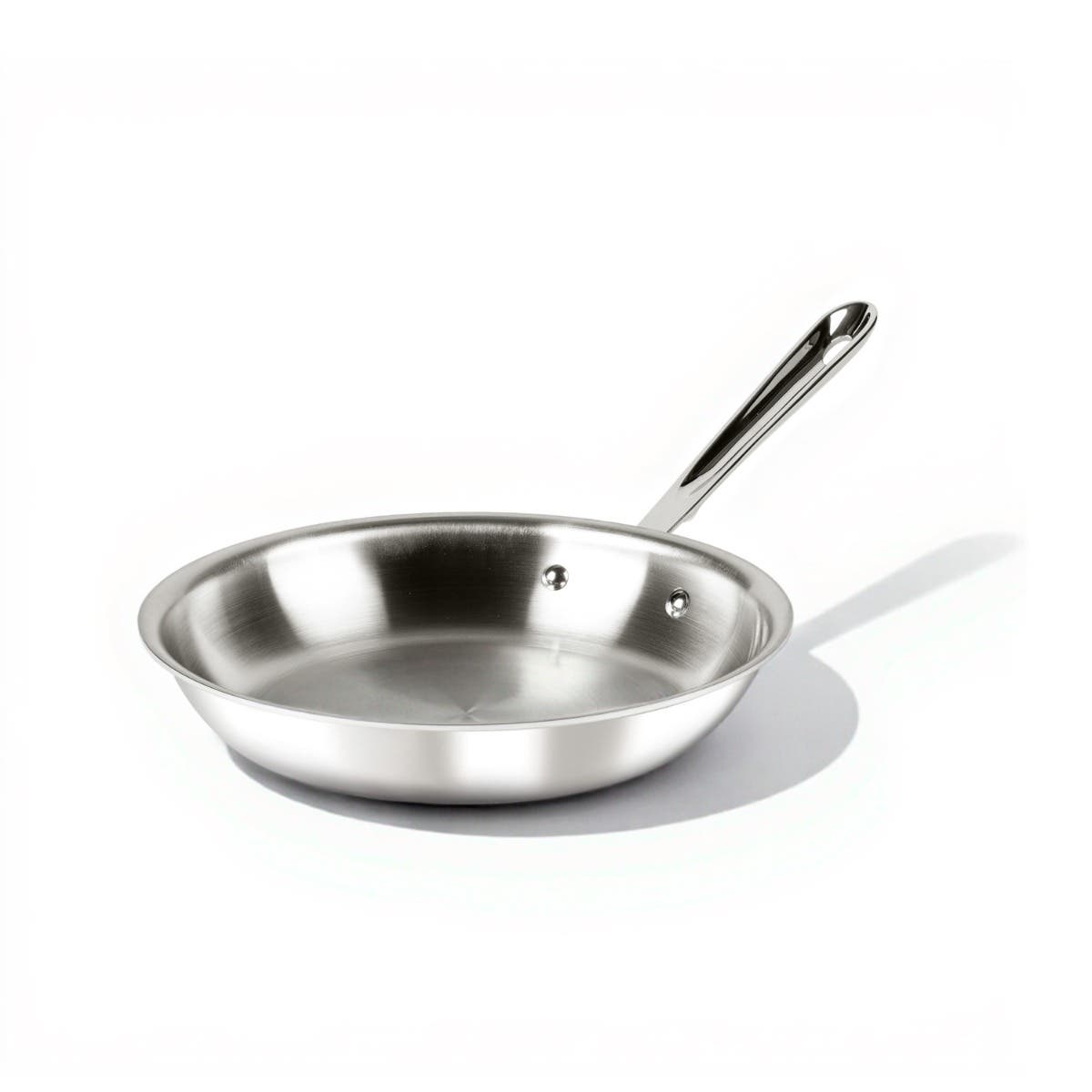
All-Clad's D3 fry pan is the same pan in two sizes, and only $10 separates them. All-Clad prices the 10-inch at $149.99 and the 12-inch at $159.99, each listed in stock when checked on 2026-10-18. Both are tri-ply stainless, rated to 600°F in the oven and under the broiler, induction-compatible and covered by the same limited lifetime warranty. All-Clad also sells both pans as a set for $249.99, $59.99 below buying them separately.
Ten dollars is not the interesting number. Area is. By nominal diameter, a 12-inch pan has about 44 percent more area than a 10-inch. The decision is whether the rest of the kitchen can take the larger pan: the burner under it, the sink it has to be washed in, and the cupboard it lives in.
Our verdict
Buy the 12-inch at $159.99 if the burner is 11 inches or wider and the sink takes a 20-inch pan. Otherwise the 10-inch at $149.99 is the one that sits properly on the burner.
- A good fit for
- A cook buying one uncoated skillet for searing, pan sauces and oven finishing, on a wide burner, with a sink and cupboard that fit a 20-inch pan.
- We would skip it if
- You want nonstick eggs, put pans in the dishwasher, or already keep a 12-inch cast iron or carbon steel skillet.
Reasons to consider it
- Tri-ply construction with an aluminum core, made in the USA with global components and rated for induction.
- Oven and broiler safe to 600°F, with no coating to wear through.
- A flared rim is shaped for drip-free pouring and a riveted handle is shaped for an underhand grip.
- A limited lifetime warranty against manufacturing defects.
The compromises
- Hand washing is a warranty condition: the warranty excludes dishwasher cleaning and soaking in water.
- Dry overheating is excluded too, so the 600°F rating is not permission to leave an empty pan on heat.
- Two sizes list the same 3 lb weight, which reads as a shipping figure rather than the pan's own mass.
- Twenty inches of pan needs a wide burner, a long sink and a cupboard that can take the length.
What we have not verified: All-Clad publishes no pan-only weight, and the 3 lb figure is identical for both sizes, so balance in the hand is unverified. The 12-inch pan's behavior on a 9-inch induction ring is also unaddressed by the maker.
The things in this guide
A closer look at the products, who they may suit, and what to check before buying.
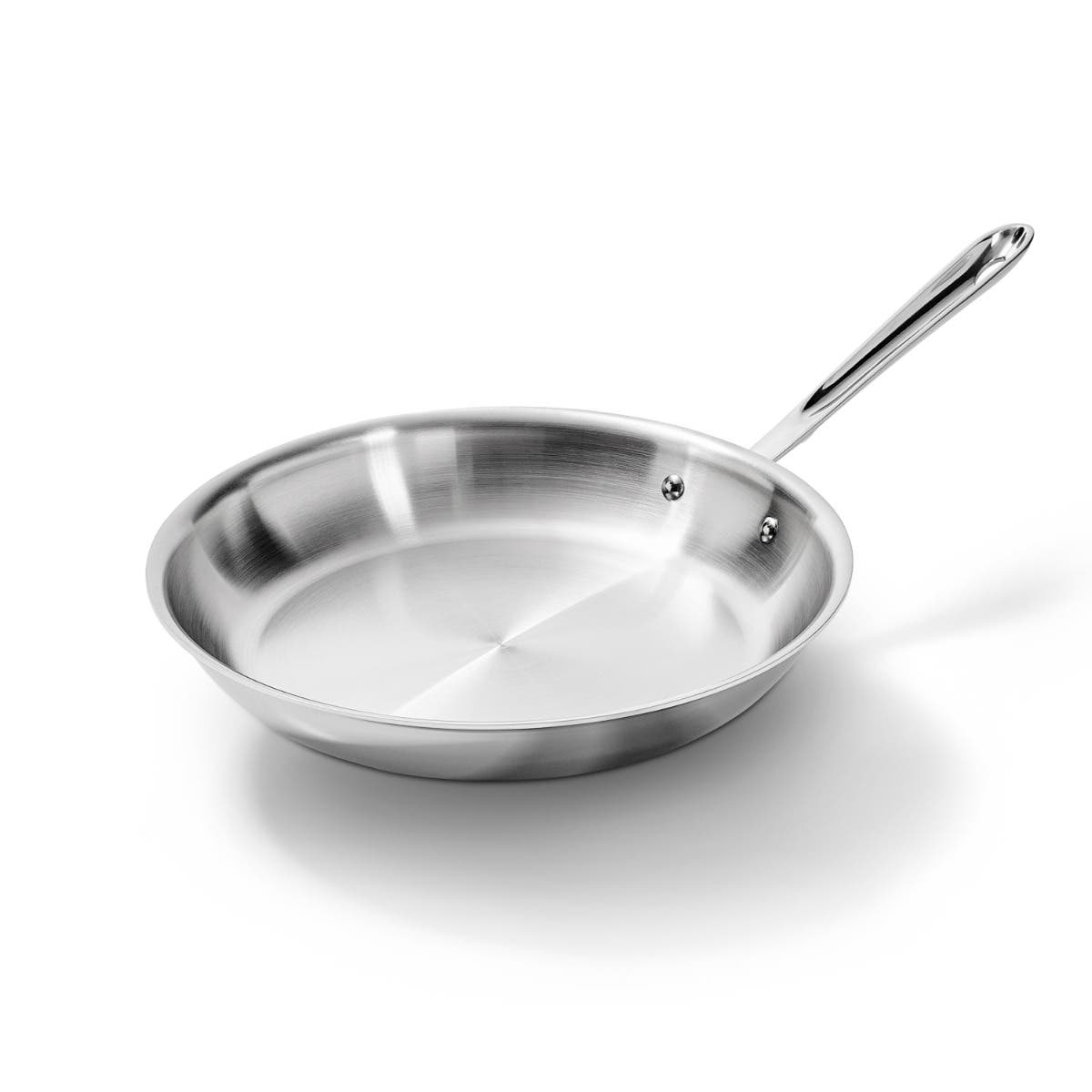
D3 Stainless Fry Pan · 12 inch
Forty-four percent more surface than the 10-inch for $10 more, with the same tri-ply build, 600°F rating and induction compatibility.
Before you buy: 20.1 inches end to end, so it needs an 11-inch burner, a long sink and a cupboard with room.
Price checked October 18, 2026. Retailer prices can change.D3 Stainless Fry Pan · 10 inch
The same construction and ratings in a 17.9-inch overall length that suits a 9- or 10-inch burner and a sink basin about 18 inches long.
Before you buy: Crowds two large steaks, and costs only $10 less than the wider pan.
Price checked October 18, 2026. Retailer prices can change.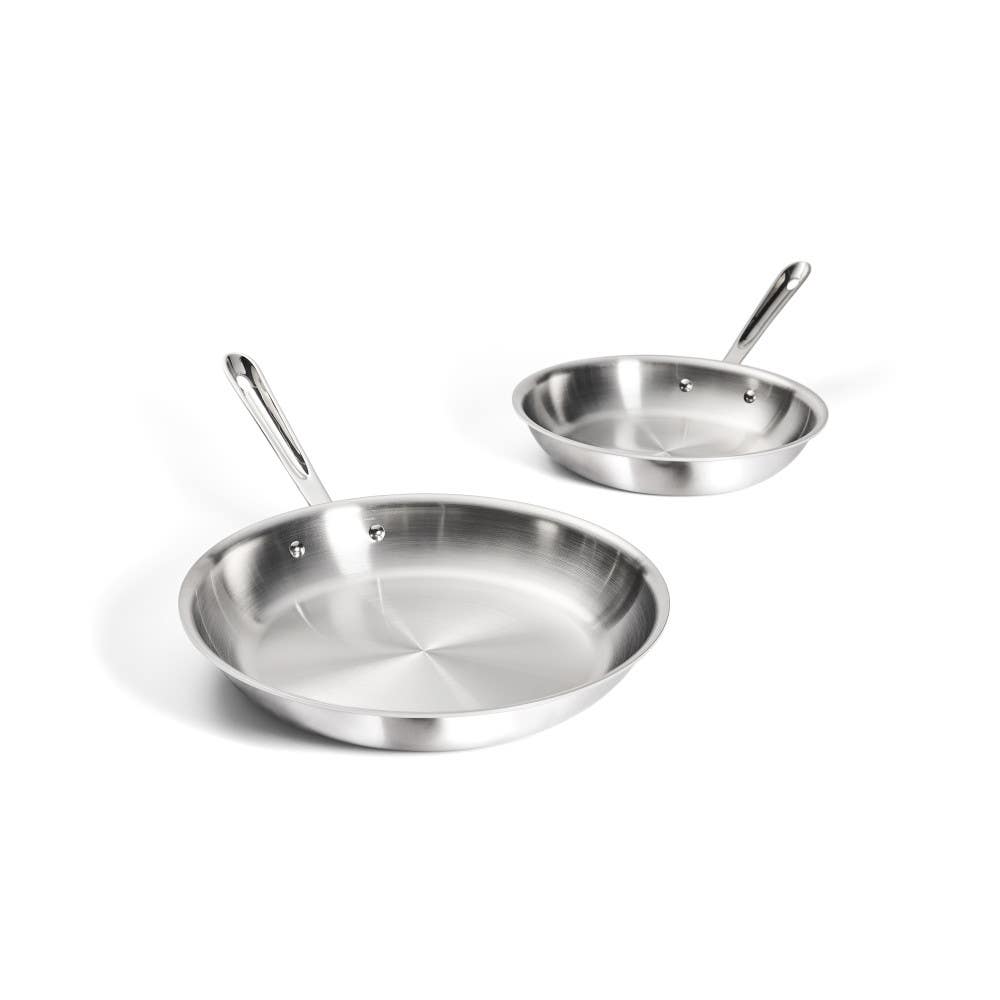
D3 Stainless Fry Pan Set · 10 and 12 inch
Both sizes for $249.99, $59.99 less than buying the 10-inch and 12-inch separately, with the same tri-ply build, 600°F rating and lifetime warranty.
Before you buy: Only a saving if both pans earn their cupboard space; the set is one more pan to store.
Price checked October 18, 2026. Retailer prices can change.Ten dollars, forty-four percent
The arithmetic reframes the choice. Cooking area grows with the square of the diameter, so going from 10 to 12 inches multiplies the surface by 1.44. The 12-inch pan does not offer 20 percent more room; it offers 44 percent more, for a price difference of $10 on a $149.99 pan.
In practice that is the gap between a pan that fits two ribeyes without touching and one that steams them where they meet, and between a whole trout that lies flat and one whose tail rides up the curve. If the pan is going to be the only skillet in the kitchen, the larger one does more of the work for very little more money.
Twenty inches, end to end
All-Clad lists the 10-inch pan at 17.9 by 10.5 by 4.8 inches and the 12-inch at 20.1 by 12.5 by 4.4 inches. The first number, not the diameter, sets whether the pan fits a sink or a cupboard shelf. A 12-inch pan is happiest on a burner close to its own width; paired with a 9-inch ring, the base overhangs the heat.
The manufacturer's table is less useful than it looks. Both pans are listed at 3.000000 lb, which is the same figure for two different sizes and reads as a shipping weight rather than the pan's own mass. Without a pan-only weight, the balance of the 12-inch model in one hand is something the page does not answer.
Six hundred degrees, and the care it assumes
The 600°F rating covers the oven and the broiler, which is what a clad pan is for: sear on the burner, then finish under heat without transferring to a roasting tray. All-Clad also lists it as compatible with any stovetop, induction included. No coating means nothing to flake, and the pan can go from the burner to the broiler without a nonstick surface's temperature ceiling.
The rating is not permission to heat an empty pan. All-Clad's care guide says empty pans should not be left on a hot burner, and the warranty excludes discoloration, warping or metal separation caused by high heat or prolonged heat exposure when empty. The same document excludes normal wear, including stains, scuffs and scratches, so a pan that darkens with use is behaving as sold rather than failing.
The warranty also covers how the pan is cleaned. All-Clad's own copy says handwash only, and the warranty lists cleaning in the dishwasher or soaking in water as a failure to follow care instructions, which it does not cover. A household that treats the pan like a plate shortens its finish and steps outside the coverage.
The routine itself is short. Preheat on low to medium until a drop of water skitters, add oil, add food, and leave the food until it releases. High heat is for boiling only. Salt goes in after the liquid boils or the food is in the pan, because salt added too early can pit the surface. Cool the pan before washing, use soap and a sponge rather than steel wool, and keep white vinegar for the rainbow tint that heat leaves behind.
The case for ten inches
The 10-inch pan is not the compromise it appears to be. It fits a 9-inch burner properly, and its 17.9-inch length needs a sink basin about 18 inches long. For a single chicken breast, a sauce for two or a quick sauté of vegetables, the smaller pan is easier to move and easier to store.
It is also the cheaper way to try cooking on bare stainless before committing to a larger pan. The learning curve is real: food sticks to a pan that was not preheated enough, and the fix is technique rather than a different pan. At $10 less, the 10-inch version is the lower-stakes introduction to that technique.
The pair is cheaper than the two pans
All-Clad prices the set at $249.99 against $309.99 regular, and buying the 10-inch at $149.99 and the 12-inch at $159.99 separately comes to $309.98. The set saves $59.99 and ships as one box.
The catch is that the set is only worth it if both pans will be used. A cook who wants one skillet pays $149.99 for the 10-inch and skips the 12-inch entirely; the set is not a discount on a pan you need, it is a discount on a pair.
When neither pan is right
Skip both if the plan is eggs and pancakes, where a nonstick surface does the job with less fat and less attention. Skip them in a household that loads every pan into the dishwasher, because the warranty excludes dishwasher cleaning. Skip them if a 12-inch cast iron or carbon steel skillet already lives on the stove; the clad pan's advantage is a surface that needs no seasoning, not a better sear, and both of those skillets work on induction too.
Buy the 10-inch when the burner is 9 or 10 inches and the sink basin is under 20 inches long. Buy the 12-inch when the burner is 11 inches or wider, the sink takes a 20-inch pan, and the pan will be the one that sears, sautés and finishes in the oven. At a $10 gap, the decision turns on burner width and sink length.
How we put this together
Built from the product pages and listings below, without test scores or results we have not measured. Specifications and prices change, so check the original page for the exact model, current price, delivery, and returns.
- All-Clad: D3 Stainless Fry Pan, 10 inch product page (opens in a new tab)
- All-Clad: D3 Stainless Fry Pan, 12 inch product page (opens in a new tab)
- All-Clad: Use and Care guide (opens in a new tab)
- All-Clad: Limited Lifetime Warranty (PDF) (opens in a new tab)
- All-Clad US: D3 Stainless 3-ply Bonded Cookware Set, 2 piece Fry Pan Set, 10 & 12 inch (411012 BL) (opens in a new tab)