Product image supplied by the brand
In this guide
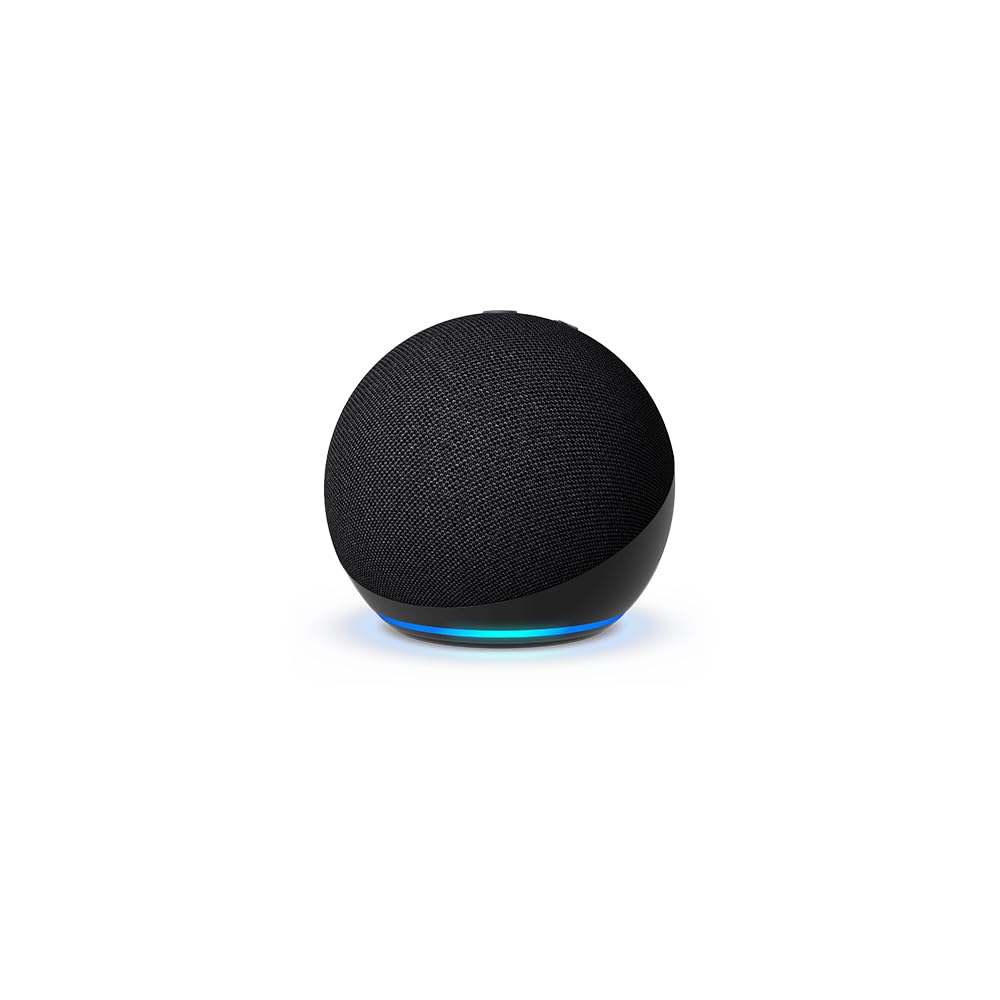
Amazon's Echo Dot (5th Gen, 2022 release) is still the company's entry speaker, and the entry no longer costs entry-level money: the listing shows $79.99, sold by Amazon.com, in Charcoal, Deep Sea Blue, and Glacier White — the same $79.99 on all three color pages, against the $49.99 Amazon charged at launch in 2022. The hardware account is specific: a sphere 3.9 x 3.9 x 3.5 inches and 10.7 oz, one front-firing speaker, a mic off button, built-in motion and indoor temperature sensors, and eero Built-in, which turns the speaker into a mesh extender under conditions. The listing now carries 'Designed for Alexa+' in its title, with a Prime subscription or the separate Alexa+ Standard plan required for Alexa+.
Three boundaries decide it, and Amazon's own pages document all three. The smart-home boundary: Amazon's developer documentation lists the devices with a built-in Zigbee hub, and no standard Echo Dot is on it — the Dot's own compatibility row names WiFi, Bluetooth Low Energy Mesh, and Matter — Zigbee is what stays out. The privacy boundary: the microphones wait on the wake word and recordings process in Amazon's cloud, where Amazon's controls — a mic off button that disconnects the microphones, recording review and deletion in settings — manage rather than remove the arrangement. The price boundary: the Dot Max at $119.99 asks $40 more for nearly 3x the bass and the hub this speaker omits.
Our verdict
Buy the $79.99 Echo Dot (5th Gen) as an Alexa household's voice remote — sensors and eero extender duty included. Skip it for sound, for Zigbee gear (no hub inside), or a house that answers to Google or Apple.
- A good fit for
- A first Alexa speaker for someone who owns or plans Alexa-compatible plugs and bulbs, wants temperature and motion sensors in routines, runs an eero network, and accepts a microphone that waits on the wake word.
- We would skip it if
- You want music worth the name, own Zigbee gear it cannot pair with, keep the house in Google Home or Apple Home, or refuse a cloud-tied microphone, however documented the off switch.
Reasons to consider it
- Built-in motion and indoor temperature sensors, stated right on the listing, feed routines and pair with the Amazon Smart Thermostat — automation inputs most speakers at this price reserve for extra hardware
- eero Built-in turns the speaker into a mesh extender adding up to 1,000 sq ft of coverage at speeds up to 100 Mbps, at no cost beyond a compatible eero router and a linked Amazon account
- The privacy control is documented at the source: Amazon's help page confirms that pressing the mic off button disconnects the microphones, with the device's light turning red to confirm, and recordings can auto-delete after 3 or 18 months
The compromises
- Amazon's Zigbee hub list leaves this Dot off, so the 'control compatible devices by voice' promise reaches Wi-Fi accessories only — Zigbee lights, locks, and sensors need an Echo (4th Gen), a Dot Max, or a separate hub
- The single front-firing speaker is the entry tier by Amazon's own account: the Dot Max claims nearly 3x the bass, and the current $40.00 gap is the price of that hardware
- The price has drifted hard: $79.99 today against the $49.99 Amazon charged at the 2022 launch, with the security-update runway ending 31 December 2029
What we have not verified: Amazon's own pages disagree on the driver: the listing's comparison table prints a 1.73 in (44 mm) front-firing speaker, while its Technical Details row and the identification help page print 1.6 in. The with-clock variant showed no price — its Glacier White listing reads 'Temporarily out of stock.' The sustainability fact sheet for this generation returns a 404, so the Carbon Trust 'Reducing CO2' label on the listing is the only materials signal Amazon's pages currently carry.
The things in this guide
A closer look at the products, who they may suit, and what to check before buying.
Echo Dot (5th Gen, 2022 release)
$79.99 buys a 3.9-inch fabric sphere with a front-firing speaker, built-in motion and indoor temperature sensors for routines, eero Built-in coverage of up to 1,000 sq ft at up to 100 Mbps on a compatible eero network, a mic off button, security updates scheduled through 31 December 2029, and a listing title that now reads 'Designed for Alexa+.'
Before you buy: No Zigbee hub — Amazon's developer list reserves built-in hubs for the Echo (4th Gen) and Dot Max class, so Wi-Fi accessories are the whole reach; the single front-firing speaker leaves bass to the $119.99 Dot Max; and the with-clock variant's Glacier White listing was out of stock with no price shown.
Price checked September 16, 2026. Retailer prices can change.From $49.99 to $79.99 on the same hardware
The launch numbers sit on Amazon's own 2022 announcement page: Echo Dot at $49.99, Echo Dot with Clock at $59.99, pre-order both. The current listing shows $79.99 with Amazon.com as the seller, and the figure repeats on all three color pages — Charcoal, Deep Sea Blue, Glacier White — with no strikethrough list price anywhere on any of them. The with-clock variant is the exception: its Glacier White listing reads 'Temporarily out of stock' and displays no price at all, so the clock's $10 launch premium over the base Dot has no purchasable price behind it today.
Drift of that size changes what the product is for. At $49.99 the Dot was an add-on to a cart; at $79.99 it has to argue against the $119.99 Dot Max above it. The fixed terms around the hardware have not drifted: the listing's Technical Details table states a 90-day limited warranty and service, with one-, two-, and three-year extended terms sold separately, and the security-update schedule ends this generation at 31 December 2029, which caps how long a $79.99 outlay rides on Amazon's update promises.
Designed for Alexa+, with Prime or a plan attached
'Designed for Alexa+' now sits in the listing title, and Amazon attaches two conditions in the same breath: a Prime plan or a subscription to the Alexa+ Standard tier is necessary to use Alexa+ on compatible devices, and Alexa+ requires a US-based Amazon account with compatible devices set to US English. Amazon maintains a compatibility page for Alexa+ whose first line concedes that Alexa+ is not compatible with some Alexa built-in devices; the fifth-generation Dot is not among the models that page excludes, while the 2025 Dot Max and Studio were built to deliver it.
The speaker has no display — Amazon's own listing says so and points to the Echo Spot for whoever wants a screen — so every Alexa+ interaction is voice in, voice out. What the designation changes for a $79.99 speaker is access, not hardware: Amazon's launch material describes the Dot Max as the best Echo Dot it has built, and the newer devices are the ones Amazon built to deliver Alexa+. The fifth-generation Dot's ticket is the software upgrade path, on hardware four years into its sale.
The microphone: a physical off button, a cloud default
Amazon's help page for Echo privacy answers the button question in one step: pressing the microphone off button disconnects the microphones, and the device's light turns red while they are off — the speaker does not listen for voice commands until the button is pressed again. The listing repeats the promise in shorter form, 'multiple layers of privacy controls, including a mic off button.' The off state rests on a physical control rather than a software toggle, which is as far as Amazon's published wording goes.
The other state is the default: the microphones wait on the wake word, and voice processing runs in Amazon's cloud. Amazon's settings allow a household to review and delete its recordings, including automatic deletion after 3 or 18 months, rather than keeping every recording by default — Alexa keeps working either way, though the help page notes deleting recordings can limit personalization-related features.
Amazon states its position in the stock sentence printed on the listing: 'Amazon is not in the business of selling your personal information to others.' The remaining judgment is not about words: a wake-word microphone sits in the room by design. The documented controls — the mic off button, the recording settings — manage that arrangement; they do not replace it.
A voice remote for Wi-Fi accessories, not a hub
Amazon's developer documentation draws the hub boundary in one list: the Echo and eero devices with built-in smart home hubs are the Echo (4th Gen), the Dot Max (2025 release), the Echo Hub, the Echo Plus (2nd Gen), several Echo Shows and Studios, and a run of eero models. No standard Echo Dot appears. What the Dot's own Technical Details row offers instead is compatibility with 'WiFi, Bluetooth Low Energy Mesh, and Matter' — Wi-Fi accessories first among them, so Wi-Fi plugs and bulbs such as Kasa's answer to Alexa through their own apps and clouds, with this speaker as the device that asks. Zigbee lights, locks, and sensors remain the boundary: different hardware, or a hub.
What the Dot adds that a plug does not have is sensing. The listing credits it with built-in motion and indoor temperature sensors and describes their jobs: routines can trigger on motion or on indoor temperature, and the Echo device can serve as a temperature sensor for the Amazon Smart Thermostat. In a room with a thermostat and a few compatible accessories, one $79.99 sphere then does three jobs at once — voice entry point, occupancy and temperature input for routines, and, on an eero network, extendership.
The eero job has conditions, and Amazon prints them right on the listing: the Wi-Fi network must use a compatible eero router, the Echo device must stay in range of a compatible eero device, the eero and Amazon accounts must be linked, and eero Built-in is managed from the eero mobile app — with support capped at up to 1,000 sq. ft. of additional coverage, speeds up to 100 Mbps, and 10 or fewer connected devices in the 5 GHz band. A household without an eero router gets nothing from the feature; it argues for this Dot only once an eero decision is settled.
What the extra $40.00 buys at the Dot Max
Amazon's own announcement sets the comparison: the Echo Dot Max, launched in 2025 at $99.99, 'features nearly 3x the bass compared to Echo Dot (5th gen) with room-filling sound that automatically adapts to your space,' and the current Dot Max listing shows $119.99 with Amazon.com as the seller. Against today's $79.99 Dot, the extra $40.00 buys the bass claim, a built-in smart home hub — the Dot Max is on Amazon's Zigbee hub list, the fifth-generation Dot is not — and hardware Amazon built to deliver Alexa+. Against the launch prices, the two speakers were $50.00 apart; the gap has narrowed even as both prices rose.
The buy checklist, and the four that end it
The case for buying one reads as a checklist. An Alexa-compatible household — or the start of one — that wants voice control for plugs, bulbs, and a thermostat, plus motion and temperature inputs for routines; tolerance for a wake-word microphone with cloud processing, moderated by a mic off button and recording settings; optionally an eero network, for the extender role to exist at all. At $79.99, with a 90-day limited warranty and updates scheduled through 31 December 2029, the checklist above is exactly what the money buys — Amazon's pages document every item on it.
Four situations end the purchase, each concrete. Sound: Amazon's own comparison gives the Dot Max nearly 3x the bass and room-adapting sound, and a single front-firing speaker in this housing does not contest that — at $40.00 more, the Max is the audio answer within the Dot line. Zigbee gear: the hub list leaves this Dot off, so existing Zigbee bulbs, locks, or sensors need an Echo (4th Gen), a Dot Max, or a separate hub before Alexa can see them.
Ecosystem is the third: a house run from Google Home or Apple Home gains little from Alexa's voice remote, and Amazon's pages document no route around that. Fourth, the bedroom clock: the Echo Dot with clock (5th Gen) listing showed 'Temporarily out of stock' with no price at all in this check, so whoever wants the LED display has no purchasable price to weigh. Where those four do not apply, the $79.99 Dot is exactly what its listing says: the small, sensor-carrying, hub-less front door to Alexa.
How we put this together
Built from the product pages and listings below, without test scores or results we have not measured. Specifications and prices change, so check the original page for the exact model, current price, delivery, and returns.
- Amazon: Echo Dot (5th Gen) product page, Charcoal (US) (opens in a new tab)
- Amazon: Echo Dot (5th Gen) product page, Deep Sea Blue (US) (opens in a new tab)
- Amazon: Echo Dot (5th Gen) product page, Glacier White (US) (opens in a new tab)
- Amazon: Echo Dot with clock (5th Gen) product page, Glacier White (US) (opens in a new tab)
- Amazon Customer Service: Which Echo Dot Do I Have? (opens in a new tab)
- Amazon Customer Service: Amazon Echo Software Security Updates (opens in a new tab)
- Amazon Customer Service: Device Warranty for Alexa Devices and Accessories (opens in a new tab)
- Amazon Customer Service: Alexa, Echo Devices, and Your Privacy (opens in a new tab)
- eero: eero Built-in (opens in a new tab)
- Amazon Developer: Understand Smart Home Zigbee Support (opens in a new tab)
- About Amazon: Amazon's latest smart speakers Echo Dot Max, Echo Studio hit market (opens in a new tab)
- Amazon: Echo Dot Max product page, Graphite (US) (opens in a new tab)
- About Amazon: Everything announced at Amazon's 2022 Devices & Services Event (Echo Dot section) (opens in a new tab)
- Amazon Customer Service: Compatibility of Alexa+ with Alexa Built-in Devices (opens in a new tab)
- Amazon: Echo Dot (5th Gen) product page, Charcoal (US) — Technical Details as archived (opens in a new tab)