Product image supplied by the brand
In this guide
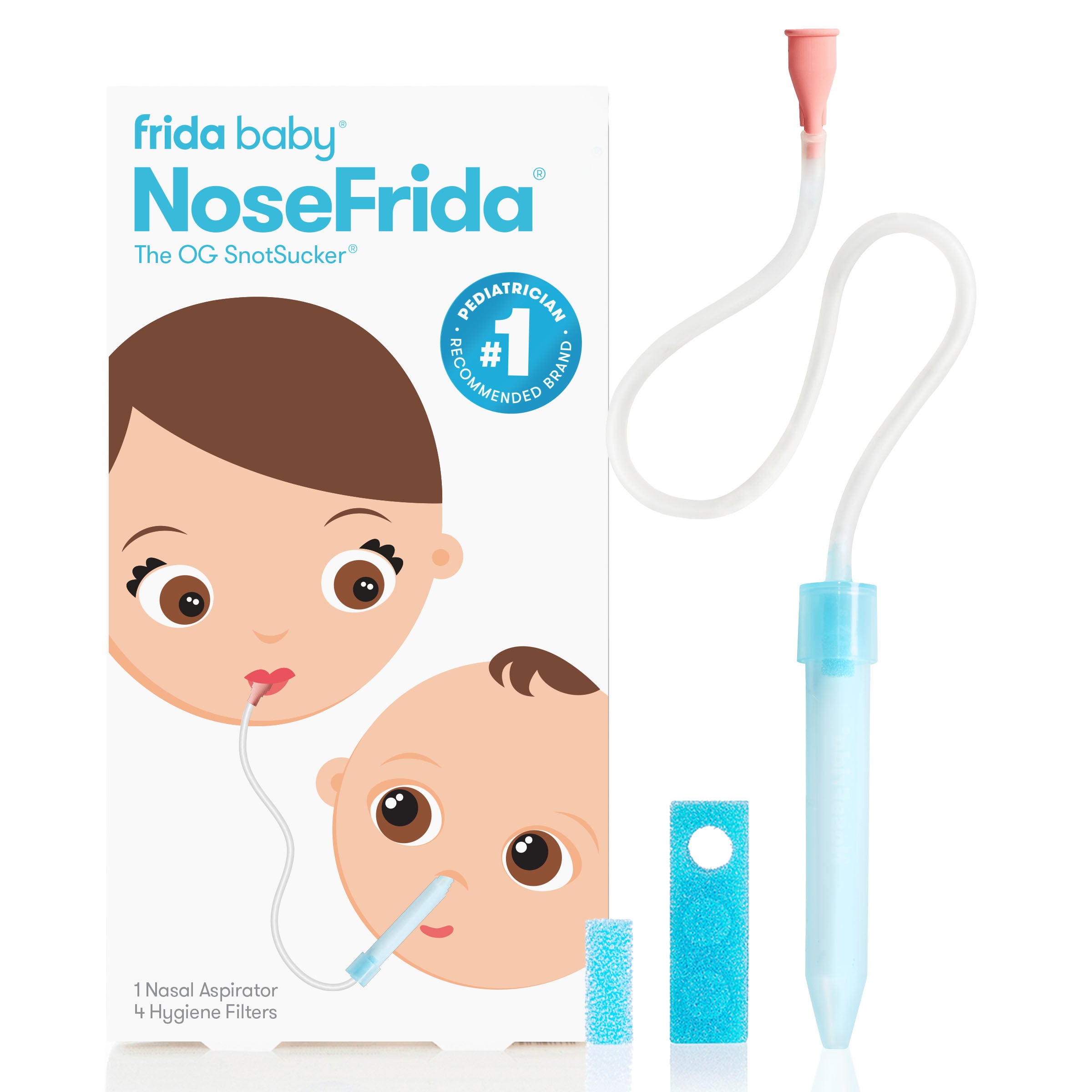
A baby with a blocked nose cannot blow it, so the job falls to a tool: the classic rubber bulb, an electric pump, or the Swedish oddity where the caregiver inhales snot through a long tube. That last one is NoseFrida the SnotSucker, and the filter in its middle is what makes the strange part survivable.
The page price is $14.99 with four filters in the box, and refills run $5.99 a pack. Three things decide whether it belongs in the house: how the suction actually works, what the filter habit demands, and when the rubber bulb already on the shelf is good enough.
Our verdict
For a congested baby who fights the rubber bulb, the $14.99 NoseFrida is the aspirator to try first — the caregiver's own breath sets the suction, through a filter, with nothing inserted in the nostril; skip it if mouth suction is a dealbreaker, because the filter does not change that part.
- A good fit for
- Parents of infants whose stuffy nose blocks feeding or sleep, and who want force they can dial up mid-pull instead of committing to a squeeze.
- We would skip it if
- Caregivers who cannot get comfortable with the mouth-suction principle, and homes where an electric aspirator already works without complaint.
Reasons to consider it
- Suction strength adjusts in the moment because the caregiver's lungs are the pump
- A disposable hygiene filter stands between nose and mouthpiece by design
- The blue tube, red mouthpiece and filter cap go on the dishwasher's top rack
The compromises
- The filter must be swapped out session by session, and keeping that habit is on you
- The tube seals against the outside of the nostril, so a squirming baby breaks the seal and the pull
- Filter refills are a recurring line, $5.99 per twenty-pack
What we have not verified: Frida describes the filters as clinically proven to block mucus and bacterial transfer; the clinical work behind that phrase is the maker's to show and no independent source for it turned up; the product's hygiene case rests on it holding.
The things in this guide
A closer look at the products, who they may suit, and what to check before buying.
NoseFrida the SnotSucker
Controllable force, a filter between nose and mouth, and a price that undercuts the electric route before it.
Before you buy: Runs on disposable filters replaced with each session, and mouth suction is the entire mechanism — no accessory changes that.
Price checked September 14, 2026. Retailer prices can change.Your lungs are the pump, and that is the feature
The device is three parts: a blue tube that rests against the opening of the nostril — Frida's own instructions put it outside, never inside — a filter cartridge, and a red mouthpiece. The caregiver draws air through the line with their mouth; snot travels from nose toward the filter and halts at the cartridge. Nothing enters the nostril, so nothing scrapes or pinches.
The pump being human changes the experience. A rubber bulb releases one fixed squeeze and needs re-squeezing to try again; an electric unit cycles a motor you cannot negotiate with. Here the pull starts gentle and strengthens only as fast as you inhale, which is why babies who panic at the bulb sometimes sit still for this one — the caregiver can stop mid-motion, and the baby can tell.
One filter per use, no exceptions worth inventing
Four filters arrive with the device, and Frida's instruction is to swap in a fresh one for every use. The company describes them as clinically proven to block mucus and bacterial transfer to the mouthpiece — a maker's claim, and the whole hygiene logic of the device rests on taking it seriously rather than reusing one filter across a week.
Refills come as a $5.99 pack — twenty filters, per the refill listing — about thirty cents a change; the recurring burden is the habit, not the money. Cleaning completes the routine: the tube, mouthpiece and filter cap go on the dishwasher's top rack, which means the nightly cleanup is a rinse and a rack, not a brush-and-pray.
Compared with the bulb already in the drawer
The rubber bulb syringe costs nothing and works — for mild, occasional stuffiness it remains a reasonable answer, and a home that reaches for it twice a winter loses little by staying there. The NoseFrida's advantage shows up when congestion is thick, frequent, or timed badly: the caregiver can sustain a steady pull for several seconds instead of one squeeze, then repeat immediately, with the filter making the repetition sanitary.
Frida's own store pairs the aspirator with a $5.99 saline spray, and the pairing is the practical truth of decongesting a baby: a few drops to loosen first, then the pull. The aspirator is the second half of that routine, not a substitute for it.
Where the tool stops
An aspirator clears the front of the nose. Congestion that does not budge, drainage that looks infected, or a baby too miserable to feed belongs with a pediatrician, not a stronger vacuum — the tool's own instructions describe gentle clearing, and that is the whole of its scope.
The rest is fit. Households past the infant stage, kids who can blow their noses, and caregivers firm in the no-mouth-suction camp all have cheaper answers. For the window between, the SnotSucker asks $14.99 to find out — and the four filters in the box are enough to know.
How we put this together
Built from the product pages and listings below, without test scores or results we have not measured. Specifications and prices change, so check the original page for the exact model, current price, delivery, and returns.
- Frida: NoseFrida the SnotSucker product page (US) (opens in a new tab)
- Frida: NoseFrida Hygiene Filters listing (US) (opens in a new tab)