Product image supplied by the brand
In this guide
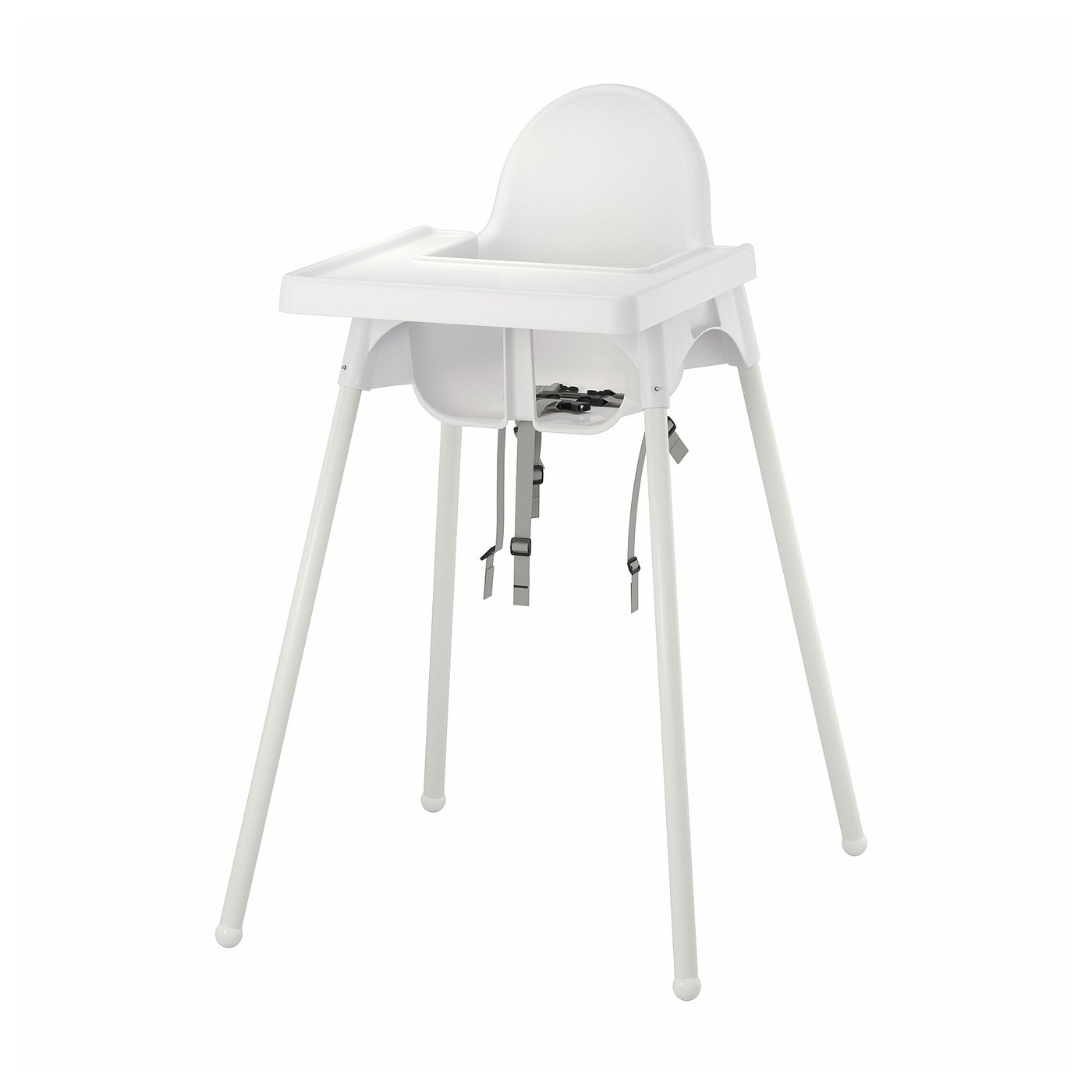
Somewhere around six months, a baby who can sit starts demanding a place at the table, and the high-chair market answers with everything from $25 plastic to walnut and leather. The ANTILOP is the $25 end — sold in the US these days as one set with the tray, belt included.
IKEA's own page answers most of a buyer's questions with unusual completeness: a test standard, an age and weight ceiling, materials, care. Treat those numbers as a schedule — when the chair starts, what it costs, and when it ends.
Our verdict
For $24.99 the ANTILOP with tray is the first high chair to buy for a baby who sits unaided — safety belt and spill-edge tray included, wipes down with soapy water, rated to age three or 33 lb; skip it only when recline, adjustable height, or use past three is what the household actually needs.
- A good fit for
- Parents feeding a sitting-up baby at a standard-height table who want the mess contained and the floor wiped, not a nursery throne.
- We would skip it if
- Families who need a recline for a baby who cannot sit yet, a seat that grows past age three, a chair for a counter-height table, or furniture that photographs like furniture.
Reasons to consider it
- Belt and raised-edge tray included in the $24.99 — nothing else to buy ahead of the first meal
- Seat shell, tray and steel legs all take the same mild soapy wipe and a dry cloth
- At 2 lb 11 oz it moves between kitchen, grandparents and the closet without a plan
The compromises
- No recline, no height adjustment, no footrest at all — legs dangle until the child grows into the frame
- The 33 lb / 3-year rating ends the seat's life early for fast growers
- 26 inches deep with the tray, which eats floor space in a small kitchen
What we have not verified: The safety belt is the one moving part that has to keep latching through years of daily use, and no wear data exists for the current production; IKEA's 2012 buckle repair program covered only chairs from a single supplier and date range, which is history rather than a present-tense warning — but it marks the part worth an occasional check, especially before a secondhand meal.
The things in this guide
A closer look at the products, who they may suit, and what to check before buying.
ANTILOP High Chair with Tray · White
Belt, tray and a test standard at $24.99 — the two messiest feeding years covered for less than a cushion costs elsewhere.
Before you buy: Fixed height, no footrest, rated only to age three or 33 lb.
Price checked September 14, 2026. Retailer prices can change.Everything the first meal needs is in the box
The US set ships chair, tray and safety belt together at $24.99. IKEA rates the chair for children who sit up unaided, up to age three or a maximum of 33 lbs, and lists testing against ASTM F404 — the high-chair standard itself, printed here on a chair priced like an accessory.
The tray's raised edge does quiet daily work: the maker credits it with keeping spills on the tray rather than the floor, which is the actual contest at every meal. Nothing on the chair is padded or upholstered, and that reads as a limitation until the first spaghetti night, when the whole assembly goes from disaster to clean with one soapy wipe and a dry cloth.
Fixed height is a feature until it is not
The chair stands 35 3/8 inches, and nothing on it adjusts. At a standard dining table that puts the tray at eating height and the child at eye contact with the table, which is the whole social point of a high chair. At a counter-height or bar-height table the geometry simply fails, and nothing on this page's accessory list repairs it — this is a standard-table chair, full stop.
There is no footrest on the chair either, so smaller toddlers ride with their legs dangling for however long the meal lasts. Adjustable rests and seat height are the only good reasons to pay convertible-chair money; everything else those chairs charge for — cup holders, leatherette, silence — solves problems this price bracket never had.
Three years, 33 pounds, then what
The rating doubles as the exit plan. A child who reaches 33 lbs or age three first has outgrown the seat by IKEA's own label, and the chair has no trick for the years after — no seat removal, no conversion kit, no higher setting. Put plainly, the ANTILOP buys the two messiest years, and the next chair becomes a separate decision made calmly instead of a ransom paid to a toddler.
That short service life is also why the chair travels so well within a family. It weighs 2 lb 11 oz, wipes clean with the same soapy cloth, and survives being wedged into a trunk; between siblings on a similar schedule, one chair can cover years of meals across two houses. Treat the label date as a birthday, not a suggestion.
A note for secondhand buyers
In January 2012, IKEA asked owners to repair, not discard, certain ANTILOP chairs: the restraint buckle could open unexpectedly, and the program covered chairs from supplier 17389 with production dates 0607 through 0911, both codes molded into the seat's underside. The notice says outright that no other high chairs were affected, and current production sits far outside that window.
The practical takeaway belongs to the secondhand market, where ANTILOPs pass between families for years at a time. Flip the seat, read the stamped supplier number and date, and work the buckle a few times ahead of the first meal. New buyers have nothing to act on beyond the ordinary habit of glancing at the latch now and then — the belt is the only part of this chair that moves under load.
How we put this together
Built from the product pages and listings below, without test scores or results we have not measured. Specifications and prices change, so check the original page for the exact model, current price, delivery, and returns.
- IKEA: ANTILOP high chair with tray, white/white (US product page) (opens in a new tab)
- IKEA: recall-to-repair notice for the ANTILOP high chair (2012) (opens in a new tab)