Product image supplied by the brand
In this guide
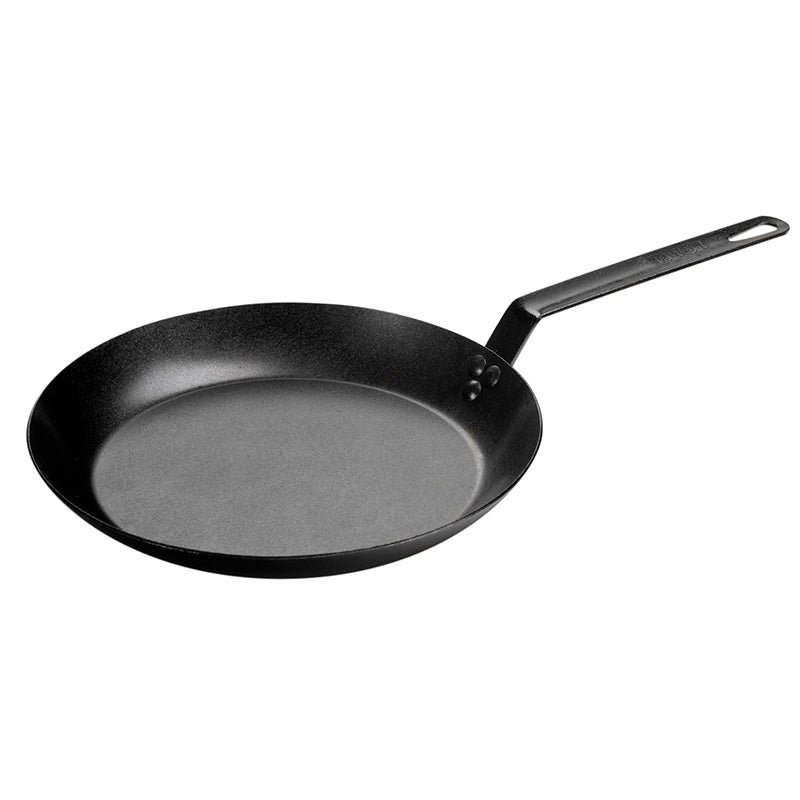
Lodge sells carbon steel skillets in three sizes, and the 12-inch model is the one for people who want a big pan without the mass. Lodge lists it at $49.95 with a 12-inch rim, a 9.87-inch cooking surface and a weight of 4.15 pounds, seasoned at the foundry with vegetable oil and rated for any stovetop including induction, plus oven, grill and campfire. The care line on Lodge's page is four words long: hand wash, dry, oil.
The obvious comparison is Lodge's own cast iron. The 10.25-inch Classic skillet is $24.90 and weighs 5.66 pounds; the 12-inch cast iron is $29.90 and 7.69 pounds. So the steel pan costs $20 more than the 12-inch iron and weighs a little more than half as much. Whether that trade is worth it turns on how you cook, and on whether you have already made peace with a pan that rusts if you leave it wet.
Our verdict
A sensible $49.95 pan for cooks who want a big seasoned-steel surface they can lift with one hand and who already accept the maintenance that comes with bare iron; it is twice the price of Lodge's 10.25-inch cast iron and gives up the mass that makes cast iron forgiving.
- A good fit for
- A cook who sears and stir-fries over a strong burner, moves the pan often, and finds a 7.7-pound cast iron skillet of the same diameter too much to handle.
- We would skip it if
- You cook mostly on a weak electric coil where stored heat matters more than response, or you are shopping for a first seasoned pan and want the lowest-cost way in.
Reasons to consider it
- 4.15 pounds for a 12-inch rim, against 7.69 pounds for Lodge's 12-inch cast iron
- Factory seasoning, induction compatibility, and campfire and grill use are all stated by Lodge
- Lodge's Made Right coverage applies to seasoned carbon steel, including cracks and warping
The compromises
- Lodge publishes no steel thickness or gauge, so heat retention cannot be judged from the specs
- The flat cooking surface is 9.87 inches, so the pan is narrower in use than the rim suggests
- Rust, sticky seasoning and flaking are explicitly outside warranty coverage; those are the failures thin steel is prone to
What we have not verified: The skillet was not cooked with here; warping tendency on high heat, how the handle behaves in the oven, and the wear rate of the factory seasoning were not assessed, and Lodge does not publish an oven temperature limit or the steel thickness.
The things in this guide
A closer look at the products, who they may suit, and what to check before buying.
Seasoned Carbon Steel Skillet · 12 in
A 12-inch rim on a 4.15-pound pan, factory seasoning, induction compatibility and Lodge's lifetime coverage for cracks and warping, at $49.95.
Before you buy: Lodge does not state the steel thickness or an oven limit, the flat surface is 9.87 inches, and rust and seasoning problems fall to you rather than the warranty.
Price checked September 11, 2026. Retailer prices can change.Twelve inches at the rim, just under ten on the floor
Lodge does not fill in the length, width and height fields for this pan; they read 0.0 inches on the page. The numbers live in three dimensional drawings instead. The rim is 12 inches wide, the flat cooking surface is 9.87 inches, the cooking surface is 1.5 inches deep, the handle is 8.93 inches long, and the whole pan runs 20.87 inches from the lip to the end of the handle. The handle sits 3.5 inches above the bottom, which matters for lids and for whether it clears a wall behind a narrow cooktop.
The weight is 4.15 pounds, and that is the whole argument for carbon steel over iron. Lodge's 12-inch cast iron skillet is 7.69 pounds at $29.90, and even the 10.25-inch cast iron is 5.66 pounds at $24.90. A 12-inch pan that a cook can tilt, shake and flip from is a different tool than one that needs two hands to drain. The smaller carbon steel sizes follow the same pattern: the 10-inch is 3.49 pounds at $44.95 and the 8-inch is 2.35 pounds at $39.95, so the step to 12 inches adds about two thirds of a pound and five dollars.
Seasoned at the foundry, rated for induction and campfires
The pan arrives with a seasoning Lodge describes as 100% natural vegetable oil, baked on at the factory; the beginner's guide names it as soy-based. Lodge's own copy says the seasoning is a starting point, that cooking with fat builds it, and that acidic dishes like tomato and lemon are better left until the surface has some history. None of that is specific to carbon steel, and Lodge treats the two materials as one family for care purposes.
Lodge rates the skillet for any stovetop including induction, plus oven, grill and campfire, and describes the design as thin and lightweight for quick, even heat. What Lodge does not publish is the thickness of the steel, an oven temperature limit, or how the handle is attached. Thin steel responds fast and stores little heat, which suits a strong gas or induction burner and punishes a weak coil. A cook on a low-output electric range should weigh the 5.66-pound cast iron instead, where the mass does the work the burner cannot.
Wash, dry, oil; rust is your problem, cracks are Lodge's
The care routine Lodge links from the skillet is the same one it gives for cast iron: let the pan cool, wash by hand in warm soapy water, simmer water in it for a few minutes to lift anything stuck, dry it, and wipe on a thin coat of oil. The warranty makes three of those steps mandatory. Washing seasoned steel in a dishwasher, soaking it, or putting it in a microwave voids the coverage outright.
Lodge's Made Right coverage is lifetime and applies to seasoned carbon steel by name. It covers cracking and warping in normal household cooking, shipping damage, and casting or grinding defects that affect performance. It does not cover rust, pitting, roughness, sticky seasoning, flaking or odors, and it excludes commercial use, drops and overheating. Coverage belongs to whoever bought the pan or received it as a gift, and a claim goes through a form with photographs or a return at Lodge's expense. Read together, the list says Lodge will stand behind the metal and leaves the surface to you, which is the honest position for a seasoned pan.
What $25 more buys over the 10.25-inch Classic
Lodge's 10.25-inch cast iron Classic is the pan most people already own, and at $24.90 it costs half what the 12-inch carbon steel does. Its flat bottom is 8 inches wide and it weighs 5.66 pounds. The carbon steel gives you a 9.87-inch floor, so nearly two more inches of flat surface for a similar footprint on the burner, and takes about a pound and a half off. Both are seasoned the same way, cleaned the same way and covered by the same Made Right terms.
The trade is in heat behavior. Cast iron's mass means a slow preheat and a surface that barely dips when cold food lands on it; thin steel preheats fast and dips more, then recovers fast. For a weeknight sear on a decent burner the steel is the more pleasant pan to handle. For cornbread, a deep-dish pizza or a pan that will sit on a campfire grate for an hour, the iron's inertia is the feature and the steel's lightness is beside the point. The $25 difference is small next to that choice.
Skip it if your first seasoned pan is still in the box
A carbon steel skillet asks for the same discipline as cast iron and forgives less. Thin steel rusts faster if it is left wet, and Lodge lists rust and flaking seasoning as outside coverage. If you are unsure whether you will keep up the wash, dry, oil routine, the cheaper cast iron is the safer place to learn, and if you already know you will not, an enameled or nonstick pan is the right answer at any price.
Pass too if your cooktop is the limiting factor. On a weak electric element the steel's fast response is wasted and its low mass shows as a temperature drop whenever food goes in; the 5.66-pound cast iron will hold a sear better there. Buy the carbon steel for a strong burner, for stir-frying, for tossing, or because a 7.7-pound pan has become a reason not to cook.
How we put this together
Built from the product pages and listings below, without test scores or results we have not measured. Specifications and prices change, so check the original page for the exact model, current price, delivery, and returns.
- Lodge: Carbon Steel Skillet product page (12 in variant) (opens in a new tab)
- Lodge: Made Right warranty (opens in a new tab)
- Lodge: Beginner's guide to cast iron (opens in a new tab)
- Lodge: Round cast iron Classic skillet product page (opens in a new tab)