Product image supplied by the brand
In this guide
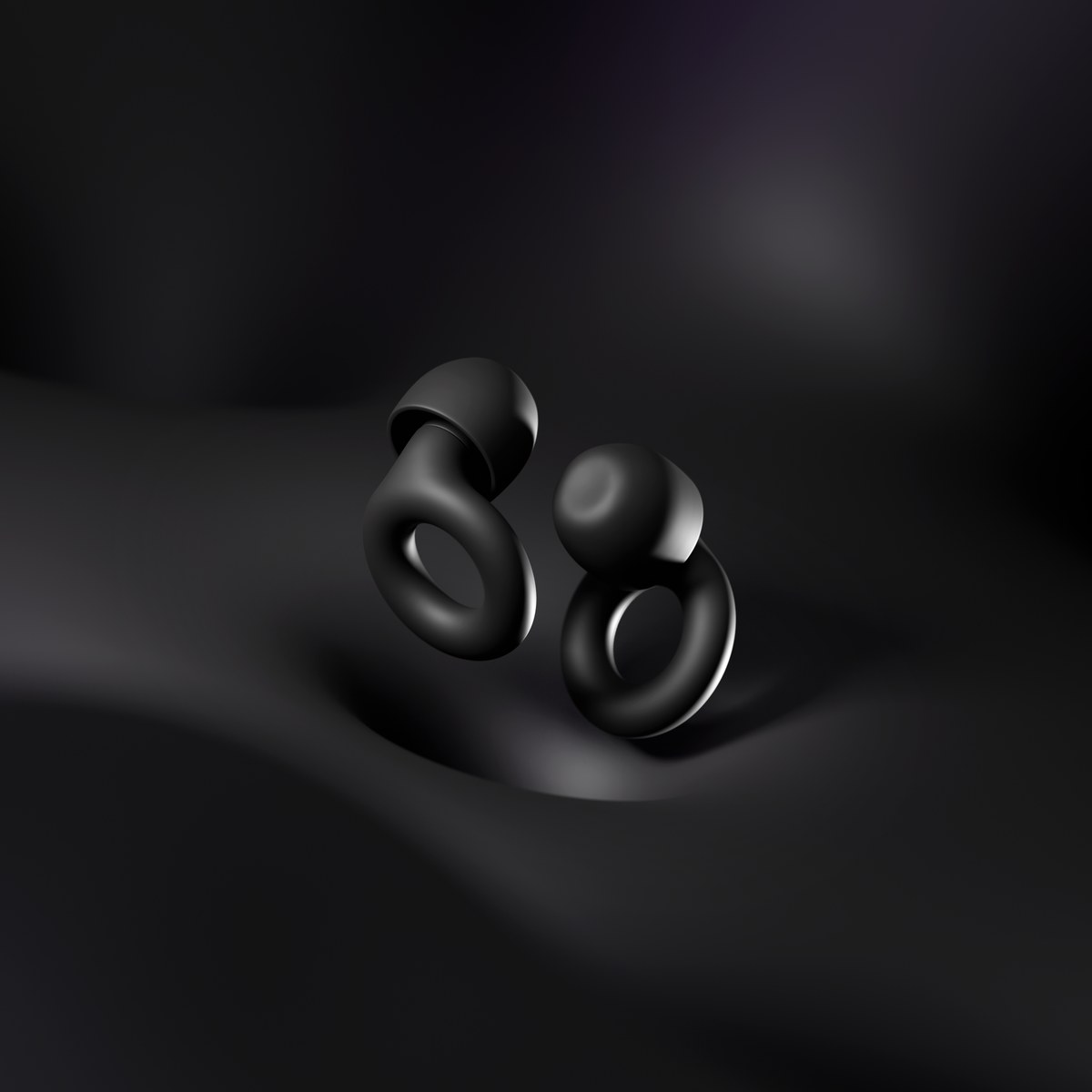
Loop sells five families of earplugs, and the Quiet 2 is the plain one: no filter, no switchable modes, just a soft silicone body shaped like a ring with a tip on the end. In the US it costs $24.95 in black, white, violet or mint, and inside are one pair, four sizes of silicone tips from XS to L, and a small case that clips to a keyring. Loop describes it as its plug for focus, travel and sleep.
The interesting wrinkle is what Loop says about sleep specifically. Its FAQ explains that the Quiet 2 is meant for daytime noise reduction and that the Dream, a separate model at $49.95, is the one built for overnight use, with a higher rating and a body designed for lying on a pillow. So the question for a sleeper is not whether the Quiet 2 works, but whether the seven-decibel step from a 14 dB to a 21 dB Noise Reduction Rating is worth $25 more.
Our verdict
A fairly priced, well-supported set of reusable plugs for dulling a room, not silencing it; at 14 dB NRR it takes the edge off a snorer or a street, and no more.
- A good fit for
- A light sleeper who is bothered by steady background noise, wants something washable instead of foam, and has small or unusual ears that never fit the one-size plugs.
- We would skip it if
- Your problem is a loud snorer or a bar under the window, or you sleep on your side and cannot tolerate a hard ring pressing into the ear.
Reasons to consider it
- Four included tip sizes, XS through L, cover ears that most foam plugs do not
- Reusable silicone with a case, so one $24.95 purchase replaces a drawer of disposables
- A 100-day trial that accepts used pairs, plus defect coverage lasting two years
The compromises
- 14 dB NRR is modest; a plain foam plug typically carries a higher lab number
- Loop's own FAQ steers sleepers to the Dream model at $49.95 with a 21 dB NRR
- The rated reduction is a lab figure with a perfect seal, and Loop says so
What we have not verified: The plugs were not worn here; comfort for side sleepers, how well the seal holds through a night, and how the silicone holds up to repeated washing were not assessed.
The things in this guide
A closer look at the products, who they may suit, and what to check before buying.
Quiet 2 Earplugs, Black
Four tip sizes, a washable silicone body, a keychain case and a 100-day trial that takes back used pairs, all for $24.95 and with defect coverage that runs two years from delivery.
Before you buy: The 14 dB NRR is a modest number, the ring body may press on a side sleeper's ear, and Loop itself recommends the Dream for people whose main goal is sleep.
Price checked September 11, 2026. Retailer prices can change.Fourteen decibels is a lab number, and a modest one
Loop's American storefront quotes a Noise Reduction Rating of 14 dB for the Quiet 2, while the European store quotes 24 dB SNR for the identical product. Both are legitimate; they come from different test standards, and the American NRR method is the more conservative of the two. What matters is that 14 dB is toward the bottom of the range for a plug whose whole job is blocking sound. Loop is candid about this on the product listing: the rating is measured in a lab with a perfect fit, and what you get in a bedroom depends on choosing the right tip size and inserting the plug properly.
Loop frames the number as a feature. Its FAQ says the Quiet 2 reduces enough to take the edge off without shutting the world out, which is a reasonable description of 14 dB. A neighbor's television becomes a murmur; a partner who breathes loudly becomes tolerable. A partner who snores hard, traffic on a busy road, or a dog two doors down are different problems, and Loop's own comparison says the Dream's extra decibels are there to cut through exactly those things.
Four tip sizes and a body you can wash
What justifies a Loop over a bag of foam is fit. The body is soft-touch silicone, the tips come in XS, S, M and L, and Loop makes a point of the smallest size for people whose ears reject standard plugs. Everything is reusable: Loop says the plugs can be cleaned and used again and again, and it sells replacement tip packs separately for the day the originals go missing. The included case is small enough for a keyring, which is where most people will lose it first.
The shape is the tradeoff. The ring sits in the bowl of the ear with the tip in the canal, and while Loop calls the design ultra-comfortable for day and night, a firm ring is still a firm ring when a pillow presses on it. That is the design difference Loop cites for the Dream, which it describes as built for side-sleeping. Nothing on the Quiet 2 page claims side-sleeper comfort, and the omission looks deliberate.
A 100-day trial that takes back used plugs
Loop's own wording is a 100-day risk-free trial, counted from the day the parcel arrives, and its returns hub says a used pair is fine. That is generous for something that goes in an ear, and it removes the usual worry about ordering earplugs sight unseen. The conditions are that everything comes back, tips and case included, and that the refund, credit or exchange is chosen in the portal. Discounted pairs from the Loop Archive sale are excluded from refunds.
Beyond the trial, Loop covers manufacturing defects for a 24-month stretch that begins on the original delivery date, at its choice by repair, replacement with the same or an equivalent model, or a refund of the price paid. Normal wear, discoloration and cosmetic damage are excluded, and Loop says the warranty covers the product's lifespan, not the owner's. Service may be limited to the country where the plugs were sold, and an order number is the ticket in.
Where the Dream at $49.95 changes the math
Loop lists the Dream at $49.95 with a 21 dB NRR against the Quiet 2's 14 dB at $24.95. Seven decibels is not a rounding error; on a logarithmic scale it is roughly what separates hearing a snore from hearing a hum. Loop's FAQ puts it plainly: if the primary goal is better sleep, the Dream may be the better choice, and the Quiet 2 is the versatile daytime option. A maker steering buyers away from its cheaper product is unusual enough to believe.
The case for the Quiet 2, at $25 less, is a quiet-ish bedroom and a light sleeper. If the noise you fight is a fan, a ticking radiator or a partner turning over, 14 dB is enough and the plug doubles as a commute and open-office plug during the day. If the noise is loud and rhythmic, buying the Quiet 2 first is a $24.95 experiment with a long trial period behind it, but the odds favor going straight to the Dream.
Skip it if the noise is loud or you sleep on your side
Pass on the Quiet 2 if the sound keeping you awake is a serious snorer, a highway or a bar. A 14 dB rating will soften those, not remove them, and Loop's own guidance sends that buyer to the Dream. The same goes for side sleepers who have struggled with hard plugs before; the ring body is the part of this design that a pillow will find.
Buy it if your ears never fit foam, you want a plug that survives washing, and your bedroom noise is steady background rather than sharp peaks. Order it knowing the trial lasts a hundred days and accepts used pairs, try every tip size, and if it is not enough, the $25 step up is the model Loop wanted to sell you anyway.
How we put this together
Built from the product pages and listings below, without test scores or results we have not measured. Specifications and prices change, so check the original page for the exact model, current price, delivery, and returns.
- Loop US: Quiet 2 product page (opens in a new tab)
- Loop: Returns and Exchanges (opens in a new tab)
- Loop: Warranty Policy (opens in a new tab)
- Loop EU: Quiet 2 product page (opens in a new tab)