Product image supplied by the brand
In this guide
A range, an oven and a dishwasher are the three large appliances most kitchens run, and each does jobs a countertop machine could take over. Whether it should is a question of scale, and the makers of small appliances publish the numbers that answer it: capacity in quarts, slot width in inches, bowl volume, wattage.
This guide is not a review of large appliances. It reads three countertop products in our library against the big machine each one competes with, using the brand's own figures to find the line where the small one stops being a replacement and becomes a second appliance taking up counter space.
The things in this guide
A closer look at the products, who they may suit, and what to check before buying.
Duo 7-in-1 Multi-Use Pressure Cooker · 6 Qt
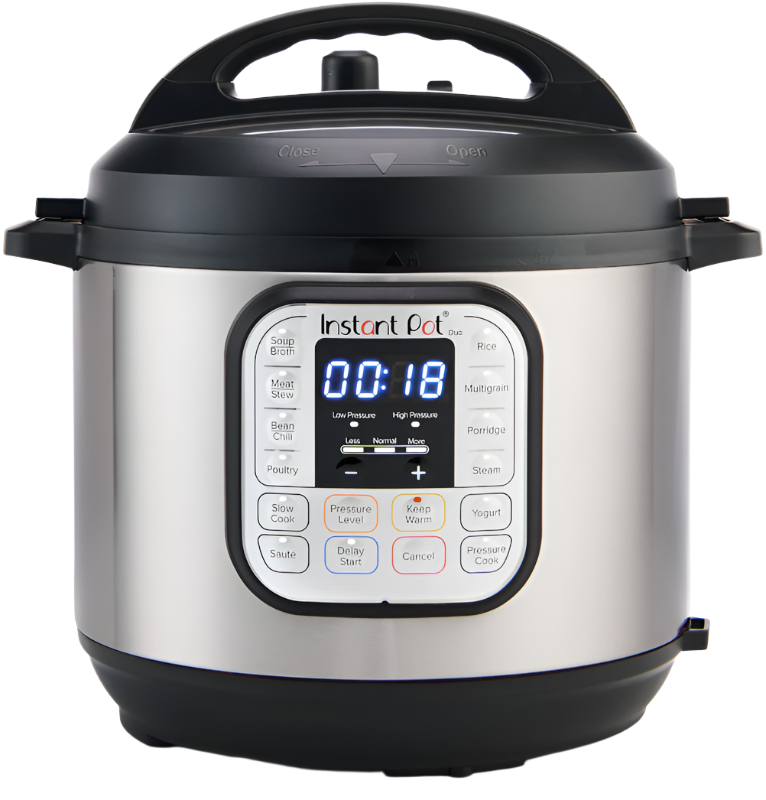
Instant Pot's Duo 6 quart is $109.99, draws 1000 W at 120 V, and its stainless inner pot holds 6.0 quarts, which covers weeknight cooking for a household of two to four without a burner being lit.
Before you buy: The sealing ring is a $9.99 part that Instant Pot says to replace every 12 to 18 months, and the pot cannot sear at the surface temperatures a burner reaches. It replaces simmering and braising, not frying.
Price checked October 5, 2026. Retailer prices can change.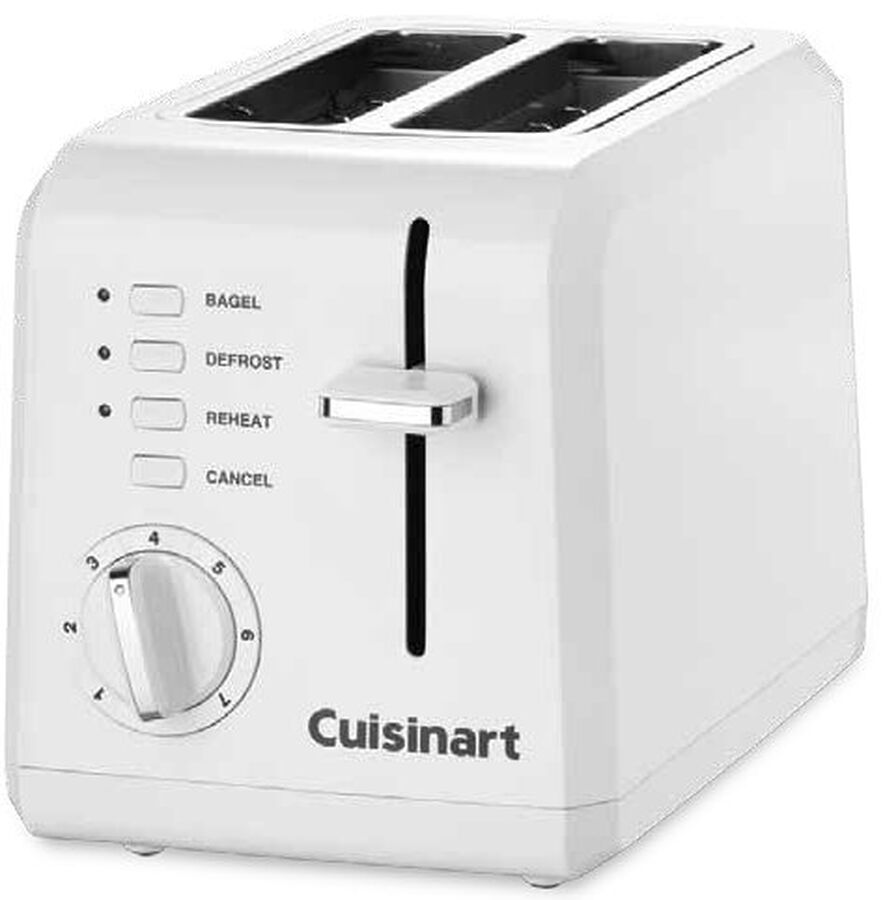
2-Slice Compact Toaster · CPT-122
Cuisinart's CPT-122 is a $39.95 two-slice toaster with 1.5 inch slots, a seven-setting dial and a three-year limited warranty, which handles the daily job an oven does badly and slowly.
Before you buy: Two slots and a slot width of 1.5 inches set the ceiling: thick-cut bread, a household of four, or anything that is not sliced sends you back to the oven.
Price checked October 4, 2026. Retailer prices can change.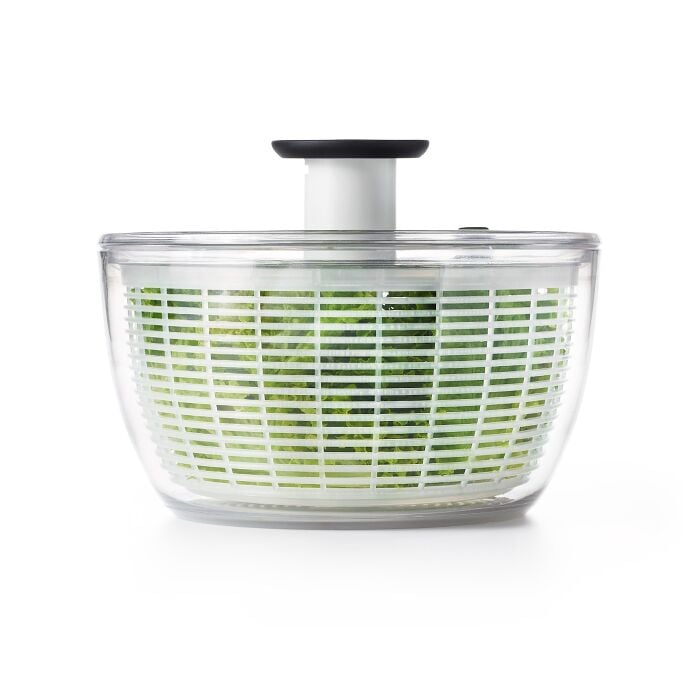
Good Grips Salad Spinner · White
OXO's Good Grips salad spinner is $32.99 with a 6.22 quart bowl and a 4.95 quart basket, and the maker marks it dishwasher safe, so it adds a prep step without adding a hand-wash job.
Before you buy: A spinner does not replace a dishwasher; it is an example of the opposite rule, a countertop tool that only earns its footprint because the big machine cleans it. At 10.5 inches across it needs a cupboard.
Price checked September 10, 2026. Retailer prices can change.Capacity and wattage are where the small machine stops
Every countertop appliance publishes the figure that decides whether it replaces a large one. Instant Pot lists a 6.0 quart pot at 1000 W. Cuisinart lists two slots 1.5 inches wide. OXO lists a 6.22 quart bowl that is dishwasher safe. Each number is a ceiling, and the question for a household is whether its ordinary evening sits under that ceiling or over it.
A pair of adults cooking one pot a night sits comfortably under six quarts; a family batch-cooking for the week does not. Two slices of standard bread fit a 1.5 inch slot; a bakery loaf does not. Those are not judgments about quality, they are dimensions, and the makers publish them precisely so that a buyer can do this arithmetic before the box arrives. The rest of this guide walks the three comparisons one at a time.
The pressure cooker replaces the burner for braising, not for frying
Instant Pot's Duo 6 quart costs $109.99, runs at 1000 W from a 120 V outlet, and cooks in a 6.0 quart stainless inner pot with a tri-ply bottom. For soups, stews, beans, rice and anything that would otherwise simmer on a burner for an hour, it takes the job off the range entirely and does it with the lid on, which is the strongest case any countertop appliance makes against a large one.
The line is drawn by what a pressure cooker cannot do. A burner reaches surface temperatures that sear; a sealed pot does not, and the sauté mode is a convenience, not a substitute. There is also a consumable: the sealing ring is a $9.99 part with a stated 12 to 18 month replacement interval, which a range never asks for. A household that braises more than it fries can let the pot take most weeknights; one that fries can use it beside the range, not instead of it.
A toaster wins one job outright and is the wrong tool for the next
Cuisinart's CPT-122 lists at $39.95 with two 1.5 inch slots, seven browning settings, a footprint of 6.5 by 11 by 7.2 inches and a three-year limited warranty. Toasting two slices in an oven means heating a cavity many times the size of the bread, so for the single daily job of toast, a two-slot machine is faster, cheaper to run and better at the task than the large appliance it stands in for.
The same numbers end the argument for anything else. Two slots serve a household of two per round; four people wait. A 1.5 inch slot takes standard sliced bread and refuses a thick-cut loaf or anything with a topping. The toaster replaces the oven for toast and for nothing adjacent to toast, and a household that wants to warm a pastry or crisp a slice of pizza is back at the oven door. Small appliances win narrow jobs; this one wins exactly one.
Some countertop tools only earn their space because the big machine cleans them
OXO's Good Grips salad spinner is $32.99, with a 6.22 quart bowl, a 4.95 quart basket, a footprint of 10.5 inches square and 6 inches tall, and a manufacturer note that it is dishwasher safe. It does not replace any large appliance. It is here as the reverse case: a countertop tool that adds a prep step and would be a poor purchase if that step also added a hand-wash, which the dishwasher rating prevents.
The rule generalizes. Any small appliance that competes with a large one also has to be cleaned, and the cleaning is where many of them lose. A pot with a dishwasher-safe insert, a toaster with a slide-out tray, a spinner that goes straight into the machine: each survives because its upkeep is folded into a routine that already exists. A countertop machine that demands its own washing regime is a second appliance in every sense, and should be judged as one.
When the large appliance was the right answer all along
Skip the countertop route when the household's ordinary evening sits above the published ceilings: more than six quarts at a time, more than two slices at a time, more than the counter can hold. In that case the small machine is not a replacement, it is a second appliance sharing a kitchen with the first, and the counter space it takes is a cost the large appliance never charged.
Give it a miss as well when the large appliance is broken. A countertop pot does not fix a range that needs replacing, and buying three small machines to work around a dead oven costs more and cleans worse than the repair. The comparison here is between a working large appliance and a small one that could take some of its jobs; it leaves out which to buy when one of them has failed.
How we put this together
Built from the product pages and listings below, without test scores or results we have not measured. Specifications and prices change, so check the original page for the exact model, current price, delivery, and returns.
- Instant Pot: Duo 6QT Multi-Use Pressure Cooker (opens in a new tab)
- Cuisinart: 2-Slice Compact Plastic Toaster CPT-122 (opens in a new tab)
- OXO: Good Grips Salad Spinner, white (opens in a new tab)