Product image supplied by the brand
In this guide
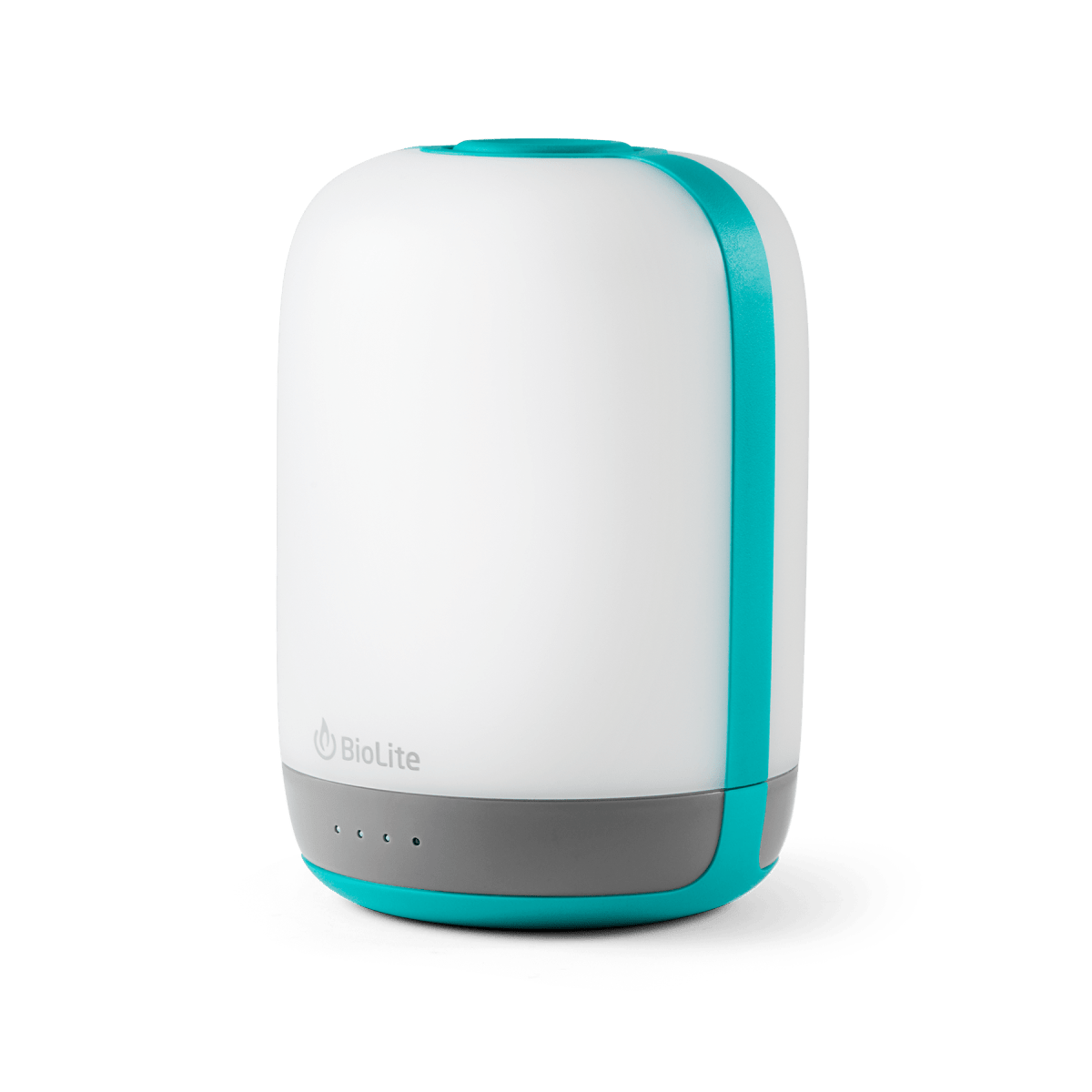
BioLite sells the AlpenGlow 500 direct at $79.95, in stock on 2026-09-16, in a single variant — SKU LNB0100 — with a white diffuser globe, a teal carrying strap, and no colorway name given. The hardware list is a 500-lumen lantern with nine lighting modes, a 6400 mAh (23.6 Wh) lithium-ion battery, one USB-A output rated 5V/2.4A, and a Micro-USB input that refills the pack in about three hours from a 5V/2A source. The cylinder measures 5.4 in tall by 3.8 in across, weighs 13.4 oz (380 g), and ships with an instruction manual and a Micro-USB cable — no charging brick.
Two numbers on BioLite's table decide the purchase. The first is 5 — the hours BioLite rates the full 500-lumen high mode at, one long evening per charge. The second is 200 — the hours up to which the 5-lumen low runs, more than a week of dim camp light between recharges. A lantern that lives on low is a different purchase from one that lives on high, and the difference decides whether the 380 grams earn a place in the pack or stay in the bin with the car-camping gear.
Our verdict
Buy the $79.95 AlpenGlow 500 when a campsite needs ambient light for days on one charge and a 12 W phone charger; skip it for solo trail weight, or for weather worse than the IPX4 splash rating BioLite gives it.
- A good fit for
- A two-person camp that runs evenings on lantern light instead of head beams, and wants one battery doubling as a phone top-up at a site with no wall outlet.
- We would skip it if
- Skip it if you pack solo and count grams — the 500 is 380 g — or if your nights mean sustained downpours, which the IPX4 splash rating does not describe.
Reasons to consider it
- The runtime spread is enormous and documented: BioLite rates the 5-lumen low at up to 200 hours and holds a further 1-hour reserve in Low Power Mode, so a long weekend of ambient light fits on one charge
- The battery does double duty out loud: 6400 mAh (23.6 Wh) behind a 5V/2.4A USB-A port makes the lantern the site's phone charger, roughly four times the capacity of Black Diamond's 1500 mAh headlamp pack
- The details that keep a lantern usable are all printed in BioLite's table: Lock Mode against a self-drained pack, a four-LED charge meter, warm 2700 K and cool 5700 K white settings, and an included charging cable
The compromises
- Five hours of 500-lumen brightness is the whole bright-mode budget, and BioLite publishes no runtime for the color, side-light, or flicker modes
- IPX4 is a splash rating with conditions attached in BioLite's own FAQ: port doors closed, lantern indoors in freezing temps, dew and rain as the promised weather
- Micro-USB input, no charging brick in the box, and a warranty clause that ends battery coverage unless the cell is charged within seven days of purchase and every six months after
What we have not verified: Every runtime, lumen, and durability figure here is BioLite's published rating, including the CRI 90 ChromaReal claim and the shake-to-activate color modes; burn time is quoted only at the two extremes of 500 and 5 lumens, with no published hours for single color, multicolor, side light, candle flicker, or the cycling modes. Lock Mode is documented as a single word — Yes — with no published instructions for engaging it, and BioLite leaves open whether output holds steady as the battery drains and whether the USB-A port powers a device while the lantern is switched off.
The things in this guide
A closer look at the products, who they may suit, and what to check before buying.
AlpenGlow 500
$79.95 buys a 500-lumen lantern BioLite rates at 5 hours on high and up to 200 on low, with a 6400 mAh battery that tops up a phone at 5V/2.4A and refills over Micro-USB in about three hours. Lock Mode, a four-LED charge meter, and warm and cool white settings are all on the documented list, and the IPX4 body is rated for dew and rain with the port doors closed.
Before you buy: The 5-hour high rating means one bright evening per charge, and no middle mode has a published runtime; IPX4 covers splash, not submersion or downpours; charging runs over Micro-USB with no charging brick in the box; and the one-year warranty keeps battery coverage only if the cell is recharged at least every six months.
Price checked September 16, 2026. Retailer prices can change.One light aims, the other fills the camp
A headlamp's spec sheet describes a cone, and Black Diamond's Spot 400 — a typical $59.95 headlamp — publishes the numbers to match: beam distances of 100, 60, and 12 meters across its three brightness steps, figures that mean something only when the lamp is pointed where you are looking. BioLite publishes no beam distance for the AlpenGlow 500. The page quotes lumens and hours, the metrics of light that leaves in every direction, because a lantern that throws a 100-meter spot would be failing at its job. The two tools answer different questions: one follows the head down a trail, the other stands on a table or hangs from a ridge line and makes a whole site readable.
Where they overlap is ambient time, and that is where pointing a beam at everything wears thin. Cooking for two, cards at the table, reading in a vestibule — all of it wants light that stays put while hands move, and running a headlamp for those hours burns its small cells fast: Spot 400's high mode is rated at 2.5 hours on the included AAA cells. BioLite's own range concedes the point in hardware. The AlpenGlow 250 at 210 g and the AlpenGlow 500 at 380 g are both built to sit still and light everything at once, and neither BioLite page claims otherwise.
Five hours or two hundred: the two runtimes and the missing middle
BioLite quotes burn time at exactly two points: 5 hours at 500 lumens, up to 200 hours at 5 lumens, plus 1 hour of reserve power. Nothing is published in between — single color, multicolor, side light, candle flicker, and the cycling modes have no rated hours at all. The 200-hour figure belongs to the dimmest white setting, not to the colorful half of the product, so a camp that runs candle flicker all evening is running on numbers BioLite never printed. Treat the two published runtimes as the whole documented story.
Each rated extreme maps to a real trip. Five hours of full brightness covers one long camp evening — the arrive-late setup, the cook, the cleanup — and then the battery needs a wall or a car before morning. The 200-hour low is the multi-day number: at 5 lumens the lantern is a tent-and-table presence light, and Low Power Mode adds one more hour after the four-LED meter flashes its warning. A long weekend of ambient light fits on one charge. A weekend of bright light does not, and the page offers no runtime for anything a camper would actually call medium.
The 6400 mAh question: is the charger half worth the grams
The battery is the largest thing about this lantern that is not light: 6400 mAh (23.6 Wh) wired to one USB-A port at 5V/2.4A — a 12 W ceiling that covers phones, headlamps, and cameras over the right cable. That is roughly four times the charge of Black Diamond's 1500 mAh BD 1500 headlamp pack, which separates topping up a phone from merely reviving a light. What the port will not do is fast-charge: no USB-C, no power delivery, no laptop duty, and BioLite does not state whether the port powers a device while the lantern itself is switched off.
Refilling the lantern runs through a Micro-USB port — a connector the rest of a modern kit has abandoned — at about 3 hours from a 5V/2A source, and the box carries a cable but no charging brick. The weight ledger follows the battery: 380 g is more than four times the Spot 400's 86 g on included cells. If the phone top-up will genuinely happen, the lantern replaces a separate power bank and the grams cancel out; if it will not, a lighter lantern and a smaller bank split the job for less weight on the back.
IPX4 has fine print, and so does the one-year warranty
BioLite's FAQ is more specific than the spec line, and worth quoting in full: 'Keeping it outside overnight at your campsite is totally fine. AlpenGlow is IPX4 rated, which means it can handle dew and rain. For best protection against the elements, keep the ports securely closed with the rubber doors. We recommend bringing it inside during freezing temps for best care of the internal battery.' The documented promise, then, is splash and drizzle with the cable doors shut — not submersion, not a storm, and not a freeze. Anyone whose trips involve sustained rain should price a lantern with a higher ingress rating instead.
The warranty is one year, per the page's callout and BioLite's published policy, and two clauses deserve a read before checkout. Coverage for any product containing a battery holds only if the cell is fully charged within seven days of purchase and at least once every six months after — maintenance homework for gear that sits in a closet between trips. And claims require a receipt from an authorized retailer: the policy excludes products bought from third-party merchants on marketplaces such as Amazon and eBay.
The color half, straight from BioLite's own description
Nine modes are listed: cool white, warm white, single color, multicolor, single side light, candle flicker, 1-color cycle, multicolor party, and fireworks. The color modes arrive by BioLite's recipe rather than a published button map: 'Give it a shake! For candle mode, shake it on the warm white setting. For Party mode, shake it on the static multicolor setting,' and holding the top button flashes green, yellow, or red to set a cycle speed. Every one of those behaviors is BioLite describing its own product — the shake gestures are the maker's description, not a documented control map, so buy the lantern for the white light and treat the color half as a bonus.
ChromaReal is the brand's name for the LED: a claimed broad-spectrum emitter at CRI 90, pitched as true-tone light that renders colors accurately in low light. The page's FAQ pins the white settings at 5700 K cool and 2700 K warm — a task light and a campfire-adjacent ambience in one cylinder. When the battery runs low, the color half ends first: Low Power Mode flashes four times and confines the lantern to low warm or cool white for its final hour, which is the mode BioLite's own numbers trust.
Where $79.95 fits, and the three walks-away
The buy case is a group campsite with multi-day ambient needs: a lantern over the table, light that lasts the weekend on low, and a phone that leaves the trip charged because the lantern fed it. Within BioLite's own range the 500 is the battery pick — $20 over the AlpenGlow 250 at $59.95 buys double the capacity (6400 against 3200 mAh) for 170 g more lantern, while the $49.95 Mini, rated 150 lumens with 40 hours on low, covers one tent, nothing more. The person who will actually use the USB port is the person the 380 g works for.
Three cases end the purchase. Solo weight: a Spot 400 at 86 g plus the 210 g AlpenGlow 250 together carry lighter than the 500's 380 g, and each device then serves one job instead of sharing a battery. Weather: a trip whose forecast is sustained rain is trusting a splash rating whose own FAQ attaches conditions. Charging kit: a traveler carrying one cable type will find Micro-USB is a second cable in the bag, and the warranty's six-month charge-in clause is a real obligation for a lantern used twice a year — anyone who will not do that homework should buy something whose coverage does not depend on it.
How we put this together
Built from the product pages and listings below, without test scores or results we have not measured. Specifications and prices change, so check the original page for the exact model, current price, delivery, and returns.
- BioLite: AlpenGlow 500 product page (US) (opens in a new tab)
- BioLite: Full Warranty Policy (opens in a new tab)
- BioLite: AlpenGlow 250 product page (US) (opens in a new tab)
- BioLite: AlpenGlow Mini product page (US) (opens in a new tab)
- Black Diamond: Spot 400 Headlamp (US store listing) (opens in a new tab)
- Black Diamond: BD 1500 Battery & Charger (US store listing) (opens in a new tab)