Product image supplied by the brand
In this guide
The Trail is the plain adjustable pole in Black Diamond's lineup: three aluminum sections, two lever locks, a foam grip and a strap. It sits between the $99.95 Trail Back and the $129.95 Trail Cork on Black Diamond's site, and it costs $119.95 in three colors. The maker lists a usable length of 100 to 140 cm, a collapsed length of 64.6 cm and a weight of 480 g.
What separates it from the cheaper aluminum poles sold everywhere is the hardware. FlickLock is the brand's external lever clamp, the tips are carbide over steel with a flexible nylon tip body, and both trekking and snow baskets come in the package. The question for most buyers is not whether the Trail is good enough; it is whether the $100 jump to a carbon folding pole buys anything they will feel.
Our verdict
A $119.95 pair of adjustable aluminum poles with the lock system, grip and tip hardware of Black Diamond's pricier models; the 480 g listed weight is the only spec a carbon buyer will miss.
- A good fit for
- A hiker or backpacker who wants lever locks, a 100–140 cm range and a pole that can be bent without snapping, and who does not count grams.
- We would skip it if
- You run with poles, need a pack-length collapse under 60 cm, or want cork grips for sweaty hands.
Reasons to consider it
- Two FlickLock levers per pole give a 100–140 cm usable range with no twist-lock guessing
- 7075 aluminum shafts, carbide tips, and both trekking and snow baskets included at $119.95
- EVA foam grip with an extension below it for choking up on side hills
The compromises
- Listed weight of 480 g is the spec the brand's carbon poles, from $219.95, exist to cut
- Collapsed length of 64.6 cm is long for a small pack; Z-style poles fold much shorter
- Foam grips rather than cork, which the Trail Cork model offers for $10 more
What we have not verified: The poles were not walked with for this piece. Whether the listed 480 g is per pair or per pole is not stated on the maker's site, and lock durability, tip wear and strap comfort were not assessed.
The things in this guide
A closer look at the products, who they may suit, and what to check before buying.
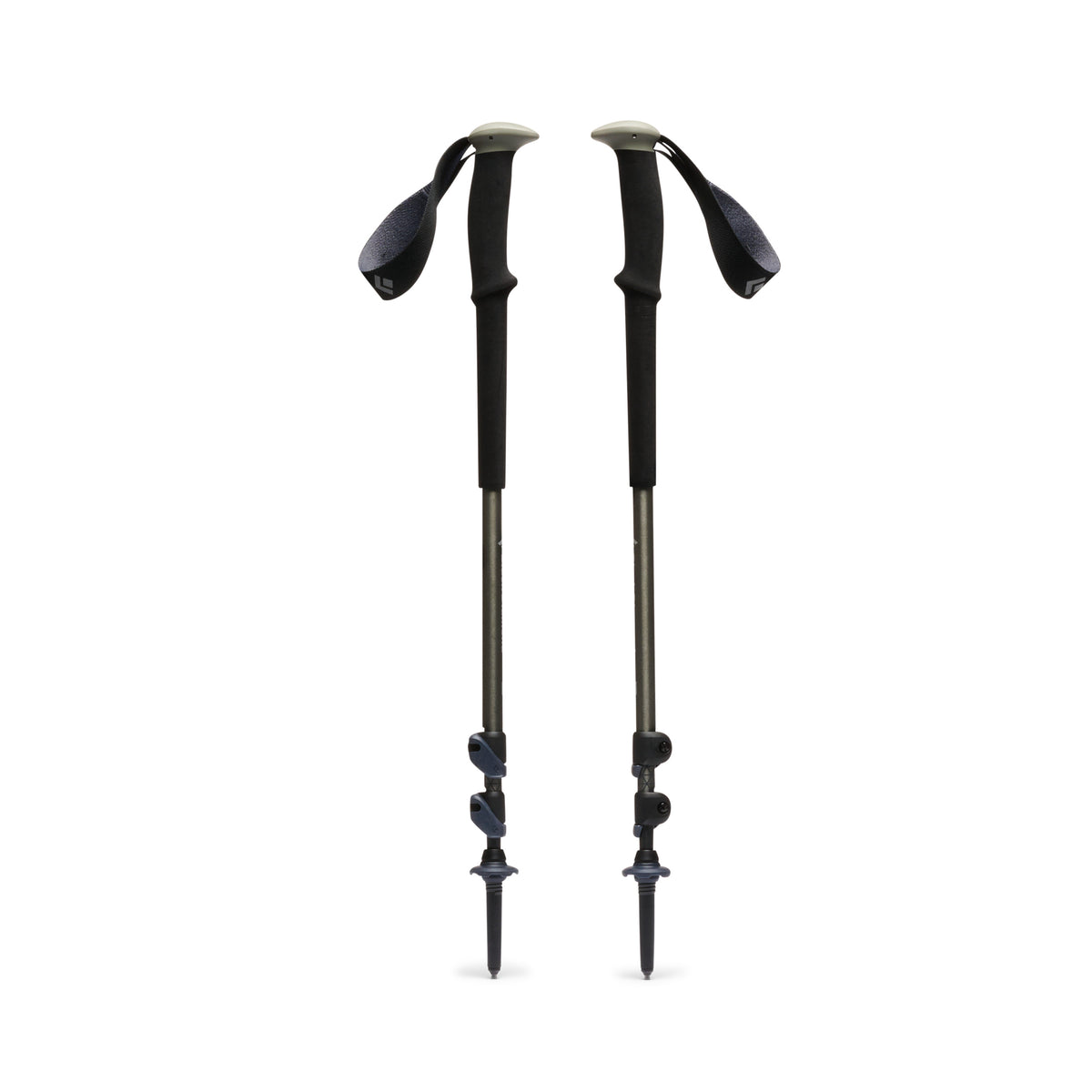
Trail Trekking Poles, Pine Smoke
A 100–140 cm adjustable range, two lever locks per pole, an EVA grip with an extension, and snow baskets already in the box, at $119.95.
Before you buy: At 480 g listed and 64.6 cm collapsed it is neither light nor compact, and foam grips hold more moisture than cork.
Price checked September 11, 2026. Retailer prices can change.Three sections of 7075 aluminum and two lever locks
The shafts are 7075 aluminum, the alloy Black Diamond uses across its aluminum poles, and the brand says 30% of it is pre-consumer recycled material validated by UL, which works out to a minimum of 14% recycled content by finished weight. Aluminum is the practical choice for a pole that will be wedged between rocks and stepped on in a tent vestibule: it bends and can often be bent back, where carbon fails in one event. The cost is mass: the listed 480 g is the number the brand's $219.95-and-up carbon poles are sold against.
Adjustment is by FlickLock, an external lever clamp at each of the two joints. The usable range is 100 to 140 cm, which the sizing chart on the page maps to hikers up to 6 foot 4 and taller; the brand's rule is that the grip top should sit at hip level with the elbow at 90 degrees, and that walkers on a size cusp should size up. Collapsed, each pole is 64.6 cm, so it will stand out of a side pocket on a daypack and needs the pack's compression straps to stay put.
Foam grip, lined strap, and a tip built to flex
The grip is 100% EVA foam with a soft-touch top of polycarbonate and TPR, and it continues down the shaft as a grip extension so you can choke up on a traverse without shortening the pole. The strap is the brand's lined Variwidth type in nylon and polyester, which is the same strap used on the cork model above it. Foam is lighter than cork and cheaper; it also absorbs sweat, which is why the cork version exists.
Below the shaft is a nylon flex tip that carries a carbide-over-steel point. Black Diamond calls it a 4 season flex tip; the nylon body is meant to give before the lower shaft does when a tip catches between rocks. Two basket sizes are supplied: the small trekking basket for dirt and the wide snow basket for spring and fall conditions. Baskets, tips and tip protectors are all sold as spares in the same store, so a worn point does not retire the pole.
Two years for defects, sixty days for regret
Trekking and ski poles carry two years of cover from the purchase or delivery date, and the banner on the pole page repeats the same term. The policy covers material and manufacturing defects only; bent shafts from a fall, normal wear and tear, and items bought used or from unauthorized sellers are outside it. Black Diamond states that it will try to repair first and replace only when repair is impossible or uneconomic, and that a replacement does not restart the clock. Claims go through an online form with a receipt and often photographs, and if the item must be shipped in, the outbound postage is on you.
Returns are separate: within 60 days of buying, unused items with hang tags and packaging qualify for a refund less the original shipping charge. The return label the brand issues is deducted from the refund, and refunds post 7 to 10 business days after the warehouse scans the package. The store shows the poles shipping free in the lower 48, so the practical cost of a wrong-size return is the label fee.
Trail Back, Trail, Trail Cork: what $20 buys twice
The Trail Back at $99.95 uses the same 7075 recycled aluminum and FlickLock levers, but the grip is TPR instead of foam, the strap is plain adjustable webbing without a lining, and the listed weight is 560 g. Its collapsed length of 61.5 cm is 3 cm shorter, which is the one spec where the cheaper pole wins. For a first pair used a few weekends a year the difference is small; the foam grip and lined strap on the Trail are the parts your hands touch for every step, and $20 for both is reasonable.
The Trail Cork at $129.95 keeps everything on the Trail and swaps the foam grip for natural cork with a foam extension, at 494 g and a collapsed 64.8 cm. Cork stays drier in the hand and molds over time, and the 14 g penalty is nothing. If you hike in heat or have sweaty palms, that model is the better buy. If you mostly hike in cool weather or wear gloves, the foam Trail is the sensible stop on the ladder.
Skip it if weight or pack length is the reason you are shopping
The Trail is not the pole for a fastpacker, a trail runner or a thru-hiker counting ounces. At a listed 480 g it is not a light pole, and at 64.6 cm collapsed it does not fit inside a running vest or a small pack the way a folding Z pole does. Those buyers should pay for the Distance or Pursuit series and accept a shorter adjustment range or a fixed length in return.
Look past it if you already know you prefer cork; the upgrade is $10 and the grip is the part you will notice most. And if you rarely hike on snow or steep loose ground, the $99.95 Trail Back does the same structural job for less, with a slightly shorter collapsed length. The Trail is the right answer for the middle of the range: one adjustable pair for spring mud, summer scree and shoulder-season snow, bought once.
How we put this together
Built from the product pages and listings below, without test scores or results we have not measured. Specifications and prices change, so check the original page for the exact model, current price, delivery, and returns.
- Black Diamond: Trail Trekking Poles product page (opens in a new tab)
- Black Diamond: Warranty and repairs (opens in a new tab)
- Black Diamond: Returns (opens in a new tab)
- Black Diamond: Trail Cork Trekking Poles product page (opens in a new tab)
- Black Diamond: Trail Back Trekking Poles product page (opens in a new tab)