Product image supplied by the brand
In this guide
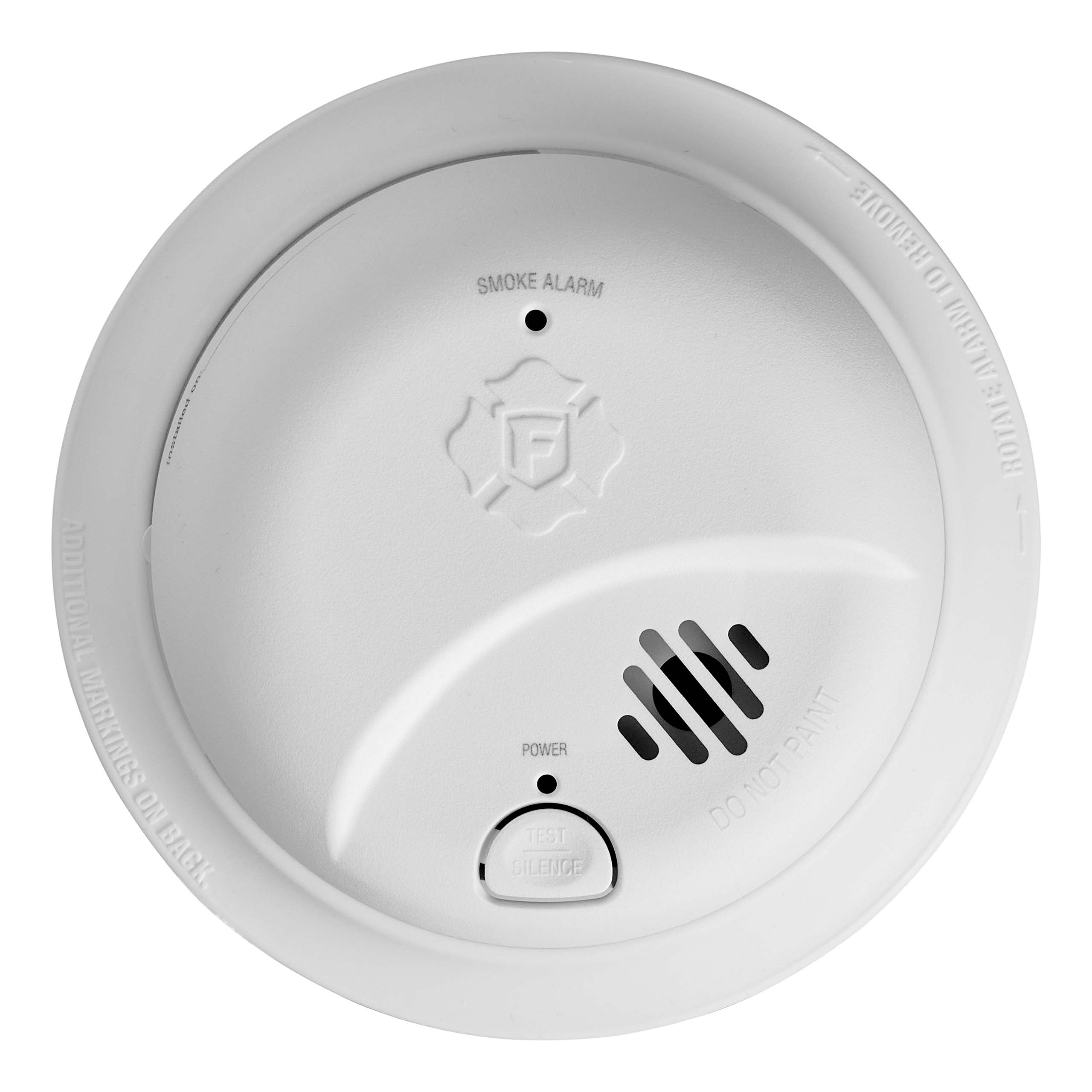
First Alert lists the SMI110 as the 10-Year Battery Smoke Alarm at $29.99 on firstalert.com under SKU 1046860, with a note when we checked that the item was backordered and would ship when back in stock. The listing calls it an ionization alarm powered by a 10-year lithium metal battery that is not replaceable, with a horn rated at 85 dB at 10 feet and a 10-year limited warranty.
Most of what a buyer needs to know sits in the user's manual linked from the listing, which states that all First Alert smoke alarms conform to UL217, describes what ionization and photoelectric sensors are each designed to detect, and points to NFPA 72 and NFPA 101 for placement. Where an alarm goes in a home is decided by local code and the NFPA, and a research review like this one does not substitute for a professional inspection.
Our verdict
The SMI110 is a reasonable pick when you want a battery-only alarm you can mount and then leave alone for a decade, provided you accept that it uses an ionization sensor only and that First Alert's own manual recommends using both sensing technologies for maximum protection.
- A good fit for
- Households replacing an older First Alert unit (the listing names model 0827 as the one it replaces) who want to stop changing batteries and are covered by local code that permits a battery-only, non-interconnected alarm in that location.
- We would skip it if
- Your local code or inspector requires interconnected or hardwired alarms, you specifically want photoelectric or dual-sensor detection, or you need the unit in hand this week: the firstalert.com listing was marked backordered when we checked.
Reasons to consider it
- Sealed lithium battery rated for ten years, with First Alert stating there are no battery replacements and no low-battery chirps for the life of the alarm
- Distinct signals for smoke, malfunction, and end of life, all spelled out in a table in the manual, so a chirp can be matched to a cause
- 10-year limited warranty covering defects in material and workmanship for the original purchaser, matching the rated battery life
The compromises
- Ionization only: per the manual, this sensor type is 'generally more sensitive' to the small particles of flaming fires, while photoelectric is the type it describes as better suited to smoldering fires
- No interconnect, no hardwire option, and no voice alert; First Alert sells those features on other models in the same collection
- The battery cannot be replaced, so the end-of-life signal means replacing the whole unit, and the manual says its silence timer stops resetting 14 days past the first end-of-life chirp
What we have not verified: The listing carries a 'Works with First Alert App' label, but neither the page nor the manual describes any app function for this model, so treat it as unconfirmed. Color is taken from the product photographs; the page text does not state it. The spec rows show two UPC numbers (029054022653 and 029054022929) without saying which belongs to the $29.99 SKU. A second variant, SKU 1046856, was listed at $0.00 and sold out, and its difference from SKU 1046860 is unstated.
The things in this guide
A closer look at the products, who they may suit, and what to check before buying.
10-Year Battery Smoke Alarm (SMI110)
First Alert names model 0827 as the unit this one replaces, it ships with a mounting bracket, screws and anchors, and the sealed battery removes battery swaps for the rated ten years.
Before you buy: It detects with an ionization sensor only, it is battery-only with no interconnect, and it was backordered on firstalert.com on the check date.
Price checked September 11, 2026. Retailer prices can change.What First Alert Lists For $29.99
The listing shows one purchasable variant, SKU 1046860, at $29.99, with an 'Add to cart' button and a line stating the alarm 'is backordered and will ship as soon as it is back in stock'. The spec rows give the model as SMI110, the type as Smoke Alarm, the sensor type as Ionization, the power source as 10-Year Battery, the battery type as '10 year battery, Lithium Metal', battery life as 10 Years, and 'Battery Replaceable: No'. Dimensions are 5.7 in by 5.7 in by 2.25 in at 0.55 lb, and the sound level is 85 dB at 10 feet.
Two feature entries appear in the same table: End-of-Life Warning and Precision Detection. First Alert describes Precision Detection as sensing technology that 'complies with the latest industry standards to reduce nuisance alarms and detect smoke from synthetic materials'. The page also lists 'Replaces Model: 0827', which the collection page shows as the Sealed Ionization Smoke Alarm with 10-Year Lithium Battery, and that older model was sold out on the check date. Image captions on the listing show the alarm packaged with a mounting plate, screws and anchors.
Ionization Versus Photoelectric, In First Alert's Words
The SMI110 uses an ionization sensor and nothing in the listing or manual describes a second sensing element. First Alert's specification table carries a sensor note that reads, in full: 'Smoke particles of varying number and size are produced in all fires. For maximum protection, use both ionization and photoelectric sensing technologies. Ionization alarms are generally more sensitive to fast flaming fires and photoelectric alarms are generally more sensitive to smoldering fires.' The manual repeats the same distinction, adding that flaming fires 'consume combustible materials rapidly and spread quickly' and giving paper in a wastebasket or a kitchen grease fire as examples of the kind ionization is designed to catch.
Which sensor suits a given room is a matter for local code, the NFPA documents the manual cites, and whoever inspects the property; this article only reports what the manufacturer says each type is designed to detect. For buyers who want both technologies in one housing, the same collection lists a 10-Year Sealed Battery Dual Sensor Smoke Alarm and several photoelectric 10-year models, but every one of those showed no price and no stock on the check date, so the SMI110 at $29.99 was the only sealed-battery unit with a live price.
The Sealed Battery And How The Alarm Reports Its End Of Life
First Alert's pitch for the sealed battery is that it 'eliminates battery replacements and low battery chirps for the life of the alarm'. The manual's signal table backs that up with specific patterns: in normal operation the horn is silent and the green power LED flashes once a minute; a smoke alarm is three beeps, a pause, then repeating, with the red smoke LED flashing in sync; a malfunction is 3 chirps every minute with three green flashes; and end of life is 5 chirps every minute with five green flashes. The manual also lists a low-battery pattern of 5 chirps per minute with a single green flash, so the LED count, not the chirp count, separates a low battery from end of life.
The end-of-life signal can be quieted with the Test/Silence button for up to about 2 days, after which the chirp resumes, and the manual states the timer 'shall not be able to be reset after 14 days following the initial end-of-life signal'. Since the battery is sealed, the only remedy at that point is a new alarm. Maintenance instructions are to test at least once a week and vacuum the outside at least once a month, and the manual warns that a unit contaminated with dirt, dust or grime that cannot be cleaned should be replaced immediately. The silence feature for a smoke alarm lasts up to a quarter of an hour and, per the manual, makes the unit temporarily less sensitive; it does not disable it.
UL217, Mounting Rules, And The 10-Year Limited Warranty
The manual states that 'All First Alert Smoke Alarms conform to regulatory requirements, including UL217', and it directs installers to NFPA 72 (National Fire Alarm and Signaling Code) and NFPA 101 (Life Safety Code) for how many alarms to install and where. The unit 'is designed to be mounted on the ceiling, or on the wall if necessary'. For ceilings the manual says to place it as close to the center as possible and at least 4 inches from any wall or corner; for wall mounting, where building codes allow it, the top edge should sit between 4 inches and 12 inches below the wall/ceiling line. It also lists places to avoid, including within 12 inches of fluorescent lights and in turbulent air near ceiling fans or open windows.
The spec rows list the warranty as '10 Years Limited'. The manual's warranty section says First Alert warrants the product against material and workmanship defects for ten years counted from the purchase date, will repair or replace at its option with a new or remanufactured unit, and limits coverage to the original retail purchaser with proof of purchase. Normal wear, misuse, and use contrary to the instructions are excluded. An optional locking feature on the bracket is described as a way to prevent unauthorized removal. None of this replaces a professional inspection: whether a single battery-only ionization alarm satisfies the code in a particular room is a question for the local authority, not for a product listing.
When To Skip The SMI110
Skip it if your jurisdiction or inspector requires interconnected alarms, because the SMI110 has no interconnect of any kind and First Alert sells that capability on separate models. Skip it if you have decided you want photoelectric or dual-sensor detection; the manual is explicit that photoelectric technology is generally more sensitive to smoldering fires, and this unit only carries an ionization sensor. Look elsewhere as well if a $29.99 alarm that was backordered when we checked does not fit your timeline, since the older 0827 it replaces was sold out at the same time.
It is also worth passing if you expect to remove and reinstall the alarm often, because the sealed battery cannot be swapped and the end-of-life timer is not something the manual lets you reset indefinitely. Buyers who want the alarm to talk, light a path, or pair with an app can turn to the voice-alert and safety-light models in the same collection, keeping in mind that those showed no price on the check date. For anyone else replacing a single battery alarm in a location where local code allows one, the SMI110 is a straightforward sealed-battery ionization alarm with a matching ten-year warranty.
How we put this together
Built from the product pages and listings below, without test scores or results we have not measured. Specifications and prices change, so check the original page for the exact model, current price, delivery, and returns.
- First Alert: 10-Year Battery Smoke Alarm, SMI110 (opens in a new tab)
- First Alert: SMI110 User's Manual (English, PDF) (opens in a new tab)
- First Alert: Smoke Alarms collection (opens in a new tab)