Product image supplied by the brand
In this guide
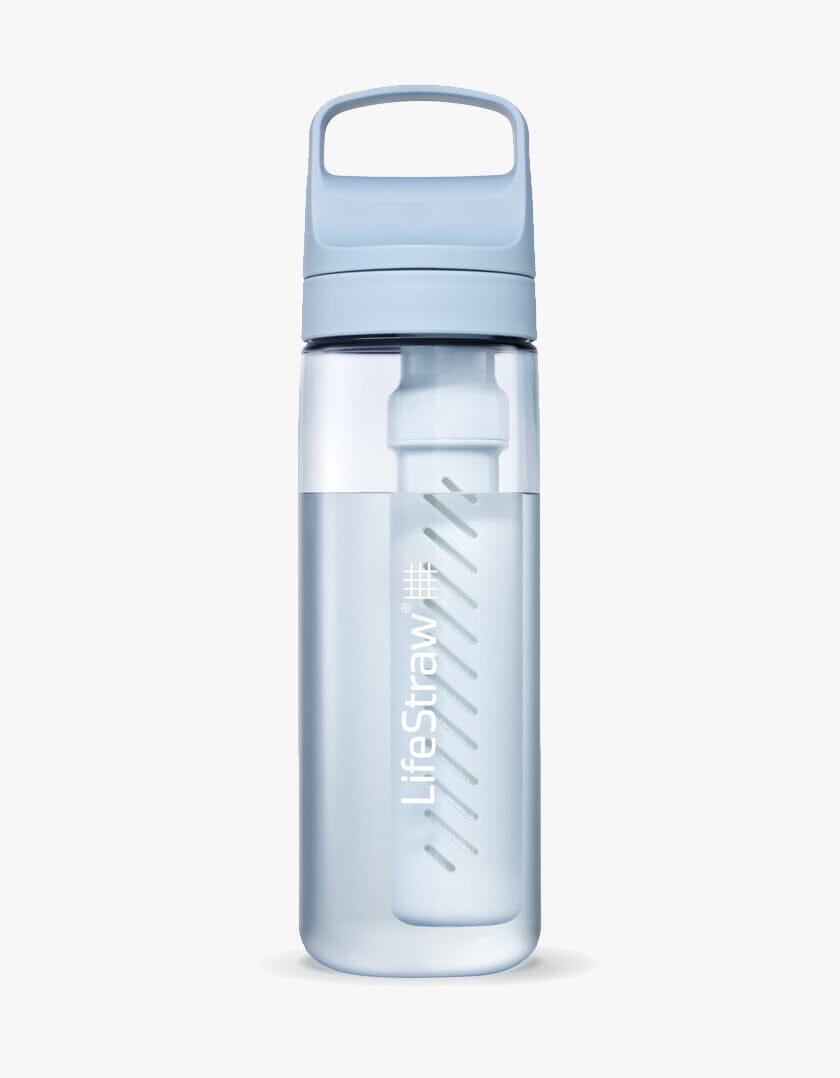
The Go Series 22 oz is LifeStraw's mid-size bottle: 650 mL of BPA-free plastic, a carry handle, and a cap that holds two filters in series. Water passes through a 0.2-micron hollow-fiber membrane first and an activated carbon capsule second. The membrane is the part that makes the bacteria and parasite claims. The carbon is there for chlorine, taste and odor.
At $44.95 the bottle costs two and a half times what the LifeStraw Personal straw does, and the extra money buys convenience, not a wider list of contaminants. What it also buys is a second consumable with a much shorter life. This article follows the two filters separately, because the maintenance schedule and the safety claims belong to different parts.
Our verdict
A sensible bottle for travel and day trips where the water is clear and the worry is bacteria or parasites. Budget for carbon capsules every couple of months, and read the brand's own comparison table before expecting anything about lead or PFAS.
- A good fit for
- A traveler or day hiker who fills from taps and streams of uncertain microbial quality and wants a bottle they can drink from directly, with a filter that is cheap to replace.
- We would skip it if
- Your concern is chemicals, heavy metals, or PFAS, which LifeStraw's own table marks as not addressed, or you need to treat cooking volumes for a group.
Reasons to consider it
- The membrane is rated to 1,000 gallons and stops flowing when spent, so a spent filter announces itself rather than being guessed
- LifeStraw cites specific standards by name: US EPA and NSF P231 for bacteria and parasites, NSF 42 for chlorine reduction
- Replacement parts are itemized and cheap: $24.95 for a membrane, $9.95 for two carbon capsules, $8.95 for a cap
The compromises
- The carbon stage is rated to 26 gallons and LifeStraw suggests replacing it every 60 days or so, which is a recurring cost the headline filter life hides
- The brand's comparison grid puts an X next to lead, PFAS, heavy metals and chemicals for this bottle
- The bottle is dishwasher safe only with both filters out, and LifeStraw still recommends hand washing
What we have not verified: We have not measured flow rate, filter life, or removal performance. LifeStraw lists the bottle as BPA-free but does not name the plastic, so a Tritan claim seen elsewhere remains unconfirmed on lifestraw.com. The Shopify data shows a shipping weight of about 4 lb per unit that contradicts the 247 g spec; we trust the spec.
The things in this guide
A closer look at the products, who they may suit, and what to check before buying.
Go Series Water Filter Bottle · 22 oz
The 0.2-micron membrane carries the named standards and a multi-year rated life, which is what makes the bottle useful on a trail or in a country where tap water is a question.
Before you buy: Carbon capsules are a $9.95 two-pack that LifeStraw says to change roughly every two months, and nothing in the cap addresses dissolved chemicals or metals.
Price checked September 11, 2026. Retailer prices can change.The membrane claims and the standards behind them
LifeStraw lists the membrane microfilter as removing 99.999999% of bacteria, 99.999% of parasites and 99.999% of microplastics, along with silt, sand and cloudiness, through a 0.2-micron pore. LifeStraw states that the bottle meets US EPA and NSF P231 drinking water standards for removal of bacteria and parasites, and the performance data sheet phrases the same claim as NSF/ANSI P231. Named organisms on that sheet include E. coli, Salmonella, Giardia and Cryptosporidium.
Those are the brand's numbers, and we have not reproduced any of them. What the citations do is tell you which protocol the lab work followed, which is more than many filter bottles offer. The data sheet also notes that its organism list is not exhaustive. Read the percentages as a description of a mechanical barrier: particles larger than the pore stay on the outside, and the claims say nothing about anything dissolved in the water.
Two filters, one of which you replace every two months
The membrane is rated to 1,000 gallons, or 4,000 liters, which LifeStraw translates as daily use for about half a decade, and it stops passing water once spent. The activated carbon capsule sits behind it and is rated to 26 gallons, or 100 liters, which the FAQ puts at roughly two months of regular use. LifeStraw's advice is to swap the carbon when taste or smell changes, or every 60 days or so.
That schedule is the number to carry into the purchase. Carbon capsules are $9.95 for a two-pack or $24.95 for six, so a daily user spends something like $30 a year keeping the taste stage fresh while the membrane keeps going. The carbon does not affect the bacteria and parasite claims, so a lapsed capsule is a taste problem, not a safety one, by LifeStraw's own description. A replacement membrane costs $24.95 and, per the FAQ, ships with a carbon capsule included.
LifeStraw's own grid draws the line at lead and PFAS
Below the specs, LifeStraw runs a comparison grid against a competing bottle. Five rows get a check mark for the Go Series: leakproof design, chlorine reduction and taste, two-stage filtration, bacteria and parasites, and microplastics. The sixth row, labeled lead, PFAS, heavy metals and chemicals, gets an X. The carbon stage is described as reducing chlorine, odors and organic chemical matter, and the listing meets NSF 42 for chlorine reduction, which is a taste standard.
For a buyer that grid is the most useful thing on the page, because it comes from the seller. A bottle that treats the microbiology of a stream is a different tool from one that treats the chemistry of a well near farmland or an old municipal main. LifeStraw sells other products for those cases. This bottle addresses what the listing enumerates and should be assumed silent on everything it leaves out.
What 22 ounces means on a pack strap
The listed dimensions are 24 cm tall and 7.1 cm in diameter, or 9.4 by 2.8 inches, at a stated weight of 247 g with both filters installed. The bottle, membrane, carbon capsule and a cap with a color-matched silicone mouthpiece are in the package, and the data sheet says every component was tested and found free of BPA. Nine colors are offered, and a two-bottle pack is $75.95.
Cleaning has conditions. LifeStraw says the bottle is dishwasher safe once the filters are removed, then adds in the FAQ that hand washing is its recommendation, that the heated dry cycle should be avoided, and that the cover and mouthpiece should come off the cap and be washed separately. For storage beyond a trip, the brand publishes a bleach soak followed by a saline bath for the membrane, and it says to fit a new carbon capsule if the bottle sat for more than three months.
Three years on the bottle, sixty days on the carbon
LifeStraw covers its products and parts for three years with the usual limits, with carbon filters carved out under a separate 60-day term. Normal wear, drops, accidents, disassembly and secondhand purchases are excluded. A claim goes by email with the model number, at least two photos of the defect, your contact details and a receipt. LifeStraw may replace the part or refund the price, and refunds are only offered on bottles bought directly from lifestraw.com.
Unused bottles can be returned within 45 days in the lower 48 states, with return shipping paid by LifeStraw on eligible orders. Discounted, bundled and limited-edition items are excluded from returns. None of this is unusual, but the carbon exception matters: the part you replace most often has the shortest coverage, which is one more reason to treat capsules as a consumable and not as a warranty question.
When the straw or a different filter is the better buy
If your use is a backup in a day pack and you rarely fill from a questionable source, the $17.95 LifeStraw Personal makes the same microbial claims for less than half the money and has no carbon stage to maintain. The Go Series pays for itself in convenience only if you actually drink from it often enough to keep the membrane wet and the carbon within its two-month window.
Pass on it as well if the water you worry about is chemically contaminated, or if you need liters for cooking. A bottle that treats sips for one person is the wrong form for a camp of four, and the brand's grid says it is the wrong chemistry for dissolved metals. Choosing this bottle honestly means agreeing with LifeStraw about what it is for.
How we put this together
Built from the product pages and listings below, without test scores or results we have not measured. Specifications and prices change, so check the original page for the exact model, current price, delivery, and returns.
- LifeStraw: Go Series 22 oz product listing (opens in a new tab)
- LifeStraw: Go Series Performance Data Sheet (PDF) (opens in a new tab)
- LifeStraw: Go Series Long Term Storage (PDF) (opens in a new tab)
- LifeStraw: Our Warranty (opens in a new tab)
- LifeStraw: Personal Water Filter Straw product listing (opens in a new tab)