Product image supplied by the brand
In this guide
An electric toothbrush is two purchases wearing one price tag. The handle is durable goods; the head is a consumable on a fixed schedule, and Philips puts that schedule in writing at three months. Over four years the handle is bought once and the heads are bought sixteen times.
So the number that matters is not the $19.96 on the handle listing. It is the price of a three-pack of heads, and Philips does not print that figure on the handle page or on the head page. A buyer at the entry tier has to leave the manufacturer's site to learn the actual cost of ownership.
Our verdict
A cheap way into a rechargeable brush with one condition: the running cost of heads is set by a price Philips does not show on its own listing. Price a three-pack at a retailer first, then decide on the handle.
- A good fit for
- Someone moving off a manual brush who wants the timer and the pacing, and who will actually replace heads on schedule.
- We would skip it if
- You will not replace heads every three months, in which case the timer is the only thing you gained, or you want pressure sensing and travel cases, which this tier does not carry.
Reasons to consider it
- A two-minute timer with thirty-second quadrant pacing removes the guesswork from how long to brush
- The listed fourteen-day battery makes charging an occasional event rather than a nightly one
- Heads are the standard click-on type that fit every Sonicare handle except Philips One and Essence
The compromises
- Philips lists no price for the C1 ProResults heads on either the handle page or the head page
- Easy-Start ramps power over the first fourteen uses, which is a comfort feature rather than a cleaning one
- The entry tier carries no pressure sensor, no travel case and no mode selection
What we have not verified: This is not dental advice; a dentist decides what suits a particular mouth. Philips states its plaque figures as clinically proven results versus a manual brush, and the underlying study is not published on the page. Head prices at retail were not surveyed, so the running-cost figure the purchase turns on is still the buyer's to look up.
The things in this guide
A closer look at the products, who they may suit, and what to check before buying.
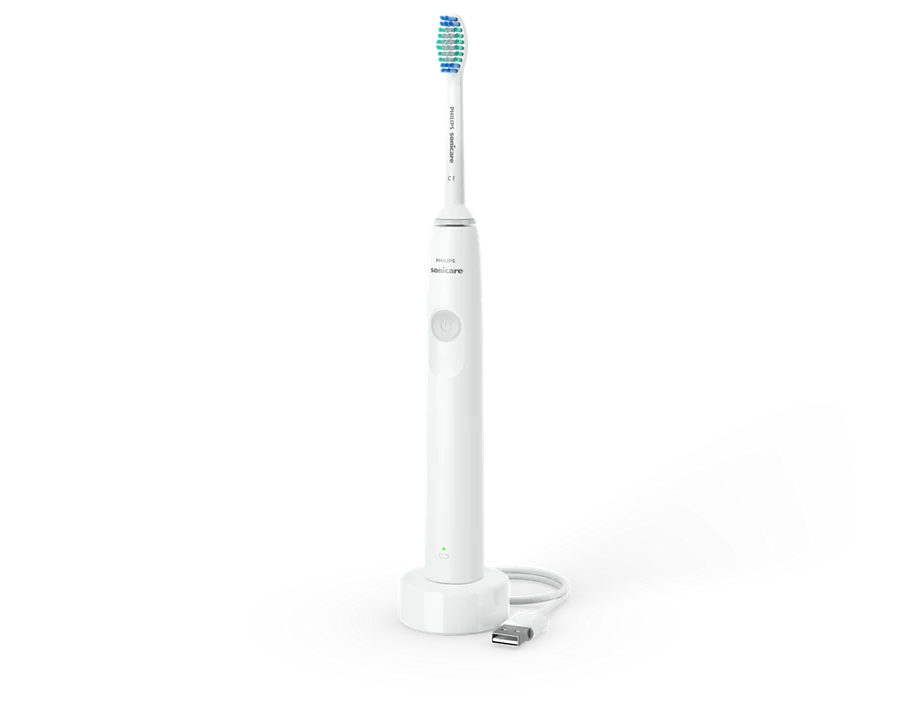
1100 Series Sonic Toothbrush · HX3641/02
The timer and pacer are the features that change how someone brushes, and this tier delivers both at the lowest price Philips charges.
Before you buy: Price a three-pack of C1 ProResults heads before committing, and check that your household will keep buying them at the stated three-month interval.
Price checked October 4, 2026. Retailer prices can change.Two minutes and four quadrants
Philips lists SmarTimer at two minutes and QuadPacer at thirty-second intervals, plus Easy-Start, which raises power gradually across the first fourteen uses. The technical listing gives 31000 brush strokes per minute and a lithium-ion battery rated at fourteen days of operation on two two-minute sessions per day.
Among those, the pacing is what changes behavior. Most people underestimate two minutes badly and spend the time unevenly across the mouth; a buzz every thirty seconds fixes both without asking anything of the user. Someone who already brushes with a phone timer gains less, and the pacing claim is about the buzz, not about any measured outcome in a mouth.
The cost you cannot look up
The C1 ProResults listing sells heads in three-packs with click-on fitting, states that heads become less effective after three months, and uses bristles that fade from blue to white as a reminder. At that interval a single user needs four heads a year, so one three-pack does not cover twelve months.
What the listing omits is a price, and the handle page omits it too. That gap matters most at this tier, because a refill pack that costs more than the handle changes the entire value proposition of buying cheap. Anyone comparing this against a manual brush should settle the refill price first at whatever retailer they plan to use, then decide.
One head fits nearly the whole range
Philips states that the C1 ProResults head fits any Sonicare handle except Philips One and Essence. A household running an entry handle and a higher-tier handle can therefore buy one type of refill, and a later upgrade does not strand a drawer of incompatible heads.
That is worth more than it sounds when two people share a bathroom. Standardizing on one head type turns restocking into a single recurring purchase. The exception list is short but real, so anyone with a Philips One in the house should check before assuming a shared refill supply works.
Read the plaque claim as a manufacturer claim
Philips advertises up to three times better plaque removal than a manual toothbrush and describes the result as clinically proven, with disclaimers noting that individual results vary and that the comparison is against a manual brush. The study behind it is not linked from the page, so the figure remains a manufacturer claim.
The practical reading is narrower and more useful. A powered brush with pacing helps mainly by making brushing longer and more even, which is a behavioral effect anyone can verify in their own bathroom. What suits a particular mouth, including gum sensitivity and existing dental work, is a question for a dentist and not for a product listing.
When the handle is the wrong purchase
Skip it if the household pattern is to buy an electric brush and then run the same head for a year. At that point the timer is the only benefit still working, and a cheap manual brush replaced every three months costs less and stays effective.
Skip it too if you want the features that make higher tiers worth their price: pressure sensing that warns when you scrub too hard, selectable modes, or a travel case. Those are absent here, and no amount of technique makes up for a pressure warning that the handle does not have.
How we put this together
Built from the product pages and listings below, without test scores or results we have not measured. Specifications and prices change, so check the original page for the exact model, current price, delivery, and returns.
- Philips: 1100 Series Sonic electric toothbrush HX3641/02 (opens in a new tab)
- Philips: Sonicare C1 ProResults Standard sonic toothbrush heads HX6013/31 (opens in a new tab)