Product image supplied by the brand
In this guide
A dry bag is a simple product to describe and a slightly annoying one to buy, because the maker sells it in a ladder of sizes and the right rung depends on what you are packing. Sea to Summit's Lightweight Dry Bag runs from 1.5 to 35 liters in five colors, and the 8-liter version reviewed here is the middle of the range: big enough for a change of clothes or a small first-aid kit, and still able to disappear into a daypack. The brand lists it at $25.95 in the US.
The design changed in its latest revision. The fabric is now a bluesign-approved recycled 70D nylon with a C0 water repellent that avoids fluorinated chemistry, the inside is coated white so gear shows up under a headlamp, and the base is oval so the bag packs against its neighbors and does not roll off a sloped surface. The roll-top and the D-ring at the buckle carry over from the older sacks. None of that is unusual on its own; the combination at 67 grams is why this bag is worth reading about, and the size question is why the reading matters.
Our verdict
A sensible $25.95 roll-top for clothes, a first-aid kit or electronics inside a pack, with a light lining and a repairable buckle; it is splash protection for a stowed load, not a bag for swimming or submersion.
- A good fit for
- A backpacker, bike tourer or paddler who sorts gear into color-coded sacks and wants the contents visible in low light.
- We would skip it if
- You need something that survives a dunking, you want a bag that hangs outside a pack, or you would only ever own one size.
Reasons to consider it
- Recycled 70D nylon with a PFC-free DWR and bluesign approval, at 67 g for the 8 L size
- White polyurethane coating inside makes small items easier to find in a tent or by headlamp
- Oval base, D-ring at the buckle, and a buckle the brand describes as field-replaceable
The compromises
- Roll-top sacks in coated nylon are splash and rain protection, not a seal for immersion
- 70D fabric is light because it is thin; sharp gear inside and rock outside will both find it
- Seven sizes and five colors make a set, and a set costs far more than the $25.95 headline
What we have not verified: The bag was not used here; how the DWR holds up after many rolls, how the coating resists abrasion against pack contents, and how the roll-top behaves when overfilled were not assessed. The site's own spec table quotes 67 g while the store's shipping data shows 102 g, and the difference was not resolved.
The things in this guide
A closer look at the products, who they may suit, and what to check before buying.
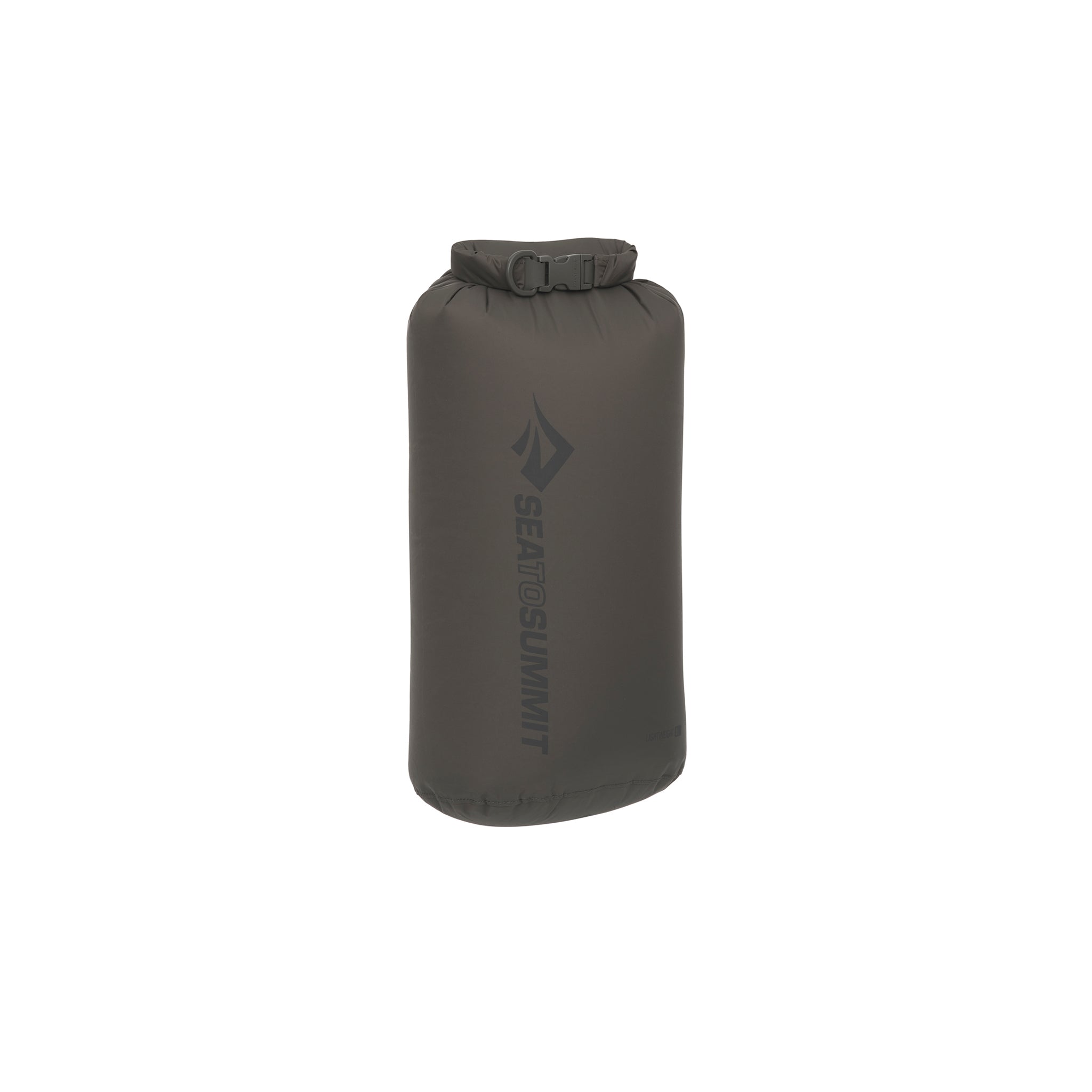
Lightweight Dry Bag, 8 L, Beluga
Recycled 70D nylon with a PFC-free DWR, a white lining that makes contents visible, an oval base that stacks, a D-ring at the buckle and 67 g in the 8 L size, at $25.95.
Before you buy: Splash protection only, not immersion; the thin fabric asks for care around sharp gear, and a full set of sizes adds up quickly.
Price checked September 11, 2026. Retailer prices can change.Recycled 70D nylon with a white inside
Sea to Summit describes the shell as a bluesign-approved recycled 70D nylon with a C0 durable water repellent, meaning the finish contains no PFCs, and a polyurethane coating on the inside that does the actual waterproofing. The coating is white on purpose. In a dark tent or at the bottom of a pack, a black-lined sack swallows small items; a white one shows a headlamp what is in there. This is the kind of detail that costs nothing to make and changes how a bag gets used.
The choice of 70D is a weight decision with a durability cost. At 67 grams for the 8-liter size, the bag adds almost nothing to a pack, but a 70-denier weave is thin, and the brand's own positioning of this sack as flexible and soft is an admission that it is not the tough option. Sea to Summit sells heavier dry bags for boat decks and pack exteriors. This one is the interior organizer: it lives inside a backpack, a pannier or a duffel, where the outer bag takes the abrasion and the dry bag takes the rain that gets through.
Roll-top, oval base, and seven sizes to choose from
The closure is the standard hypalon-stiffened roll-top that Sea to Summit uses across its dry sacks: fold the strip over three times, clip the buckle, and the rolled fabric forms the seal. The published spec numbers put the 8-liter bag at 39 centimeters, or 15.35 inches, tall with the top rolled three times, on a base of 16.5 by 19.9 centimeters. A D-ring sits at the buckle for clipping the sack to a bike rack, a kayak deck line or a pack strap, and the product imagery calls the buckle a field-replaceable part, which fits the brand's stated spare-parts department.
The oval base is the revision's second visible change. A round-bottomed sack rolls; an oval one lies flat against the next sack and stays where it was put on a slope. The range runs 1.5, 3, 5, 8, 13, 20 and 35 liters, with the weight climbing from 34 grams at the smallest to 115 at the largest, and each size comes in the same five colors so a kit can be color-coded by category. That is the right way to buy these, and it is also how a $25.95 purchase turns into three sacks at close to $80. Decide what you are sorting before choosing the rung.
Rain protection inside a pack, not a swim bag
The word dry does a lot of work on a roll-top sack, and it is worth being precise about it. A rolled closure with a coated fabric keeps out rain, splashes, condensation and the water that soaks through a pack in a storm. It is not a submersible seal, and Sea to Summit does not claim one; the product copy talks about backpacking, cycle touring, travel and ski touring, which are all cases where water arrives from above or from wet gear alongside. A phone that goes into a river inside this bag is a phone that has gone into a river.
The other limit is the fabric itself. The warranty covers faults in materials or assembly for the intended life of the product, and it excludes normal wear, breakdown with age and use, and damage from improper handling. A pinhole from a tent stake or a scuff through the coating from a stove is wear, not a defect, and the thin 70D shell makes both easier to achieve than on a heavier sack. The practical advice is to keep sharp and hot things in their own bag and let this one carry the soft, the small and the electronic.
Lifetime coverage, repairs, and a 60-day return with a $5 label
Sea to Summit backs the bag with lifetime coverage against manufacturing faults for the first buyer, with a receipt from the brand or an authorized dealer. The remedy is repair, replacement or credit, at the brand's choice, and the same page runs a spare-parts and repair service that will quote a cost and turnaround for damage the warranty does not cover. Claims run through a web form or a US phone line staffed on Mountain Time weekdays. The page also carries a California-specific paragraph offering a replacement or a refund less an allowance for use.
Returns on direct purchases are accepted for 60 days if the item is unused and in its packaging, and the brand deducts $5 for the return label from an otherwise full refund. Items bought elsewhere go back to that seller, and secondhand purchases get neither returns nor warranty. On price, $25.95 for the 8-liter bag sits in the middle of the range, with the 13-liter one listed at $28.95; Spicy Orange was out of stock in this size on the day of the check, while Beluga, Surf the Web, Sulphur and Burnt Olive were available.
Skip it when a seal, a shield, or a single sack is the brief
Leave this bag on the shelf if the plan involves water from below. A paddler who expects to capsize, a swimmer towing gear, or a photographer crossing a stream wants a welded, submersible case, and a roll-top in 70D nylon is not that product however carefully it is rolled. The same goes for gear that rides outside a pack or on a boat deck, where abrasion, not rain, is the enemy and a heavier fabric is the answer.
Also pass if one bag is the whole purchase. The Lightweight Dry Bag works as a system, with sizes and colors chosen to split a load into clothes, kit and electronics; buying a single 8-liter sack at $25.95 gives a light, well-lined pouch and not much of the organizing benefit. The buyer this suits already sorts gear into stuff sacks, is tired of the black ones, and wants the set to weigh as close to nothing as recycled nylon allows.
How we put this together
Built from the product pages and listings below, without test scores or results we have not measured. Specifications and prices change, so check the original page for the exact model, current price, delivery, and returns.
- Sea to Summit: Lightweight Dry Bag product page (opens in a new tab)
- Sea to Summit: Warranty (opens in a new tab)
- Sea to Summit: Refund policy (opens in a new tab)