Product image supplied by the brand
In this guide
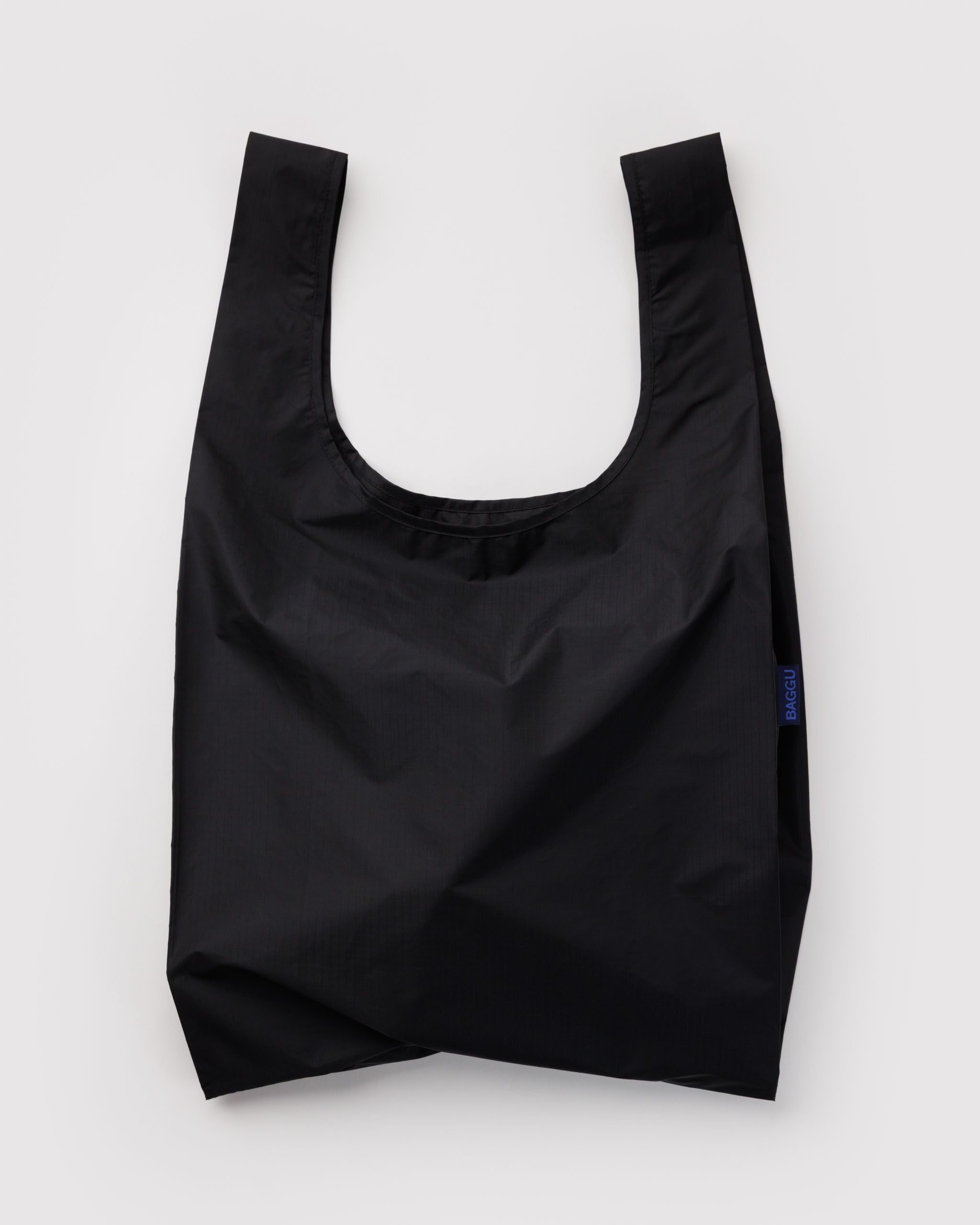
The Standard Baggu is at its best as the bag inside another bag. Its job is the unplanned one: the groceries on the way home, the parcel, the jumper you took off at lunch.
Useful, and not universal. If a tote already travels with you every day, a prettier one for $16 solves nothing. The most common right answer here is to buy nothing and move the bag you own to where you leave from.
Our verdict
Standard is our starting point for an unpredictable shopping stop. Baby suits a known compact load; owning both needs two recurring jobs.
- A good fit for
- Someone whose daily bag has room for a compact spare and whose errands are often unplanned.
- We would skip it if
- You need rigid support, protected compartments, or already have several unused shopping bags.
Reasons to consider it
- The manufacturer lists a flat 5-by-5-inch storage pouch
- Machine-washable fabric supports repeated everyday use
The compromises
- A soft bag provides little structure for mixed or fragile loads
- A high stated load capacity says nothing about carrying comfort
What we have not verified: The two sizes were not compared for handle comfort, load strength, pocket fit or behavior after repeated washing.
The things in this guide
A closer look at the products, who they may suit, and what to check before buying.
Standard Baggu
Prefer the larger format when your backup bag needs to accommodate an uncertain set of purchases.
Before you buy: Extra capacity does not make an uncomfortable load a good idea.
Price checked September 10, 2026. Retailer prices can change.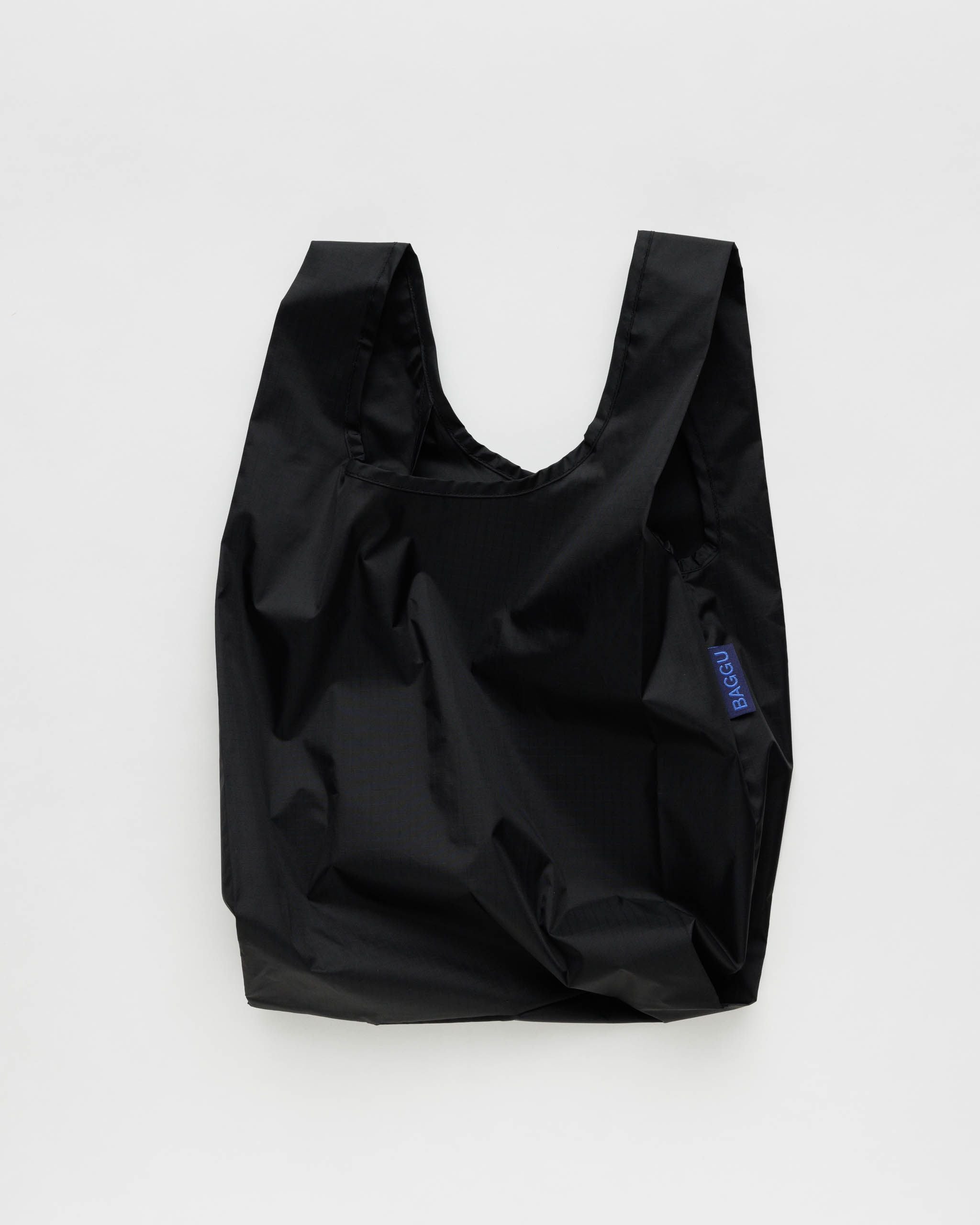
Baby Baggu
Prefer the smaller format when its assignment and storage place are already clear.
Before you buy: Leave room for the rigid object in the load; item count alone is misleading.
Price checked September 10, 2026. Retailer prices can change.Small when stored matters more than big when opened
Baggu lists recycled ripstop nylon, machine washing, and a flat 5-by-5-inch pouch. The opened dimensions are 25.5 inches high, 15.5 inches wide, and 6 inches long. These are the brand’s specifications rather than measurements we took.
The test that matters is whether the folded pouch has a permanent home next to your keys or in the daily bag. A folding routine you find fiddly ends the same way every time: the pouch loose in the bottom of the bag, the bag left at home.
Do not confuse capacity with comfort
The brand states that the Standard holds up to 50 pounds. Fifty pounds is a structural claim, not a recommendation, and it says nothing about how two thin handles feel against your fingers at the twenty-pound mark. It was not verified here.
Load it with an ordinary errand and walk with it before deciding. Bulky and light suits a soft bag. Four cans and a glass jar sit far below fifty pounds and still want structure, or at least a second bag.
The most defensible environmental choice is continued use
There is no honest number of uses at which a reusable bag pays back environmentally, not without a lifecycle study matched to these materials, this manufacturing and the bags being displaced. Recycled fabric does not make a fourth bag a green purchase.
The rule is simpler than the arithmetic: own one you actually carry, and keep carrying it. A new print is not a new need. When the real problem is forgetting, the first experiment is free — move the bag you own to the door.
A good small gift needs a gap to fill
As a gift it lands with someone who genuinely lacks a spare, and lands badly in a house with a drawer full of them. Ask where they shop and what they carry before choosing a print.
Treat washing and putting it back as a single task. A washable spare that lives in the laundry pile is not a spare. Follow the care instructions and look at the handles and seams while you fold it.
Favorable for the backup role, restrained beyond it. A predictable heavy load wants a structured carrier, and a bag that already does the job wants no replacement at all.
The modest price difference should not choose the bag
The checked black versions cost $16 for Standard and $14 for Baby. BAGGU lists Standard at 25.5 by 15.5 by 6 inches, packing into a 5-by-5-inch pouch; Baby is 18 by 10 by 4 inches, packing into 4 by 4 inches. Those dimensions describe a meaningful difference in role, even though the price gap is small.
More fabric for a couple of dollars is not automatically the better buy. A load that never varies, and a pocket with no room to spare, both point at Baby. A load that changes week to week points at Standard. Value here is an easier carry, not the most inches per dollar.
Capacity is most useful when it absorbs a change of plan
A packed lunch does not grow on the way home. A grocery stop does, and one awkward box changes the problem more than six small items. Standard is the size to own when the bag exists as insurance against that.
Baby makes sense when the contents are known before you leave: a lunch, a book, a change of shoes, lifted out of a bigger bag on arrival. It makes much less sense when the bag already has an internal pocket doing that job, which most do.
How we put this together
Built from the product pages and listings below, without test scores or results we have not measured. Specifications and prices change, so check the original page for the exact model, current price, delivery, and returns.
About our shopping links