Product image supplied by the brand
In this guide
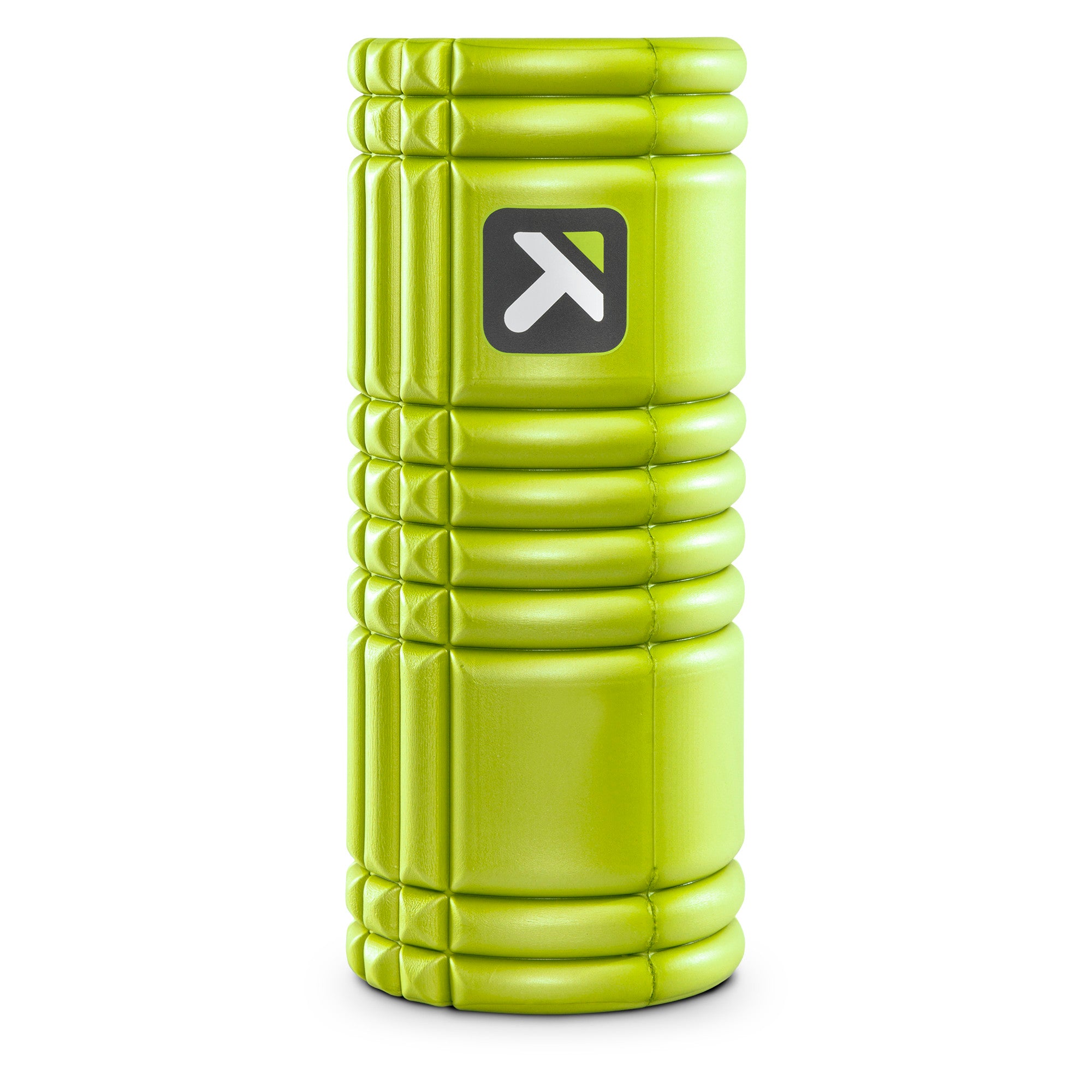
The GRID 1.0 is TriggerPoint's 13-inch textured roller: EVA foam over a hollow core, 5.5 inches across, rated to support up to 300 lb, listed at $39.99 in nine colorways with Lime as the default. The GRID surface arranges the cylinder into three patterns the maker maps onto a massage therapist's hands — flat panels like the palm for large muscles, tubular ridges like fingers for kneading, dense nodules like fingertips for a single tight spot — and the listing judges it right for first-time rollers and advanced users alike.
A first recovery tool really has three price points: a bare smooth roller for under $20 — TriggerPoint's own Foundations Roller is $17.99 — this $39.99 three-zone version, or a $219.99 massage gun such as the Theragun Mini. Which ache is actually there decides which of the three is worth buying, and most of it hangs on one question: whether the soreness spreads across a whole limb or sits in one spot a finger can find.
Our verdict
At $39.99 the GRID 1.0 is the textured roller to start with: a three-zone surface over a hollow core rated to 300 lb, soap-and-water EVA, one-year warranty — provided 13 inches and one fixed depth are enough.
- A good fit for
- Anyone building a first home recovery kit for post-run calves, quads, glutes and upper back — no charging, no $220 tool — as long as body weight stays within the 300 lb rating.
- We would skip it if
- You want concentrated powered pressure on one spot — massage-gun territory — or a roller for luggage, where TriggerPoint's own 10-inch GRID Travel at $34.99 is the better shape.
Reasons to consider it
- Three distinct surface zones — flat panels, tubular ridges and dense nodules — mapped by the maker to a therapist's palm, fingers and fingertips
- Hollow core rated to 300 lb under a water- and sweat-resistant EVA shell that cleans with mild soap and water
- One-year warranty against manufacturer's defects, free shipping over $25 at the brand's store, and 30-day returns on unused orders
The compromises
- One fixed depth: pressure changes only by shifting body weight, and TriggerPoint publishes no firmness figure that would line it up against softer or firmer rollers
- Thirteen inches rolls one limb at a time; soothing large muscle groups on a longer roller is what the $74.99 extra-long GRID 2.0 is sold for
- Everything depends on the floor: no floor, no pressure — the trade for a $39.99 tool with no battery to charge
What we have not verified: TriggerPoint publishes no overall weight for the roller and no firmness or density figure, so the pressure has no on-paper comparison with other textured rollers; the warranty is one line (manufacturer's defects, one year, receipt required), and how the EVA surface holds up past year one is nowhere documented.
The things in this guide
A closer look at the products, who they may suit, and what to check before buying.
GRID 1.0 Foam Roller · 13 in
$39.99 buys the three-zone GRID surface, a hollow core rated to 300 lb, a soap-and-water EVA shell and nine colors; free shipping over $25 and 30-day unused returns stand behind it at the brand's store.
Before you buy: One fixed depth and 13 inches of length; TriggerPoint publishes no firmness figure or overall weight, and coverage is one year with a receipt.
Price checked October 14, 2026. Retailer prices can change.What the three zones actually buy
The surface is what separates the GRID 1.0 from a smooth roller: the patented GRID pattern divides the cylinder into three bands, and TriggerPoint's store sums the arrangement up as 'like three foam rollers in one.'
In use the zones change the shape of the pressure, not the amount. Depth still comes from the floor and from how much weight sinks onto the roller; there is no dial, and TriggerPoint publishes no firmness or density figure that would let this roller be compared numerically with a softer or harder one. What the zoning changes is how the same body weight lands: the flat band behaves like any smooth cylinder, the ridged band spreads load into lines, the nodule band concentrates it into points. The EVA surface is water- and sweat-resistant and cleans with mild soap and water.
$39.99 of roller or $219.99 of massage gun
Broad, dull soreness after a workout across a whole limb is roller work: quads, calves, glutes, lats and the upper back all take the GRID 1.0 with body weight supplying the pressure, and 13 inches covers one limb per pass. One stubborn knot — a spot a finger can isolate — is massage-gun territory. Therabody's Theragun Mini 3rd Gen lists at $219.99, weighs 0.40 kg, and runs three speeds from 1750 to 2400 percussions per minute. Its 150-minute battery claim names no speed, and it presses without floor space, which a roller cannot do.
The paperwork overlaps more than the marketing suggests. Both tools carry one-year warranties. Neither publishes the number that would settle the pressure question — Therabody gives no stall force or amplitude for the Mini, TriggerPoint no firmness figure for the GRID — so neither purchase can be settled by numbers alone. The working split: the roller costs about a fifth of the Mini's list price, asks for nothing but a floor, and treats a whole limb per pass; the gun wins when getting down on the ground is the problem, or when the spot needs pressure more precise than body weight can aim.
Nine colors, three siblings, one conflicting spec
Inside TriggerPoint's own line the forks are small and all first-party. The GRID X at $57.99 stays in the 13-inch class (its spec line reads 13.11 x 5.31 x 5.31 in) and is described by the maker as the firmest roller in the GRID line, aimed at advanced users who want deeper pressure. The GRID Travel at $34.99 is the same surface in 10 inches and 4.33 inches of diameter, sold in black only for gym bags and luggage, with no load rating published. The smooth Foundations Roller at $17.99 is where the line starts: solid EVA core, softer compression, marketed to people new to rolling.
The odd one is the GRID 2.0, the $74.99 extra-long version of this roller, sold for soothing large muscle groups and massaging large areas of the body. Its own page lists item dimensions of 36 inches, then describes a 26-inch length twice in the feature copy, and nothing on the store settles the conflict — the real length is unverified, and the $35 step up from the GRID 1.0 buys an unconfirmed number of inches. TriggerPoint's cart pricing blurs the line differently: two items take 5 percent off, three 10 percent and five or more 15, applied in the cart with no expiry date posted.
One price, one year, no consumables
The full cost of a GRID 1.0 is its $39.99 list; the store shows no strikethrough reference beside it. Orders over $25 ship free, so the roller qualifies on its own. In-stock orders leave in one to three business days from Durham, North Carolina, and most arrive inside a five-to-ten business-day window; shipping runs Monday to Friday only, and not to US territories, PO boxes or APO/FPO addresses, and not internationally. Unused products can be returned before 30 days have passed since the purchase date, with the order confirmation attached.
The warranty is one line on TriggerPoint's page — Warranty: 1 Year — and one sentence more in the refund terms: one year against manufacturer's defects, claimed by sending the defective product to the return address with a receipt, an explanation and contact details. Every roller in the line carries the same single year. Upkeep is soap and water on the EVA shell and nothing else: no battery, no app, no replacement heads, no consumables. Soreness that persists, shoots down a limb or follows an injury belongs with a doctor, not a roller.
Where the roller stops
TriggerPoint's education pages describe rolling in benefit terms — relieving muscle tension, restoring movement, improved range of motion — and name no cautions for any body part; even the back section lists its tools with no lower-back warning printed anywhere. That leaves the guardrails to the buyer: roll muscle rather than bone or joint, and treat persistent pain as a reason to see a professional, not to press harder. The 300 lb rating is also a family-wide ceiling — the X and the 2.0 carry the same figure, and the Travel publishes none.
The skip list stays short and concrete. Skip it for one deep spot a fingertip can isolate — that is the job a handheld massager such as the $219.99 Theragun Mini is built for. Skip it for a suitcase: the 10-inch GRID Travel exists for exactly that at $34.99, in black. Skip it above the 300 lb rating, because nothing else in the family publishes a higher one. The nine colors share the same core and surface, so the decision is $39.99 and 13 inches, not Lime.
How we put this together
Built from the product pages and listings below, without test scores or results we have not measured. Specifications and prices change, so check the original page for the exact model, current price, delivery, and returns.
- TriggerPoint: GRID 1.0 product listing (opens in a new tab)
- TriggerPoint: Return & Refund Policy (opens in a new tab)
- TriggerPoint: Shipping policy (opens in a new tab)
- TriggerPoint: What is TriggerPoint Therapy? education page (opens in a new tab)
- TriggerPoint: GRID 2.0 product listing (opens in a new tab)
- TriggerPoint: GRID X product listing (opens in a new tab)
- TriggerPoint: GRID Travel product listing (opens in a new tab)
- TriggerPoint: Foundations Roller product listing (opens in a new tab)
- TriggerPoint: US store homepage (opens in a new tab)
- Therabody: Theragun Mini 3rd Gen product page (opens in a new tab)