Product image supplied by the brand
In this guide
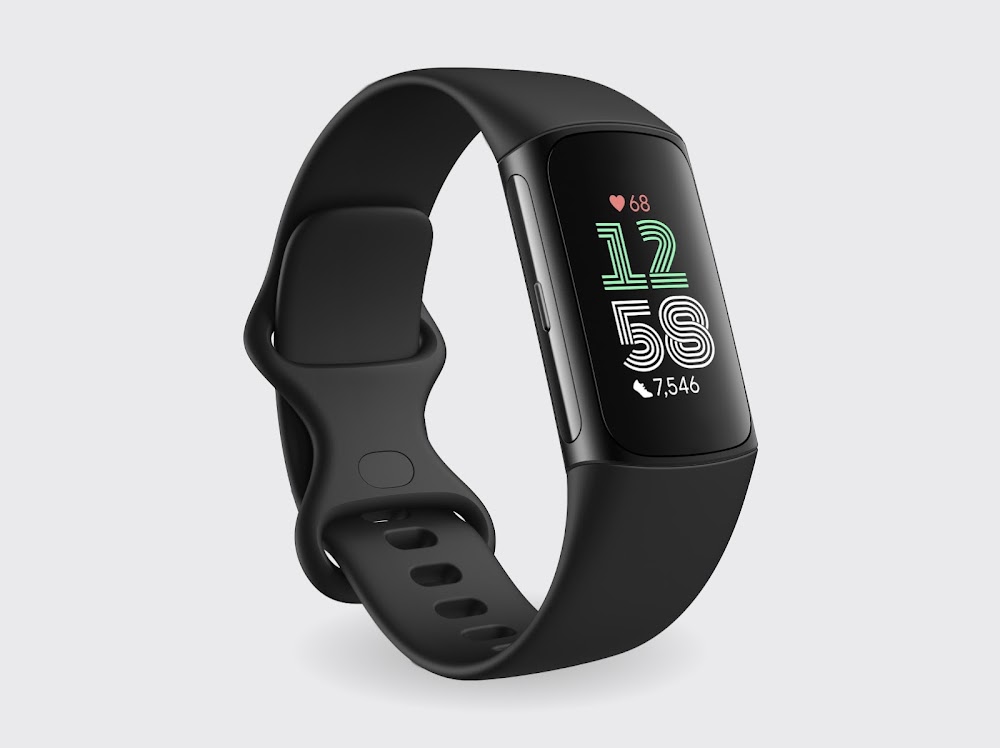
Google sells the Fitbit Charge 6 for $159.95 in Obsidian / Black Aluminum, Porcelain / Silver Aluminum, and Coral / Champagne Gold Aluminum, or $13.33 a month over 12 months of financing. It is the most expensive band in Google's Fitbit line and the one that carries the radios a cheaper tracker leaves out: built-in GPS with GLONASS, NFC for Google Wallet, and the Bluetooth Heart Rate Profile that lets it feed a treadmill or bike a live pulse. Google's Inspire 3, at $99.95, has not one of the three.
This article draws on the Google Store overview and tech specs pages for the Charge 6, Google's Fitbit battery support page, the Google Store Inspire 3 page for price comparison, and the Fitbit Limited Warranty document. Nothing here is based on wearing the device. Every heart-rate, ECG, blood-oxygen, skin-temperature, and sleep feature is quoted as Google states it, and Google's own footnotes repeat that these features are not intended for medical purposes and are not a replacement for medical advice. Nothing in this article is medical advice either.
Our verdict
Buy the Charge 6 if you run or ride without a phone and want pace, distance, turn-by-turn Google Maps, and tap-to-pay on a band, or if you want a Fitbit that can broadcast heart rate to gym equipment. If no one of those apply, Google's $99.95 Inspire 3 covers steps, sleep, SpO2, and heart rate with a longer battery claim, and the Charge 6 premium is paying for radios you will not switch on.
- A good fit for
- Runners, cyclists, and gym users on Android 11 or iOS 16.4 who want built-in GPS, Bluetooth heart-rate broadcast to compatible machines, and Google Wallet on the wrist without moving to a full smartwatch.
- We would skip it if
- You want a 10-day battery, you refuse a Google Account, you are under 22 (Google excludes that group from the ECG app), or you expect the ECG, SpO2, or irregular rhythm features to serve as medical checks; Google labels all of them as not for medical purposes.
Reasons to consider it
- Built-in GPS plus GLONASS, NFC for Google Wallet, and Google Maps turn-by-turn directions on the tracker, which the Inspire 3 does not offer.
- Multipurpose electrical sensors support the ECG app and the EDA Scan app, on top of the optical heart rate, SpO2, skin temperature, ambient light, and accelerometer sensors Google lists.
- Heart rate can be sent to compatible exercise machines over the Bluetooth Heart Rate Profile, and Google claims heart-rate tracking up to 60 percent more accurate during vigorous activity than its earlier trackers.
The compromises
- Google's battery support page cuts the 7-day claim to about 5 hours with continuous GPS and about 3 days with the always-on display; SpO2 tracking also requires more frequent charging.
- YouTube Music controls require a paid YouTube Music Premium subscription, and Daily Readiness, the detailed stress breakdown, and the Gemini-built coach sit behind Google Health Premium at $9.99 a month after the trial.
- The ECG app and irregular rhythm notifications are limited to select countries, excluded for people under 22 or with other known arrhythmias, and, in Google's words, are not intended to diagnose or treat any medical condition.
What we have not verified: We have not worn the Charge 6. Battery, GPS, heart-rate, SpO2, ECG, and sleep figures are Google's stated claims from its store and support pages, not measurements. The warranty term for devices bought after July 11, 2023 sits on Google's interactive Hardware Warranty Center, which we could not read as static text; the one-year figure comes from the older Fitbit Limited Warranty document that page links to.
The things in this guide
A closer look at the products, who they may suit, and what to check before buying.
Fitbit Charge 6
Google's only Fitbit band with onboard GPS, NFC payments, Maps directions, and ECG and EDA electrodes, sold with both band sizes and a charging cable, and able to broadcast heart rate to compatible gym machines.
Before you buy: Battery drops to roughly 5 hours with GPS on, YouTube Music control needs its own paid subscription, and coaching renews at $9.99 a month after the bundled three months.
Price checked September 11, 2026. Retailer prices can change.The $159.95 hardware, as Google specs it
The tracker body is 36.73 mm long, 23.09 mm wide, 11.20 mm thick, and weighs 30 g, with an AMOLED color touchscreen under Corning Gorilla Glass 3 and a physical side button Google calls the navigation button. Radios are Bluetooth and NFC. The battery is lithium-polymer with a stated 0-to-100 percent charge time of two hours. Memory holds seven days of minute-by-minute motion data, 30 days of daily totals, and heart rate at one-second intervals during tracked exercise and five-second intervals otherwise.
The box includes the tracker, an Infinity band in both small (5.1 to 6.7 inch wrist) and large (6.7 to 8.3 inch wrist) sizes, and a charging cable. The band is a silicone loop-and-peg design, and Google's care text asks you to take it off periodically and dry it after sweat or water. Setup needs the Google Health app on Android 11 or newer or iOS 16.4 or newer, a Google Account, and internet access; syncing range is quoted at up to 30 feet over Bluetooth LE. The three colors carry the same price.
Sensors and the health features, quoted as Google labels them
Google's sensor list: an optical heart rate monitor, a 3-axis accelerometer, built-in GPS + GLONASS, red and infrared sensors for SpO2, a device temperature sensor that reports skin temperature variation in the app, a vibration motor, an ambient light sensor, NFC, and multipurpose electrical sensors compatible with the ECG app and EDA Scan app. Google says Charge 6 has its most accurate heart rate on a tracker yet and, in a footnote, claims up to 60 percent more accurate heart-rate tracking during vigorous activity than other Fitbit trackers as of autumn 2023, with the caveat that physiology, placement, and movement affect performance.
The medical-sounding features come with Google's own limits attached. The ECG app "lets you assess your heart rhythm for atrial fibrillation" and share results with a healthcare professional; a footnote says it is "not intended for use by people under 22 years old or with other known arrhythmias" and that rhythm data is recorded only when the user is still or sleeping. Irregular heart rhythm notifications, high and low heart rate notifications, SpO2 tracking, skin temperature, and sleep tracking each carry the same class of note: not intended for medical purposes, not a replacement for medical advice, and not intended to diagnose or treat any medical condition. The ECG app and irregular rhythm notifications are also available only in select countries.
GPS, gym equipment, and what they do to the seven-day claim
Built-in GPS is the headline addition over the Inspire 3: Google says you get pace and distance on the wrist with no phone, and after an outdoor workout the Google Health app draws a workout intensity map of pace and heart-rate zones along the route. Google Maps turn-by-turn directions run on the tracker during runs or rides. The other fitness-specific feature is heart-rate broadcast: connect the Charge 6 to a compatible treadmill, elliptical, rower, or bike that supports the Bluetooth Heart Rate Profile and the machine shows your live pulse. Google keeps a compatibility list and says more machines are coming.
Battery is where those radios collect their fee. The store page and specs page both say up to 7 days, with Google's usual caveat that the figure comes from mid-2023 testing on pre-production hardware with default settings. Google's battery support page is more specific: with continuous built-in GPS the Charge 6 lasts up to 5 hours, and with the always-on display enabled the figure is up to 3 days. SpO2 tracking, per the specs page, also requires more frequent charging. A runner who uses GPS for an hour a day and leaves always-on off should expect something between those numbers, and Google publishes no figure for that mix.
Sixty dollars more than the Inspire 3
Google lists the Inspire 3 at $99.95, which makes the Charge 6 premium exactly $60. Both share the optical heart rate sensor, red and infrared SpO2 sensors, a device temperature sensor, an ambient light sensor, an AMOLED display under Gorilla Glass 3, a 5 ATM water rating, both band sizes in the box, the Google Health app, and the three-month Google Health Premium trial with the same $9.99 renewal. The Inspire 3 also carries a longer battery claim of up to 10 days against the Charge 6's 7.
The $60 buys hardware the Inspire 3 specs page does not list: built-in GPS and GLONASS, NFC for Google Wallet, and the multipurpose electrical sensors that enable the ECG app and EDA Scan app, plus Google Maps directions, YouTube Music controls, heart-rate broadcast to gym equipment, and a body that weighs 30 g instead of 17.69 g. If you will use GPS, Wallet, or the gym broadcast, the Charge 6 is the only Fitbit band with them. If your list stops at steps, sleep, SpO2, and heart rate, the Inspire 3 covers it for less and charges less often.
Water rating and the warranty question
Google states the Charge 6 is designed to comply with a water protection rating of 5 ATM under ISO 22810:2010 when manufactured, and then spends a paragraph on what that does not mean: it is not waterproof, resistance decreases over time or with drops, repair, or damage, the tracker is meant for shallow water, and it should not be used for high-velocity or high-temperature water activities. Some Charge 6 bands are not water resistant at all, so a swap to a leather or fabric band changes the answer. Google's care note is to dry the band after it gets wet.
The warranty term is the one fact we could not pin down from a static page. The Fitbit Limited Warranty document covers new Fitbit devices and accessories for one year for the first buyer in the US, with Fitbit choosing between a repair and a replacement unit, but the same page routes purchases made on or after July 11, 2023 to the Google Hardware Warranty Center, an interactive page that did not render for us. A Charge 6 bought today falls under that newer center; confirm the term there before relying on the one-year figure.
When to skip the Charge 6
Skip it if battery life is the number you care about. Google's own figures put the Charge 6 at up to 7 days against 10 for the Inspire 3, and the features that justify the higher price, GPS and the always-on display, pull that down to 5 hours and 3 days respectively. Skip it if you will not carry a Google Account or install the Google Health app, because setup requires both. Skip it if your phone runs anything older than Android 11 or iOS 16.4.
Also leave it if the ECG app is the draw and you are under 22, have a known arrhythmia, or live outside the countries where Google enables it, and set aside any expectation that the ECG, SpO2, or irregular rhythm features stand in for a clinical test: Google labels every one as not intended for medical purposes and points you to a healthcare provider. If you want music on the wrist, budget for YouTube Music Premium as well, since the controls do nothing without it. And if none of GPS, Wallet, Maps, or gym heart-rate broadcast will get used, the $60 is better left in your pocket.
How we put this together
Built from the product pages and listings below, without test scores or results we have not measured. Specifications and prices change, so check the original page for the exact model, current price, delivery, and returns.
- Google Store: Fitbit Charge 6 overview (opens in a new tab)
- Google Store: Fitbit Charge 6 tech specs (opens in a new tab)
- Google support: Fitbit battery life by device (opens in a new tab)
- Google Store: Fitbit Inspire 3 overview (opens in a new tab)
- Google support: Fitbit Limited Warranty (opens in a new tab)