Product image supplied by the brand
In this guide
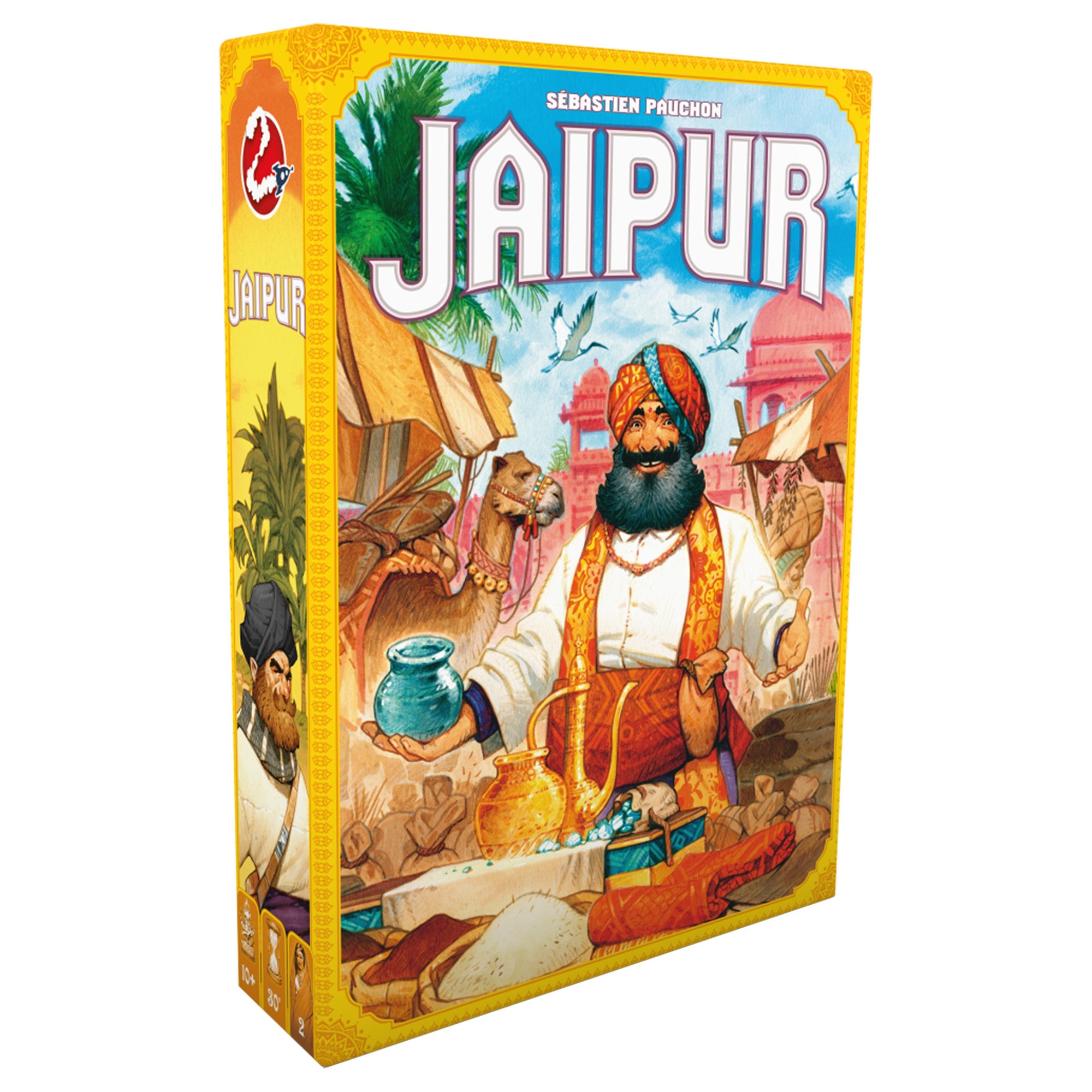
Jaipur is a two-player trading card game designed by Sébastien Pauchon, illustrated by Vincent Dutrait and published as JD Editions – Space Cowboys; the edition sold in the US carries a 2019 Space Cowboys copyright in its rulebook. Asmodee's US store carries it as SKU JAIP01 at $26.99, with Players (Minimum) 2 and Players (Maximum) 2, an age floor of 10 and an average play time of 30 minutes (checked 2026-10-15). It is the first title in the publisher's 2-Player Collection.
Two people who buy a multiplayer box get a good game and one of its several setups. Jaipur gives two people the entire game: both herds dealt in, one camel token fought over, a single market that empties at its own pace. Choosing between them depends on what your table looks like on an ordinary night, not on whether a four-seat box can be played at two.
Our verdict
At $26.99 (Asmodee's US store, checked 2026-10-15), Jaipur is the right box for a table that is reliably two and the wrong purchase the moment a third player is a regular.
- A good fit for
- Households that are reliably two people — partners, flatmates, a parent and a teenager — and want a competitive game whose setup, token piles and rounds are all scaled to a pair.
- We would skip it if
- A third or fourth player joins often, you want solo play, or your group needs cooperation or a story rather than a one-on-one market.
Reasons to consider it
- Two seats is the whole design: three camels start between the players, each player is dealt five cards, and nothing in the materials list sets up a dummy or neutral player
- Every turn is one binary choice — take cards or sell them — so the five-card market is the only thing to read, with no board, track or upkeep phase to maintain
- The round ends on its own fuel gauge: three goods piles emptied, or a deck too thin to refill the market to five, so the end of a round is visible on the table
The compromises
- There is no third seat and the publisher lists no expansion that adds one, so four-player nights are simply off the table
- Silver, diamonds and gold cannot be sold as a single card — the rulebook requires at least two — so a lone high-value card cannot be cashed in
- Because nothing scales up, a household that hosts regularly is buying a second, multi-seat box as well as this one
What we have not verified: Box dimensions do not appear on the store's US page; the only weight on record is the 0.73 lb figure the store gives as shipping, so shelf fit is unverified. Whether a given copy carries the first-print metallic first-player coin is also unresolved, since the store does not separate print runs.
The things in this guide
A closer look at the products, who they may suit, and what to check before buying.
Jaipur
It is a complete game for exactly two players — both herds, the camel token and the market rules are built for a pair — and nothing else has to be bought to play it.
Before you buy: No third seat and no expansion: if guests arrive regularly, the money belongs on a box that also seats three or more.
Price checked October 15, 2026. Retailer prices can change.The setup assumes exactly two hands
Setup says who the game was built for. Three camel cards go face up between the players; each player takes five cards and pushes any camels in hand into a personal herd; the remaining deck fills a five-card market by dealing two cards beside the camels. No dummy hand and no neutral marketeer: every card dealt goes to one of two hands, one of two herds or the market both players share.
The turn is equally narrow. You either take cards or sell cards, never both: take one good, exchange several goods by returning the same number, or take every camel from the market into your herd. Seven cards is the hand limit at the end of a turn, and camels sit outside that count, which is what turns a herd into a resource instead of a dumping ground.
Selling, camels, and what ends a round
A sale covers one goods type and any number of its cards, taken from the top of that type's token pile. Three cards sold earns a bonus token, and four or five-plus earn larger ones, with the rupees revealed only when the token is flipped. Silver, diamonds and gold carry a floor: those three need at least two cards, so a lone diamond stays in your hand.
The camel token is the two-player pressure valve. At the end of a round the player holding more camels takes a token worth five rupees, and an exact tie leaves it unclaimed — there is nobody else at the table to hand it to. The round then ends on one of two tripwires: three goods piles emptied, or a deck too thin to refill the market to five cards.
Rounds are scored, not the game. The richer trader takes a Seal of Excellence; a points tie goes to whoever holds more bonus tokens, then to whoever holds more goods tokens. Two Seals win, and the round's loser opens the next one — a scoring ladder with exactly two candidates at every rung.
What the box holds
The publisher's materials list is brief: 55 goods cards — 6 diamonds, 6 gold, 6 silver, 8 cloth, 8 spice, 10 leather and 11 camels — plus 38 goods tokens, 18 bonus tokens, one camel token and three Seals of Excellence. The rulebook prints the same breakdown, and nothing in it is a board, a counter or something to assemble, so a first game starts once the tokens are sorted by type.
Asmodee's listing adds that the first print run includes a metallic collectible coin to decide the starting player. The store does not say which run a given order comes from, so treat the coin as a bonus, not as a purchase argument.
The store's variant record gives 0.73 lb (331 g) as its shipping figure, and no box dimensions appear on either the store listing or the publisher's page, so there is no shelf measurement to check before ordering.
Two seats by design, not by subtraction
The designer says it in the rulebook: he kept Jaipur to two players because barter has the greatest impact on a single opponent. The intent is visible in the pieces — one shared market both players draw from, a camel token only two players can contest, tie-breaks with two candidates — rather than in a trimmed-down version of a bigger game.
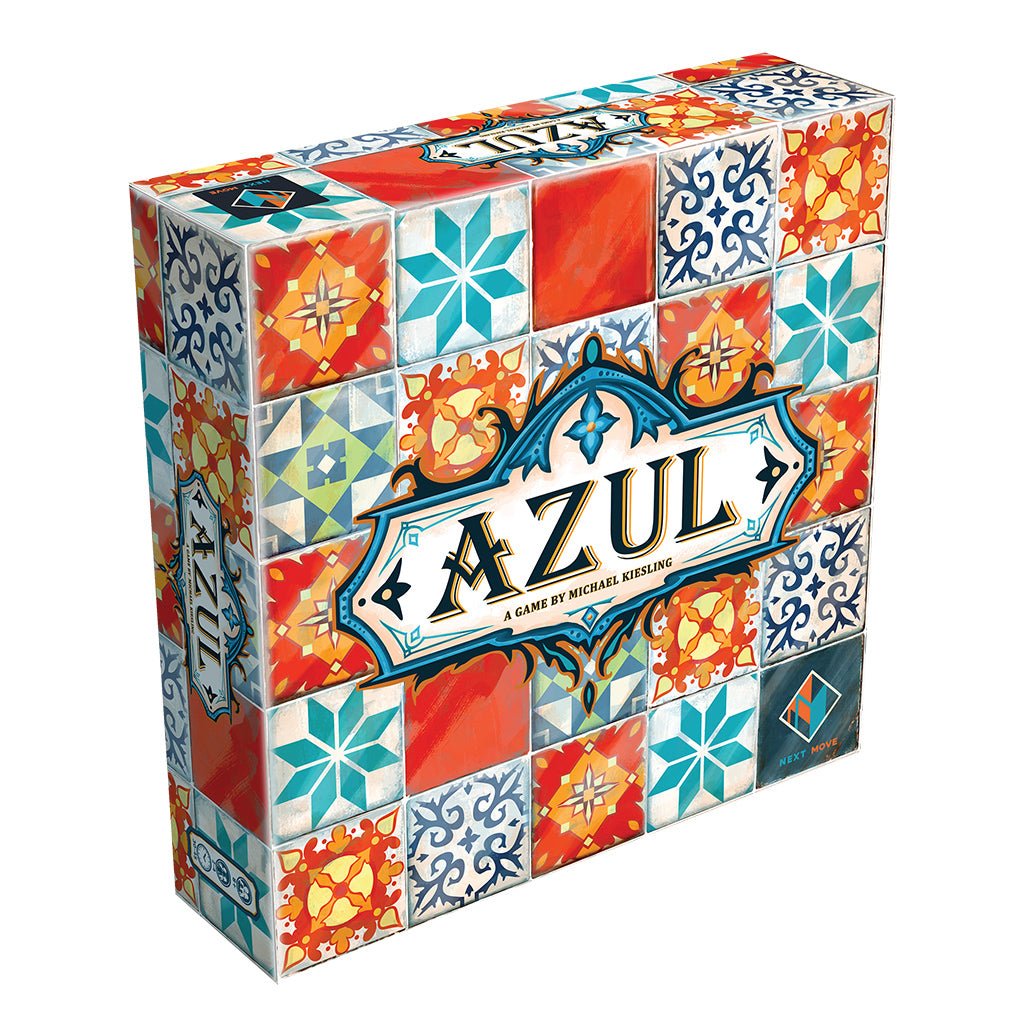
The contrast with a multiplayer box is about the count, not the quality. Azul's US listing runs from two players to four, so a pair gets the full game and a guest can still join; nothing is subtracted when only two sit down. Jaipur never opens that second door: two is the minimum and the maximum, and no expansion is listed.
So the choice follows the usual headcount. If a third or fourth player is a monthly occurrence, buy a box whose listed range runs past two, and treat a two-seat game as the extra for nights when nobody else is coming. If your two-player evening is the normal one, Jaipur is the box that spends the whole design there: one market, two herds, one contested camel token. A multiplayer box still plays well at two — it simply also carries rules for seats you rarely fill.
Buying it: price, shipping and returns
Asmodee's US store prices Jaipur at $26.99 with no compare-at price and no dated markdown on the record (checked 2026-10-15). The SKU is JAIP01, the store's variant data carries barcode 3558380063933, and Add to cart is the live purchase control — one listing, one edition, no color or size to choose.
Shipping is a threshold rather than a promise. The store banner offers free shipping within the US over $49, so a single copy sits below it and two copies clear it; the shipping policy page itself carries the heading and no delivery terms, which leaves no published delivery window to count on.
Asmodee accepts unopened boxes in original packaging for 30 days, with postage on the customer; refunds are processed within five business days of reaching the warehouse. Missing or damaged pieces go through customer service with an order reference and photographs, and the rulebook's back page routes them the same way instead of back to the shop.
When a two-player box is the wrong box
Skip Jaipur if a third or fourth player turns up often. The box has no answer for that night, no expansion in the publisher's range and no team option in its rulebook, so the alternative is a game listed for more than two seats — bought before the guest arrives, not after.
And pass if you play alone. There is no solo opponent in the box and no automated deck to run one, so a one-person evening gets no game at all. And skip it if the appeal is a story or a cooperative puzzle: there is no shared objective here, only two traders reading the same market and the cards your opponent takes before you do.
How we put this together
Built from the product pages and listings below, without test scores or results we have not measured. Specifications and prices change, so check the original page for the exact model, current price, delivery, and returns.
- Asmodee USA: Jaipur Board Game product page (opens in a new tab)
- Asmodee USA: Jaipur product JSON (variant record) (opens in a new tab)
- Space Cowboys: Jaipur game page (opens in a new tab)
- Space Cowboys: Jaipur rulebook, English (Asmodee CDN PDF) (opens in a new tab)
- Asmodee USA: Refund policy (opens in a new tab)
- Asmodee USA: Shipping policy (opens in a new tab)
- Asmodee USA: Azul product page (opens in a new tab)