Product image supplied by the brand
In this guide
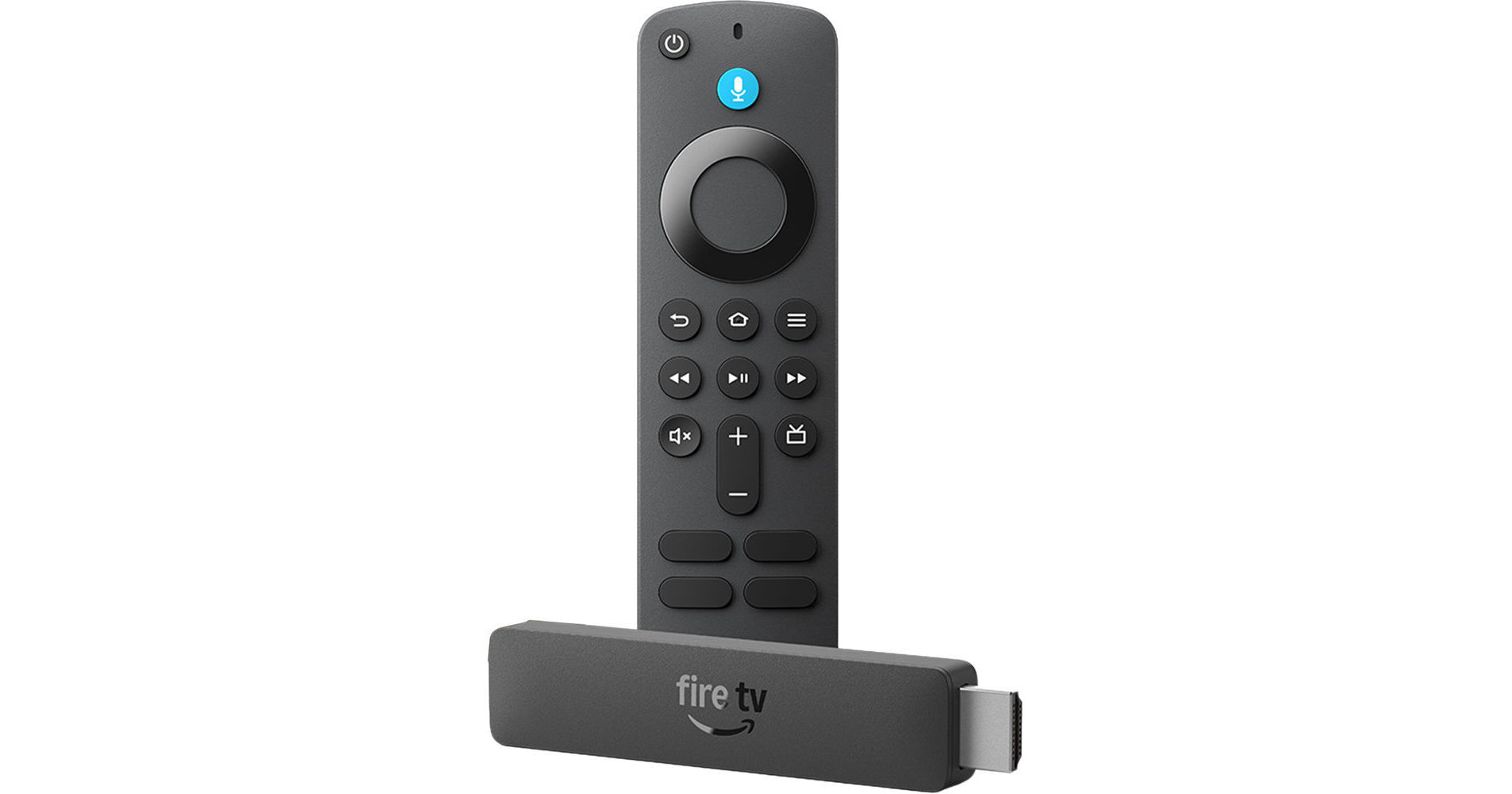
Amazon sells the Fire TV Stick 4K Plus (newest model) in stock direct, in one configuration and one color, with a 30-day refund window. The listing's technical table reads quad-core 1.7 GHz, 8 GB of storage, Wi-Fi 6 dual-band, Bluetooth 5.2, and 2160p, 1080p, and 720p at up to 60 fps with Dolby Vision, HDR10, HDR10+ and HLG. In the box: the stick, the Alexa Voice Remote, power adapter and cable, an HDMI extender, two AAA batteries, and a quick-start guide. Amazon's developer table files it as the Fire TV Stick 4K Plus (2025), model AFTMA08C15, on Fire OS 8 over an Android 11 base.
Re-read on 2026-10-05, the buy box read $37.99 beside a $69.99 list price, with the unit In Stock and the shipper and seller both Amazon.com. An earlier check on 2026-09-16 found $39.99 against a typical price of $49.99, and the table that carried that typical figure now prints a list price instead.
The harder question is which stick, because Amazon now sells four and they do not share an operating system. Amazon's side-by-side chart on this listing runs five columns — HD, 4K Select, 4K Plus, 4K Max and the Fire TV Cube — and on 2026-10-05 every column printed a deal price with a list price beside it. The two rows do not step by the same amount. The rows that mark the tiers are picture, sound, radio, storage and remote, and they change at different columns.
Our verdict
Buy the 4K Plus when a Prime-and-Alexa household wants 4K with Dolby Vision on a dual-band Wi-Fi network; move to the Max only with a 6 GHz router, and skip the Select when sideloading matters, because it runs Vega OS.
- A good fit for
- A Prime household after Dolby Vision and Atmos, the AI Fire TV Search remote, and Fire OS's full app and sideloading range without paying for Max's 16 GB or Wi-Fi 6E.
- We would skip it if
- Your router broadcasts 6 GHz — Amazon's own line sends 6 GHz router owners to the Max — or you sideload and eye the Select, which runs Vega OS with no sideloading or Downloader support.
Reasons to consider it
- The video and audio ceiling is full-spec for the tier: 2160p at up to 60 fps with Dolby Vision, HDR10, HDR10+, and HLG, plus Atmos, 7.1, and HDMI passthrough to 5.1 in the listing's own format rows
- It stays on Fire OS 8 while the Select and the HD move to Vega OS — the developer table lists Android Level 30 for this stick and no Android level for those two, and enthusiast-press device tracking documents sideloading and Downloader surviving only on Fire OS hardware
- That chart gives this stick the same picture and sound rows as the Max and the Cube, and Amazon's own sentence recommends the Max only to Wi-Fi 6E router owners, so the step up is storage, a radio band and a remote rather than a better image
The compromises
- 8 GB of storage with no card slot and no expansion — capacity doubles only in the Max and Cube columns, and wired Ethernet on this stick sits behind a separate micro-USB adapter
- The listing prints its own power port two ways: micro USB in the port table, a USB-C socket in the marketing image caption, with nothing reconciling the two
- The Alexa+ experience in the title is partially metered — full access needs a Prime membership or an Alexa+ Standard plan per the listing, and hands-free voice needs a linked Echo per the developer table, not the bundled remote
What we have not verified: Amazon's listing prints no RAM figure; the 2 GB LPDDR4 comes from the developer comparison table, which also pins Fire OS 8 to an Android 11 base. The micro-USB-versus-USB-C contradiction stays unreconciled on Amazon's own pages. No specific official app count exists for Fire OS or Vega OS — the retail claims count content and gesture at 'thousands more,' and the Vega side's app limits rest on enthusiast-press documentation rather than an Amazon statement. The software security update help page the listing links to did not render in any channel used for this research, so its per-device update end dates remain unverified. The 2026-10-05 deal figures carry no end date.
The things in this guide
A closer look at the products, who they may suit, and what to check before buying.
Fire TV Stick 4K Plus (newest model)
The 2026-10-05 buy box read $37.99 against a $69.99 list price for 2160p60 with Dolby Vision, HDR10/10+, and HLG, Atmos with 5.1 passthrough, Wi-Fi 6, AV1, an HDMI extender in the box, and the AI Fire TV Search remote — on Fire OS 8, the system that keeps the app and sideloading surface the Vega OS sticks below it drop.
Before you buy: 8 GB with no expansion, micro-USB power with Ethernet behind a separate adapter, full Alexa+ behind Prime or a plan, hands-free voice needing a linked Echo, and a one-year warranty; 16 GB, Wi-Fi 6E and the Enhanced remote are reserved for the Max one column up.
Price checked October 5, 2026. Retailer prices can change.Five columns, two price rows, and the feature rows that mark a tier
Amazon's comparison table, rendered on this listing, priced its five columns two ways when it was re-read on 2026-10-05. The deal row read $15.99 for the Fire TV Stick HD, $17.99 for the 4K Select, $37.99 for this stick, $44.99 for the 4K Max and $89.99 for the Fire TV Cube, and beside them the list row printed $39.99, $49.99, $69.99, $84.99 and $199.99. The discount labels differ column by column, 60 and 64 percent off on the two cheapest, 46 and 47 percent on the Plus and Max, and $110 off on the Cube.
What the table prints beside the money is the buying information. The video row gives HDR10, HDR10+ and HLG to the HD and the Select and adds Dolby Vision from this column upward; the audio row reads Dolby Atmos for the three upper columns and Dolby-encoded HDMI pass-through for the two lower ones; storage is 8GB in three columns and 16GB in the Max and the Cube.
Not every row is a ladder. The radio row reads Wi-Fi 6 for the HD, Wi-Fi 5 for the Select, Wi-Fi 6 again for this stick, and Wi-Fi 6E for the Max and the Cube, and the remote row changes only at the Max. The operating system is missing from the table entirely: the word Vega is nowhere in it and no row names a system, so the split between the two Vega OS sticks and the two Fire OS sticks rests on Amazon's developer table, not on the retail comparison.
The stick this one replaces is still easy to misbuy. Amazon's developer table lists the Fire TV Stick 4K (2023) as a Fire OS 8 device on the same MediaTek MT8696D at 1.7 GHz, with the same 2 GB of RAM and 8 GB of storage as the Plus, released in 2023 against the Plus's 2025. The retail comparison table counts five devices — HD, Select, Plus, Max, Cube — and the 2023 model is not among them. A buyer meeting a listing for an older stick should check the year on the box: the 2023 entry shares capacity, radio and system with this stick but predates the 2025 generation.
What the picture and sound rows actually cover
The video claim runs to the full HDR set. The listing's format table lists Dolby Vision, HDR10, HDR10+, and HLG at output resolutions of 2160p, 1080p, and 720p up to 60 fps, with AV1 decoding next to H.265, H.264, and VP9. The requirements land on the television: 4K playback asks for an HDMI input at 2160p with HDCP 2.2, and the HDMI 2.1 output carries Auto Low Latency Mode where the TV implements it. On an HD set the same resolution row steps down to 1080p or 720p.
Audio is where this stick and the Select print different rows. The chart's audio row reads Dolby Atmos for the Plus and Dolby-encoded audio passthrough for the Select, and the Plus listing spells the support out: Atmos, 7.1 surround, two-channel stereo, and HDMI passthrough up to 5.1, with the developer table adding Dolby MAT transcoding plus TrueHD and DTS passthrough formats. Passthrough hands the bitstream to the TV or receiver for decoding, so the Atmos row matters only once something downstream can decode it.
Storage, radios, and the port the listing describes two ways
The compute sheet is modest and the two sources agree on it. The listing prints a quad-core 1.7 GHz processor and a 650 MHz GPU; the developer table names the silicon as a MediaTek MT8696D and adds 2 GB of LPDDR4, a figure the retail page never prints. Storage is 8 GB with no card slot and no expansion path, so the Max's 16 GB is the only escape upward. The radio is Wi-Fi 6 dual-band on 2.4 and 5 GHz, with the listing stating that Wi-Fi 6 needs a compatible router. Bluetooth is 5.2 with BLE, and power runs through a micro-USB port, which puts wired Ethernet behind Amazon's separate micro-USB adapter.
One contradiction survives into the buying decision. The listing's port table says micro USB, and Amazon's own marketing image caption says a USB-C socket on the side of this stick — two Amazon statements, two answers, no reconciliation on any Amazon page; behind the micro-USB reading sits Amazon's own Micro-USB Ethernet Adapter for Amazon Fire TV Devices. Around the ports the rest is settled: 99 x 30 x 14 mm for the housing, 108 mm with the HDMI plug, 43.5 grams, and an HDMI extender in the box so a crowded HDMI panel does not force a return.
Vega OS, and the boundary the price rows do not show
The 4K Select reads close to this stick: 4K at 60 fps, HDR10, HDR10+, and HLG, 8 GB of storage, an Alexa Voice Remote, and an AI-search title. The operating system is the difference. Amazon's developer table lists the Select on Vega OS 1.1 with no Android level, 1 GB of RAM where the Plus carries 2 GB, Wi-Fi 5 where the Plus carries Wi-Fi 6, and Bluetooth 5.0. No Dolby Vision on the Select, and only Dolby-encoded passthrough where the Plus claims Atmos. Amazon's developer blog describes Vega as a new operating system built on Linux components, introduced with the Select.
The app boundary is permanent. Amazon's Select listing promises the majors — Prime Video, Netflix, YouTube, Disney+, Apple TV+, HBO Max, Hulu, Peacock — and ends its app line at '…Paramount+, and thousands more,' while the headline counts content: 'hundreds of thousands of movies and TV episodes.' No app count exists for either. Vega lacks the Fire OS long tail: Enthusiast-press device tracking documents that Vega sticks support neither sideloading nor the Downloader app and names the Select the only 4K model on Vega OS. Press documentation, not an Amazon statement — Amazon's pages do not advertise the limit. Kodi-class and sideloaded software is the traffic that clause stops, so the Select is a false economy for anyone who sideloads.
What the Max adds, and when Amazon itself says to buy it
The 4K Max is this stick plus four things. Capacity doubles to 16 GB, which the listing pitches as room for more apps and games. The radio adds the 6 GHz band — Wi-Fi 6E instead of Wi-Fi 6, usable only with a 6 GHz router. The remote upgrades to the Alexa Voice Remote Enhanced, and the Max adds Fire TV Ambient Experience, the idle art-and-photos screen. Amazon's developer table adds a faster clock, 2.0 GHz against 1.7 GHz, and the Max's technical table swaps the Plus's micro-USB port for USB-C. The rest is shared: the HDR set, the Atmos row, the AI-search title, the HDMI 2.1 output.
Amazon's own sentence decides who should move up: 'If you have a Wi-Fi 6E router, we recommend Fire TV Stick 4K Max,' the Plus listing says. Read as a router test, it cuts both ways. A network that never broadcasts 6 GHz gains nothing from 6E, and what remains is 8 GB of extra storage, the Enhanced remote, and an idle screen — conveniences that do not change what the television shows. A 6 GHz router flips the row: there Amazon's recommendation and the spec gap point the same direction, and the Max is the better match for hardware the house already owns.
The Roku fork: neutrality at a higher price, ecosystem at a lower one
The other fork is Roku, and both product lines put the contrast in writing. Roku's Streaming Stick 4K lists at $79.99 with the same video ceiling as the Plus — 2160p at 60 fps with Dolby Vision, HDR10/10+, and HLG — on an 802.11ac Wi-Fi 5 MIMO radio, with the long-range receiver built into a power cable Roku expects to feed from a wall adapter. Roku's page advertises voice search across apps and compatibility badges for AirPlay, HomeKit, Google Home, and Alexa, and none of it asks for a membership. The Streambar SE carries the same posture into soundbar territory at $149.99.
The Fire TV side is cheaper on list price, $69.99 against Roku's $79.99, and adds Wi-Fi 6, but it leans on Amazon accounts. The headline claim counts content, 'hundreds of thousands of movies and TV episodes,' naming Netflix, Prime Video, Disney+, and HBO Max, plus free channels from YouTube, Tubi, and Pluto TV. The Alexa+ experience is partially metered: full access requires a Prime membership or an Alexa+ Standard plan, and hands-free Alexa needs a linked Echo, per the developer table. AirPlay and HomeKit appear nowhere in the stick's compatibility claims. For a house already inside Prime the bill is shorter; for one committed to AirPlay or HomeKit, that missing pair is the blocker.
Roku's own pages, read on 2026-10-04, showed $44.99 for the Streaming Stick 4K and $99.99 for the Streambar SE, each beside its struck list figure, with no end date printed for either offer; this listing, read on 2026-10-05, stood at $37.99 against a $69.99 list price. The price comparison above therefore holds at list price only. The rest of the fork does not depend on the tags — the membership behind full Alexa+, the absent AirPlay and HomeKit, and the Fire OS app surface are printed either way.
Where the purchase holds, and the three exits
The purchase holds when three things are true. The house already streams inside Prime and asks Alexa things, so the ecosystem hooks cost nothing extra. The router is dual-band Wi-Fi 5 or Wi-Fi 6 with no 6 GHz band, so the Max's headline feature has nothing to latch onto. And the television is 4K with HDCP 2.2, so the Dolby Vision and Atmos rows have somewhere to land. Direct purchases carry a 30-day refund window, the hardware a one-year limited warranty with paid one-to-three-year extensions in the US, and the HDMI extender, adapter, and batteries are all included, so day one needs no other purchases.
Three situations end it. A 6 GHz router in the house is Amazon's own stated case for the Max. A sideloading habit makes the Select the trap of this shelf: Vega OS drops sideloading and the Downloader app per enthusiast-press device tracking, and this stick is the cheapest 4K column in the current lineup that stays on Fire OS. An AirPlay or HomeKit household finds neither among the Plus's compatibility claims, which puts Roku's Streaming Stick 4K, $79.99 on list, badges and all, in its place instead. Everyone else gets a specific object at $37.99 on 2026-10-05: 2160p60 with four HDR formats, Atmos, Wi-Fi 6, 8 GB, one color, one configuration.
How we put this together
Built from the product pages and listings below, without test scores or results we have not measured. Specifications and prices change, so check the original page for the exact model, current price, delivery, and returns.
- Amazon: Fire TV Stick 4K Plus product page (US) (opens in a new tab)
- Amazon Developer Docs: Fire TV device specifications comparison table (opens in a new tab)
- Amazon Developer Docs: Fire TV streaming media player specifications (opens in a new tab)
- Amazon Developer Blog: Get started with Vega Developer Tools (opens in a new tab)
- Amazon: Fire TV Stick 4K Select (newest model) listing (US) (opens in a new tab)
- Amazon: Fire TV Stick 4K Max (newest model) listing (US) (opens in a new tab)
- Amazon: Fire TV Stick 4K Max technical details (bundle listing) (opens in a new tab)
- Roku: Streaming Stick 4K product page (opens in a new tab)
- Roku: Streambar SE product page (opens in a new tab)