Product image supplied by the brand
In this guide
USB-C cables look identical and are not. The same connector can carry 60 W or 240 W, 480 Mbps or 40 Gbps, and either video or nothing, and none of that is visible from the outside. The only way to know what a cable does is to read the specification the maker publishes, and to read all of it.
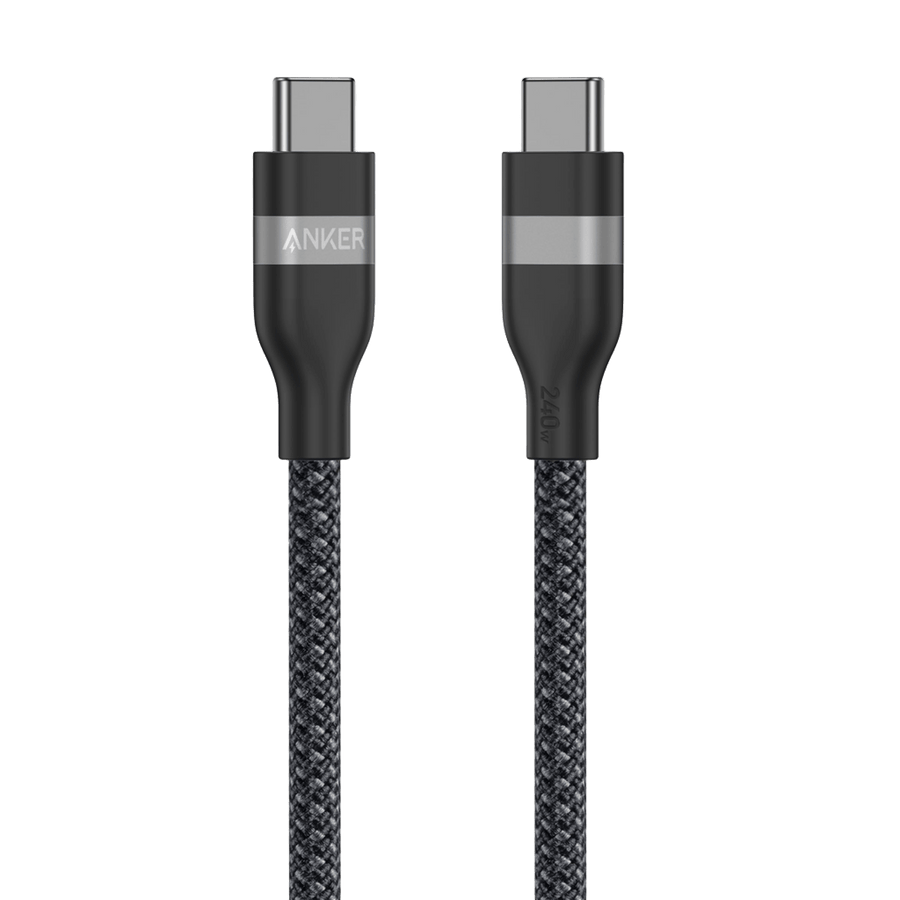
Anker's 240 W upcycled-braided cable, model A82E2, publishes a clear one. The charging figure is the headline and it is USB-IF certified. The rest of the sheet, which lists 480 Mbps data and no screen mirroring, is what decides whether $19.99 is the right cable or the wrong one for the job in front of you.
Our verdict
A well-specified charging cable at $19.99, worth its price for a laptop that draws over 100 W or for a drawer cable that must survive years of bending. For a phone, the same money buys two 60 W cables from the same brand.
- A good fit for
- Someone charging a high-wattage laptop over USB-C, or someone who has worn through enough cheap cables to pay for the 30,000-bend rating.
- We would skip it if
- You need the cable to drive a monitor, you move large files over it, or the only device on it is a phone that tops out well under 60 W.
Reasons to consider it
- USB-IF certification and a published 240 W rating, which most cheap cables neither claim nor hold
- A stated bend lifespan over 30,000 cycles and a 24-month coverage period
- Ships with a silicone organizer, which is the part that keeps a braided cable from knotting in a bag
The compromises
- Data transfer is 480 Mbps, the USB 2.0 figure, so it is a slow cable for anything but charging
- Anker states it does not support screen mirroring, so it will not connect a laptop to a display
- The 16-inch MacBook Pro is listed under limited charging speeds despite the 240 W rating
What we have not verified: We have not charged anything with this cable, measured its delivered wattage, or bent it 30,000 times. Anker publishes no weight and no connector dimensions, and the compatibility lists on the page mix full-speed and limited-speed devices without explaining the limit.
The things in this guide
A closer look at the products, who they may suit, and what to check before buying.
USB-C to USB-C Cable · 240W, Upcycled-Braided
Certified 240 W delivery and a published bend rating make it the cable to leave plugged into a power-hungry laptop for years.
Before you buy: Check that your device draws more than 60 W before paying for 240; if it does not, Anker's own two-pack of 60 W cables covers the job for half the price.
Price checked September 11, 2026. Retailer prices can change.Read the three numbers together
Anker lists a 240 W maximum output, a 480 Mbps data rate, and a note that the cable does not support screen mirroring. The first number is the largest the USB Power Delivery standard currently allows. The second is the USB 2.0 rate from two decades ago. The third rules out any display use at all.
Together they describe a charging cable and only a charging cable, built to the top of the power scale and the bottom of the data scale. For someone whose USB-C cable only ever moves electricity that is exactly right. For someone who plugs a laptop into a monitor or copies photos off a camera, the wattage buys nothing and the data rate costs time.
Very few devices reach the rating
Anker's compatibility list runs from recent iPhones through MacBook Air and Pro models, Lenovo and HP laptops, and Samsung and Pixel phones, and then adds a separate heading for compatible devices with limited charging speeds, where the 16-inch MacBook Pro sits. Phones on the list charge at a fraction of the cable's ceiling.
Wattage only helps up to what the device and the charger negotiate. A phone that accepts 27 W charges identically over a 60 W cable and a 240 W one. The rating matters for a laptop that draws over 100 W and for a future device you have not bought yet. Anyone buying for a phone alone is paying for headroom that will never be used.
The comparison inside Anker's own catalog
On the same collection page Anker sells a two-pack of nylon USB-C cables rated at 60 W for $9.99, and a 515 cable with Thunderbolt 4 compatibility for $29.99. The three products bracket the 240 W cable on price and on capability from both sides.
That makes the decision cleaner than a single listing suggests. Two 60 W cables cover phone, tablet and most laptop charging for half the money. The Thunderbolt-compatible cable is the one that moves data quickly and drives a display. The 240 W braided cable earns its place only in the gap between them: high power, low data, long life.
The bend rating is a claim with a warranty behind it
Anker states a bend lifespan of over 30,000 cycles, recycled nylon braiding, a silicone cable organizer in the box, and 24 months of coverage. The bend figure is a manufacturer claim from a test we have not seen; the coverage period is a commitment you can hold them to.
For a cable that lives at one desk the bend rating is beside the point. For one that goes in and out of a bag daily, the rating and the warranty are the reason to pay double what a bare cable costs, since the failure that retires most cables is the strain relief at the connector and not the wire inside.
When the label is selling you the wrong thing
Skip it if the cable has to do anything besides charge. Video out, fast file transfer and docking all need a cable specified for data, and this one is specified against it in plain text. Buying the highest wattage and expecting the highest everything is the most common USB-C mistake.
The same goes if every device you own is a phone or a tablet. The money is better spent on two cables than one, because the failure mode of a household is a lost cable and not a slow one. Keep the 240 W purchase for the laptop that can use it.
How we put this together
Built from the product pages and listings below, without test scores or results we have not measured. Specifications and prices change, so check the original page for the exact model, current price, delivery, and returns.
- Anker: USB-C to USB-C Cable (3 ft / 6 ft, 240W, Upcycled-Braided), model A82E2 (opens in a new tab)
- Anker: USB-C to USB-C Cables collection (opens in a new tab)