Product image supplied by the brand
In this guide
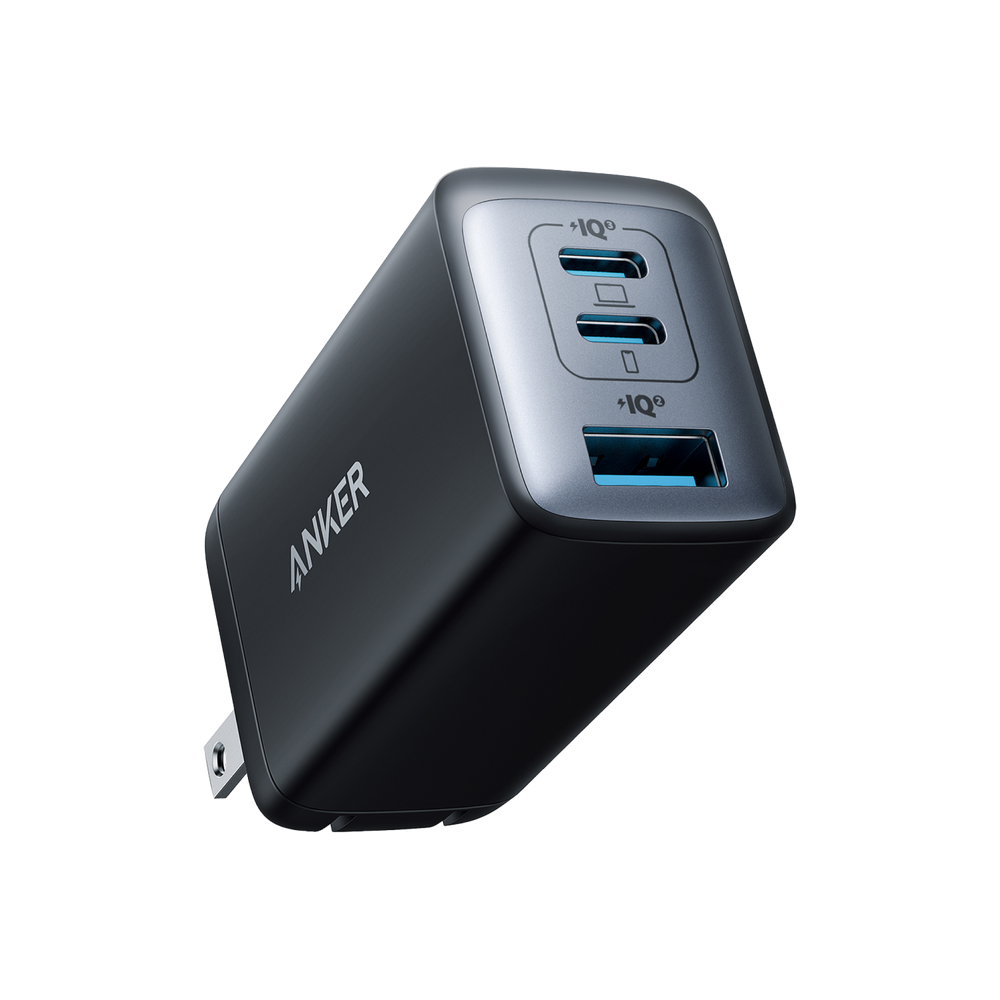
Assess the Anker 735 by drawing the charging arrangement before looking at the price. Laptop, phone and accessory, each against the port it would use. If those requirements fit the documented split, one adapter genuinely simplifies the kit. If they do not, 65W on the box is decoration.
The A2667 Nano II was listed at $29.99 on the US page when checked. The approval is conditional on the port plan working out. It does not extend to every product Anker calls a 735, and it does not claim this replaces the adapter that came with your laptop.
Our verdict
A useful candidate for mixed-device charging when the documented power split matches your equipment.
- A good fit for
- Someone replacing several small adapters and charging a compatible laptop alongside modest-demand accessories.
- We would skip it if
- Your laptop needs its full higher-power adapter during work, or the lower ports must both fast-charge demanding devices.
Reasons to consider it
- Two USB-C connections and one USB-A connection consolidate a mixed kit
- Published per-port allocations make the limitations possible to plan around
The compromises
- Available output changes with the occupied ports
- Similar Anker product names can hide different model behavior
What we have not verified: Efficiency, temperature, device negotiation and sustained output under load remain unmeasured; the published split is a plan, not a result.
The things in this guide
A closer look at the products, who they may suit, and what to check before buying.
735 Charger · Nano II 65W A2667
Consolidation works when the remaining power still covers the devices that will be plugged in together.
Before you buy: With all three ports in use the top USB-C port is limited to a published 40W.
Price checked September 10, 2026. Retailer prices can change.The weakest arrangement may be the one you use every night
The published maximum is 65W from either USB-C port used alone. With both USB-C ports occupied, Anker lists 45W plus 20W. With all three ports occupied, it lists 40W for the top USB-C and 12W each for the remaining two connections.
That last arrangement is the one to buy against, because it is the one you will use. Check it against each manufacturer's stated requirement and against your workload: a laptop charging while shut is not the same load as the same laptop building a project. Overnight adequacy proves nothing about a working afternoon.
Count the cables as part of the travel kit
This model has two USB-C ports and one USB-A port, and Anker says cables are sold separately. A mixed set of connections can be helpful for existing equipment, but it is useful only when the corresponding cables are already suitable or are included in the budget.
Lay the whole kit out, cable lengths included, and think about where the socket actually is in a hotel room. One charger at the wrong end of three short cables is worse than two adapters in the right places. The goal is a working arrangement, not the smallest number of plugs.
Consolidation also concentrates inconvenience
One adapter means fewer objects to track, but leaving it behind affects several devices at once. That is no argument for carrying a duplicate of everything. It argues for keeping the charger in one place and checking it on the way out, instead of assuming a smaller kit manages itself.
At home, one shared charging point becomes a queue when two people want their phones in different rooms. Keep the adapters that already serve useful places. Consolidation is for the bag that carries the same three devices every week.
Buy the exact model after checking the ordinary workload
The sensible buyer can name the three devices and their intended ports. The less convincing purchase starts with a sale badge and only later discovers that the working laptop needs a different arrangement. Our recommendation therefore favors a mapped, compatible kit over a generalized promise of charging everything.
Unreliable negotiation with your own devices, or output with no margin for the usual workload, would end the recommendation. Efficiency and heat need instrumented testing that was not done here. The published split is a planning input, not a substitute for measurement.
How we put this together
Built from the product pages and listings below, without test scores or results we have not measured. Specifications and prices change, so check the original page for the exact model, current price, delivery, and returns.
About our shopping links