Product image supplied by the brand
In this guide
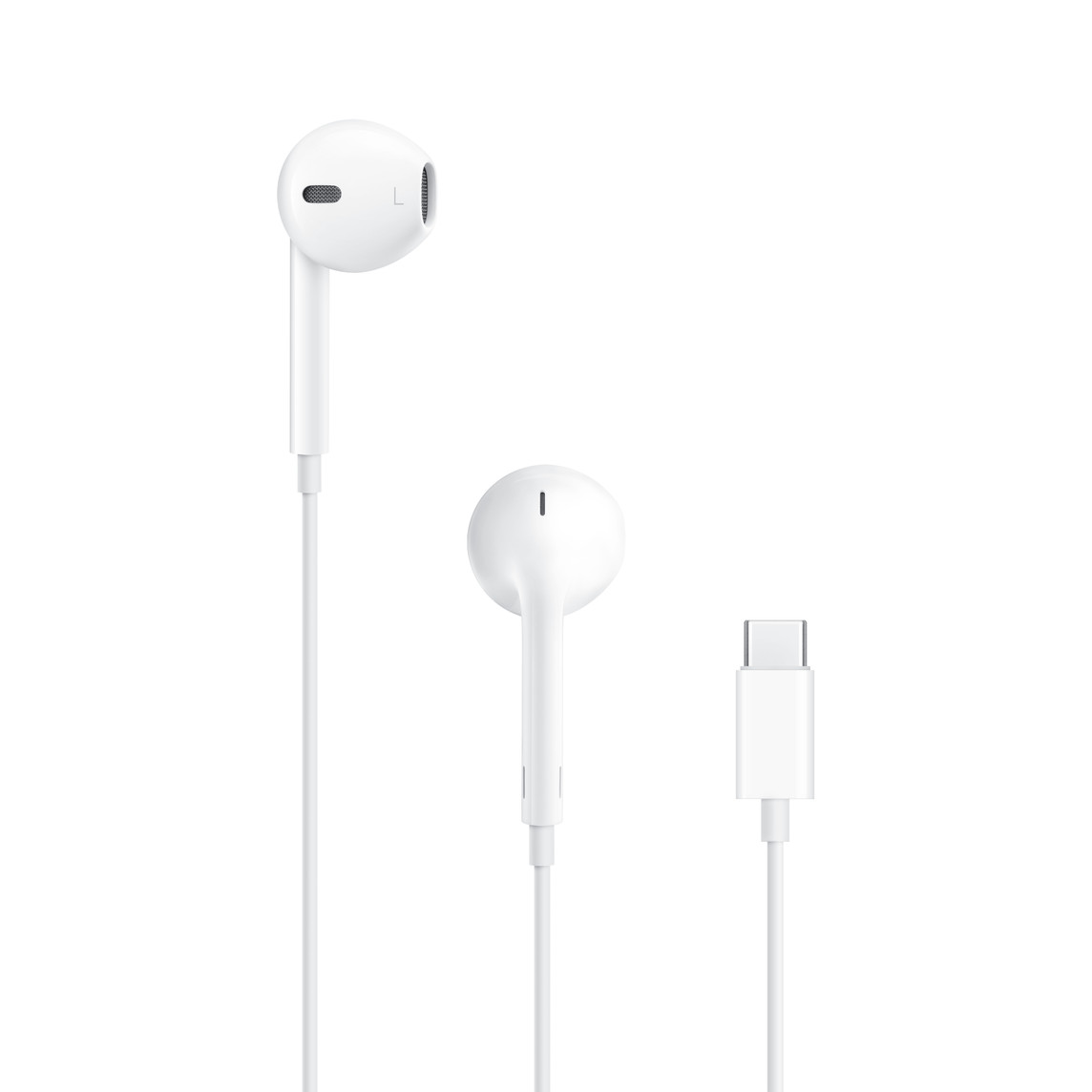
Wired earbuds have become a deliberate choice again, and Apple sells the same $19.00 EarPods in three connector versions: Lightning, 3.5 mm and USB-C. They are priced identically and none of them plugs into the other's device, which makes the connector, not the sound, the decision you are actually making.
The USB-C version is the one with a future, since Apple's own compatibility list now covers USB-C Macs, iPads and iPhones. Buying it is a small bet that your next phone keeps the same port, and a $9.00 adapter exists for the day that bet needs covering.
Our verdict
Sensible at $19.00 as a spare or a backup for a USB-C device, provided you understand you are buying an open-fit earbud with no isolation and no noise cancellation.
- A good fit for
- Someone who wants a cable in a bag for calls and podcasts, or who prefers wired audio for latency and for never charging anything.
- We would skip it if
- You need quiet on a plane or a train, you want a seal in the ear, or your devices use more than one connector standard.
Reasons to consider it
- Nothing to charge and nothing to pair, so it works the moment it is plugged in
- The inline remote handles volume, playback and answering calls without touching the phone
- An open fit leaves you aware of the room, which suits a walk or a shared office
The compromises
- There is no noise cancellation and no seal, so loud places push you toward turning the volume up
- The Lightning, 3.5 mm and USB-C versions all cost $19.00 and none is interchangeable
- Apple lists sweat and water protection without publishing an IP rating
What we have not verified: We have not listened to these, measured frequency response, or tested how the cable and connector survive being wound into a pocket. Apple's compatibility list names only its own USB-C Macs, iPads and iPhones, so behavior on non-Apple USB-C hardware is unverified here.
The things in this guide
A closer look at the products, who they may suit, and what to check before buying.
EarPods (USB-C)
Plug-in audio with working call controls, no battery and no pairing, at a price that makes losing a pair a minor event.
Before you buy: Confirm every device you want to use them with has USB-C, and expect no isolation from an open-fit earbud in a noisy place.
Price checked September 11, 2026. Retailer prices can change.Same earbud, three ports, no interchangeability
Apple lists EarPods with a Lightning connector, a 3.5 mm plug and a USB-C connector, all at $19.00. The USB-C version carries model number MYQY3AM/A, and the stated compatibility covers Macs with USB-C on macOS Monterey 12.6 or later, iPads with USB-C on iPadOS 16.4 or later, and iPhones with USB-C on iOS 17 or later.
A household running an older iPhone alongside a new one therefore needs two versions of a product that looks identical in the drawer. Anyone who owns a laptop with a headphone jack and a phone without one faces the same split. Apple sells a USB-C to 3.5 mm adapter at $9.00, which is the cheapest way to make one pair cover two ports, at the cost of carrying a dongle.
An open fit is a design position, not a shortcoming
Apple describes the EarPods shape as defined by the geometry of the ear instead of a circular bud, and nothing on the listing claims a seal, isolation or noise cancellation. The highlights mention deep bass tones, control of playback and answering calls, but sealing the ear canal is not among them.
The consequence is specific and predictable. In a quiet room an open fit sounds airy and stays comfortable for hours; on a train the low rumble goes straight past the bud, and the only available fix is volume. Someone who mostly takes calls at a desk or walks a city street is well served. Someone commuting under a jet engine is buying the wrong shape at any price.
No battery is a feature with a long tail
The box contains the EarPods and nothing else: no case, no cable, no charger. There is no pairing step, no firmware and no battery that degrades over a few hundred cycles, which is the failure mode that eventually retires every wireless earbud regardless of how well it was treated.
That makes a $19.00 wired pair a reasonable long-term backup even for someone who mostly uses wireless earbuds. When the wireless pair dies mid-call or arrives at a meeting empty, a cable in the bag has no such failure state. The trade is the cable itself, which will eventually fray at the connector, and Apple publishes nothing about the expected life of the strain relief.
Sweat and water protection is not a rating
The listing highlights protection from sweat and water without giving an IP rating, and no ingress figure appears anywhere on the page. Compare that with hardware sold specifically for exercise, where a rating like IPX4 is stated because buyers use it to judge whether a workout or rain is survivable.
Treat the phrasing as a reassurance about ordinary use rather than a promise about running in a downpour. For a gym bag pair this is probably sufficient; for anything more demanding the absence of a published figure is itself the answer. We have not tested water resistance and will not infer a rating that the manufacturer did not print.
When nineteen dollars is still the wrong nineteen dollars
Skip these if quiet is the point of the purchase. Nothing about an open earbud gets you a silent commute, and spending four times as much on a sealed pair with cancellation solves a problem this product does not address at all.
Skip them too if your devices disagree about connectors. Buying the wrong version is the most common way to waste this money, and buying two versions plus an adapter turns a cheap accessory into a small, annoying collection. Check the port on every device you actually use before ordering.
How we put this together
Built from the product pages and listings below, without test scores or results we have not measured. Specifications and prices change, so check the original page for the exact model, current price, delivery, and returns.
About our shopping links