Product image supplied by the brand
In this guide
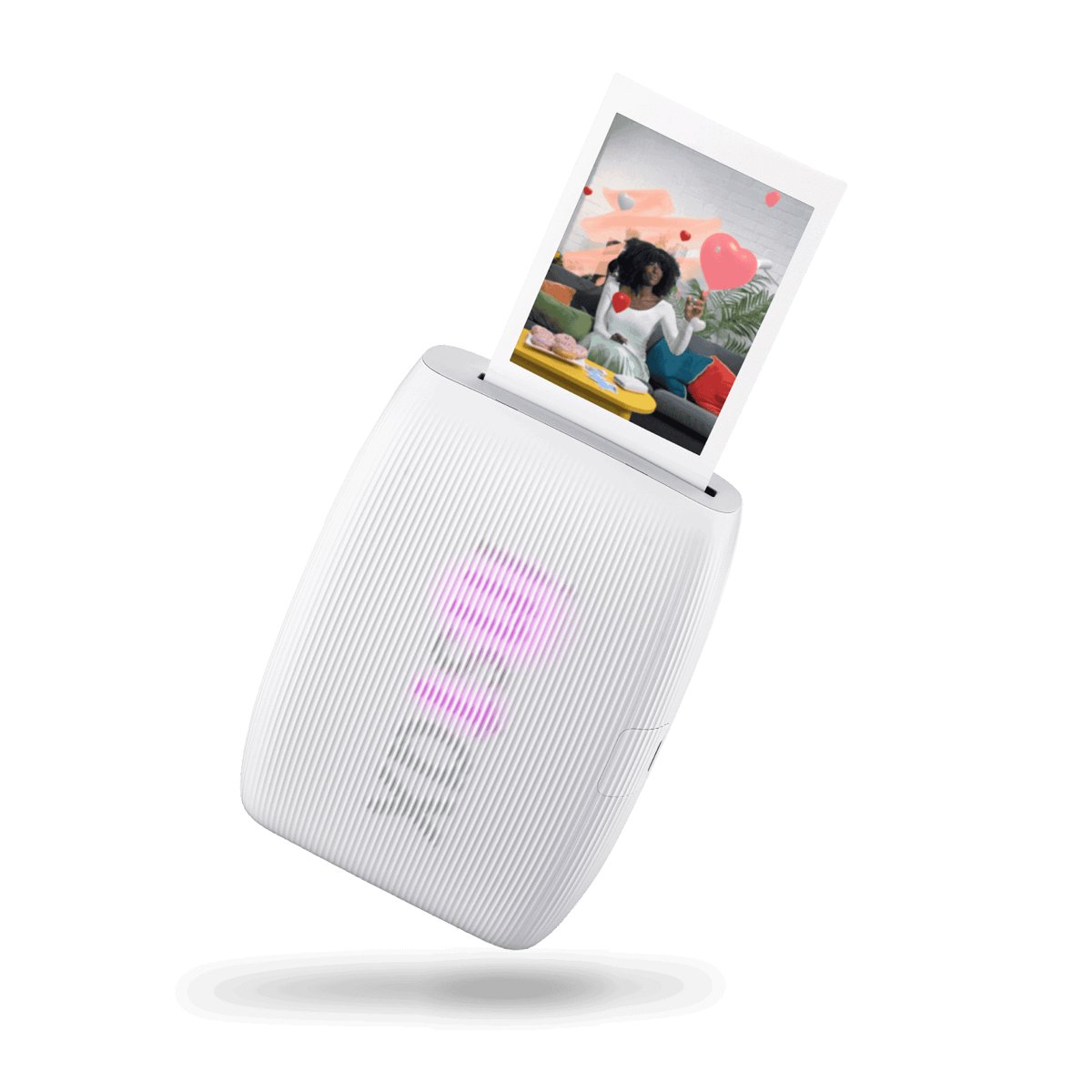
The instax mini Link 3 is the other half of the instant photo idea: the phone takes the picture, and this box makes the print. Fujifilm's US instax site lists it at a $116.95 MSRP, which is $23 above the mini 12 camera on the same site. Both machines consume the identical mini twin pack at $23.99 for 20 sheets, so the printer does not change the film bill at all. What it changes is when the film gets spent.
With a camera, every press of the shutter costs $1.20 whether the frame is good or not. With the printer, the frame is already on the phone, cropped and checked, before a sheet leaves the slot. That single difference is the reason to consider this device, and the rest of the review works through what Fujifilm publishes about the print engine, the battery, the Bluetooth link, the app, and what it leaves out.
Our verdict
A compact instax printer that makes sense for people who already take photos on a phone and want to print only the keepers. At $116.95 it costs $23 more than the mini 12 camera, and it burns the same $23.99 twin packs, so the case for it rests on selecting shots before committing film. The AR studio, collage and video features are extras; the core function is a 15 second print of an image you have already approved.
- A good fit for
- A phone photographer who wants a stack of small prints from an existing camera roll, and who would rather pick ten frames from a hundred than shoot ten blind.
- We would skip it if
- You want the instant camera experience of not seeing the shot first, you print in volume, or you expect the AR and collage features to work on an older Android phone without ARCore support.
Reasons to consider it
- Prints any JPEG, PNG, HEIF or DNG from the phone at 318 dpi on an 800 x 600 dot exposure, so the shot is chosen and edited before film is used
- Fujifilm rates the internal battery for about 100 prints per charge with a 1.5 to 2 hour recharge over the Type-C jack
- Bluetooth 5.1 pairing with a reprint gesture, a remote shutter mode and a six-shot collage mode built into the free app
The compromises
- Film is $23.99 for 20 sheets, so 100 prints cost $119.95, which passes the printer's own price on roughly the 98th sheet
- Only one phone can be paired at a time, and the instax AiR Studio feature needs ARCore on Android, which older phones lack
- Fujifilm publishes no battery capacity in mAh and no warranty term on its US pages, and the reprint buffer is cleared whenever the printer powers off
What we have not verified: We have not printed with this device, timed a print, or counted how many sheets a full charge delivers. Fujifilm's US and global pages disagree on the depth by 0.4 mm, list the battery only as an internal lithium-ion cell with no capacity figure, and give no warranty length. The $116.95 figure is Fujifilm's MSRP and retailers may sell lower. Per-print costs assume the plain white-border twin pack; patterned film lines cost more.
The things in this guide
A closer look at the products, who they may suit, and what to check before buying.
Instax Mini Link 3 Smartphone Printer
A 210 g Bluetooth 5.1 printer that turns approved phone photos into instax mini sheets in about 15 seconds, with a reprint gesture and about 100 prints per charge according to Fujifilm.
Before you buy: The film costs exactly what it costs through the mini 12 camera, the battery capacity and warranty term are unpublished, and the AR features need a recent phone.
Price checked September 11, 2026. Retailer prices can change.A 318 dpi exposure onto the same film a mini camera uses
Fujifilm's global specification page describes the print engine as a three-color OLED exposure at 800 x 600 dots, or 12.5 dots per millimeter, which works out to 318 dpi across the 62 x 46 mm image area of an instax mini sheet. The printer accepts JPEG, PNG, HEIF and DNG files from the phone over Bluetooth, exposes the sheet in approximately 15 seconds, and the chemistry then develops in about 90 seconds, the same figure Fujifilm gives for its mini cameras.
The film is standard instax mini stock bought on its own, and the US film page confirms the twin pack is compatible with mini smartphone printers as well as the analog and hybrid cameras. Nothing in the box is film. A buyer needs at least one $23.99 twin pack on day one, and the two-hour initial charge Fujifilm asks for in its FAQ means the first print is a couple of hours after unboxing at best.
The film bill is identical to the mini 12's, so the $23 buys selection
At $23.99 for 20 sheets, each print costs just under $1.20. One hundred prints run to $119.95, which overtakes the printer's $116.95 MSRP at about the 98th sheet. The mini 12 camera lists at $93.95 on the same site and uses the same twin pack, so the printer is $23 dearer up front and identical in running cost. Over a year of one twin pack a month, both machines consume about $288 of film.
What the $23 buys is the ability to look at the photo before it costs anything. A camera commits a sheet at the moment of exposure, misfires included. The printer only spends film on frames that have already been viewed, cropped and, if wanted, edited on the phone. For a household that shoots hundreds of phone photos and wants a dozen prints from them, the printer's waste rate is close to zero and the camera's is whatever the photographer's hit rate happens to be.
Bluetooth 5.1, one phone at a time, about 100 prints per charge
The global spec page lists Bluetooth Ver. 5.1 as the only interface and an internal, non-removable Li-ion cell as the only power source. Fujifilm does not publish the cell's capacity in mAh. It does publish the practical numbers: approximately 100 prints from a full charge, a 1.5 to 2 hour recharge depending on temperature, and about 3 W of power consumption. Charging runs through the Type-C socket using the 30 cm cable in the box; no wall adapter is listed.
The FAQ adds constraints the feature copy leaves out. Only one phone can be paired at a time, and switching phones means unpairing the first. On Android the app needs location permission before it can find the printer over Bluetooth. Battery level is read by pressing the function button on the side and reading the LED, or from within the app while connected. Automatic power-off can be switched on or off from the app's printer settings.
Which app features need a print, and which need a recent phone
The free instax mini Link app is mandatory; the printer has no other input. Simple Print sends a photo from the camera roll. Video Print pulls a frame from a clip of three minutes or less, though the FAQ excludes Android HDR video. Click to Collage fires six shots at three-second intervals and lets the user print two, four or six of them on one sheet. Frame Print adds borders, stickers and text, and Collage Print combines several photos on a single print. The app also offers instax-Natural and instax-Rich color modes.
Two features live on the printer itself. Turning it upside down and holding the power button for one second reprints the last image, but the FAQ states that reprint data is deleted whenever the printer is switched off. Remote Shooting uses the power button as a shutter release for the phone's camera, with tilt gestures for zoom. instax AiR Studio, the augmented-reality mode, needs ARCore on Android and holds a rolling gallery of 20 images before deleting the oldest; on an older Android phone it will not run at all.
210 grams, three colors, and two things Fujifilm does not say
Fujifilm's global page gives 90.0 x 37.3 x 125.0 mm excluding projections and 210 g without a film pack; the US page lists the depth as 37.7 mm, a discrepancy of 0.4 mm that changes nothing in practice. Three finishes are offered in the US: Clay White, Sage Green and Rose Pink. The supplied accessory is a single 30 cm Type-C cable, part number FZ00013220. The sibling mini Link+ lists at $169.95 and weighs about 240 g with the same print engine, so the Link 3 is the lighter and cheaper of the two mini printers.
Two facts are missing. Neither the US nor the global page states the battery capacity, so the 100-print rating is the only measure of endurance available. Neither page states a warranty period for the printer; the US page lists a Fujifilm North America repair phone number and an email address under service and repair, but no term. A shopper who wants a defined coverage window will have to get it from the retailer's paperwork or by asking Fujifilm directly.
When to skip the mini Link 3
Skip the printer if the point of instant film for you is the surprise. The mini 12 costs $23 less, needs no phone and no app, and produces a print at the moment of the shot; the printer produces a print of something you have already seen on a screen. The same goes if you expect to print in volume, because the $1.20 per sheet applies whether the image came from a lens or a camera roll, and 200 prints cost more than two of these printers.
Also leave it if the appeal is the augmented-reality studio or the collage booth and your phone is an older Android model, since Fujifilm ties AiR Studio to ARCore support. And if the household has more than one phone that will want to print, note that only one can be paired at a time. For a single phone user with a camera roll full of shots and a short list of frames worth $1.20 each, the printer is the more economical way into instax film.
How we put this together
Built from the product pages and listings below, without test scores or results we have not measured. Specifications and prices change, so check the original page for the exact model, current price, delivery, and returns.
- Fujifilm instax US: instax mini Link 3 printer page (opens in a new tab)
- Fujifilm instax global: instax mini Link 3 product specifications (opens in a new tab)
- Fujifilm instax US: mini Twin Film Pack (opens in a new tab)
- Fujifilm instax US: instax mini 12 camera page (opens in a new tab)
- Fujifilm instax global: instax mini Link 3 support and FAQ (opens in a new tab)
- Fujifilm instax US: instax mini Link+ printer page (opens in a new tab)