Product image supplied by the brand
In this guide
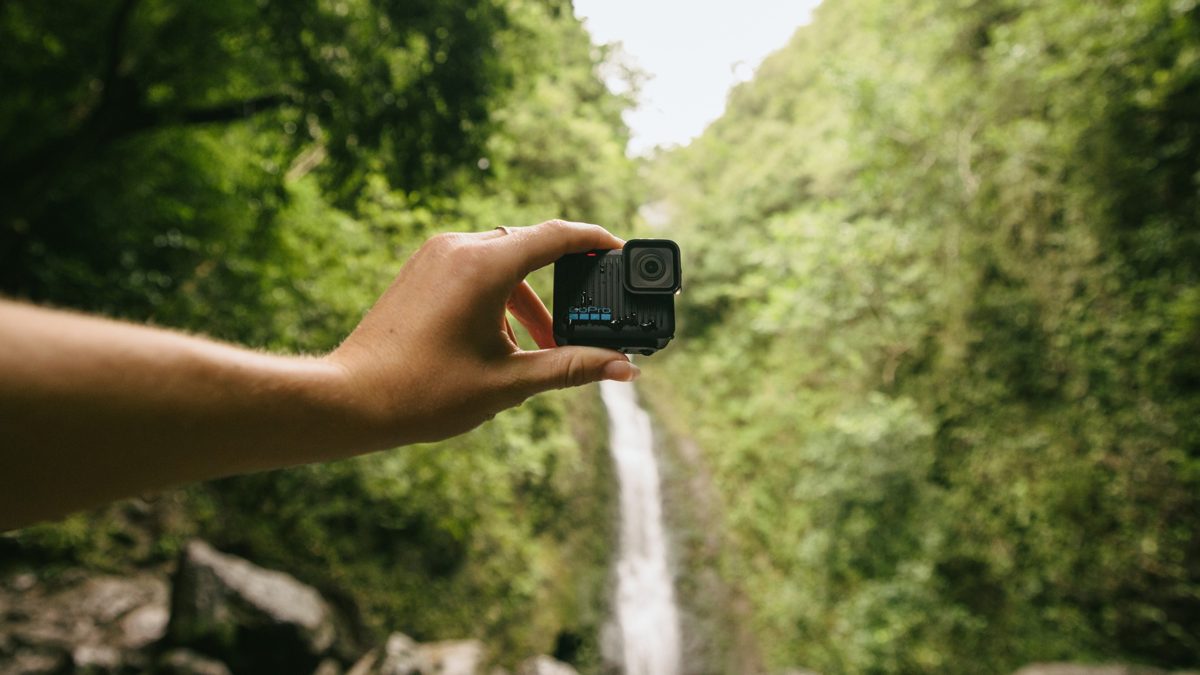
The HERO is the camera GoPro built for people who found the HERO13 Black too big and too complicated, and the company is candid about the trade: 35% less volume and 46% less mass than the flagship, with a simplified control set that reduces to three capture modes. On gopro.com US it is priced at $204.99, shown as $15 under a $219.99 regular price, and a first-year Premium subscription is bundled with the camera at no charge.
Read the specifications tab and the design intent is clear. Video tops out at 4K30 and 2.7K60, the battery is built in, stabilization lives in the phone app instead of the camera, and a long column of GoPro features is marked with a dash. The question this review tries to answer is whether that reduced feature list is a relief or a ceiling, and the answer depends almost entirely on who will be holding it.
Our verdict
A $204.99 point-and-shoot action camera that trades nearly every GoPro feature for size and simplicity; good value if three modes are all you will ever use, poor value the day you want a fourth.
- A good fit for
- A first action camera for a kid, a helmet or a handlebar, where 4K30 clips, a small body and a screen that shows what you are pointing at matter more than frame-rate menus.
- We would skip it if
- You want 60 fps at 4K, a swappable battery, in-camera stabilization, time lapse, an external mic, or footage you can drop straight into an editor without the Quik app in the middle.
Reasons to consider it
- 86 g and 56.6 mm wide with fold-out mounting fingers, waterproof to 16 ft without a housing
- 4K30, 2.7K60 and 1080p30 with 12 MP stills and 8.29 MP frame grabs, in H.265 at up to 50 Mbps
- Three modes, a 1.76-inch touch screen and eight voice commands keep the controls short
The compromises
- The 1255 mAh battery is sealed in, so a dead camera means a charging break, not a swap
- HyperSmooth stabilization is applied only when clips go through the Quik app; raw files off the card are unstabilized
- No HDMI, mic input, GPS, RAW photos, time lapse, live streaming, webcam mode or Protune, and no HB-Series lens support
What we have not verified: GoPro does not publish a runtime figure for the built-in battery, and the camera was not switched on for this piece, so recording time per charge, heat behavior at 4K and how the sealed cell ages remain open questions.
The things in this guide
A closer look at the products, who they may suit, and what to check before buying.
HERO (CHDHF-131) · Compact 4K Action Camera
A 4K30 GoPro at 86 g with a touch screen, waterproofing to 16 ft, built-in mounting fingers and three modes, at $204.99 with a free first year of GoPro Premium.
Before you buy: The battery cannot be swapped, stabilization requires the Quik app, and there is no 4K60, HDMI, mic input, RAW or time lapse; GoPro publishes no runtime figure.
Price checked September 11, 2026. Retailer prices can change.A 56 mm body with the battery sealed inside
GoPro's dimensions for the HERO are 56.6 mm wide, 47.7 mm tall and 29.4 mm deep, and the weight with the folding fingers and the embedded battery is 86 g. The fingers are GoPro's standard mount interface, so the camera drops into the same buckles and adhesive mounts as its larger siblings; GoPro counts 35 compatible mounts and accessories. The body is rated waterproof to 16 ft (5 m) without a housing, and the cover glass over the lens is described as water-repelling and replaceable.
The battery is a 1255 mAh Enduro cell that is not removable. GoPro's own FAQ frames this the way phone makers do: keep it topped up, plug it in when idle, recharge during the day if you are shooting a lot. What GoPro does not give is a runtime figure at any resolution, which is a real gap for a camera you cannot reload. The rated operating range is -10 °C to 35 °C, and the only display is a 1.76-inch touch LCD on the back, so framing yourself from the front is guesswork.
4K30, 2.7K60, 1080p30, and a column of dashes
The sensor is a 1/2.8-inch CMOS with 12 MP active (4000 × 3000) behind an F2.3 lens with a 15 mm equivalent focal length. Video is offered at 4K 16:9 at 30 or 25 fps, 2.7K at 60 or 50 fps, and 1080p at 30 or 25 fps, encoded in H.265 at 8-bit with a 50 Mbps ceiling. The slow-motion mode is 2x, meaning 2.7K60 played back at half speed; there is no 4K60 and no 120 fps at any resolution. Stills are 12 MP standard photos, and frame grabs from video come out at 8.29 MP from 4K, 4.11 MP from 2.7K and 2.1 MP from 1080p.
The overview copy says the HERO can use the full 165° lens for a 4:3 capture that is 25% taller than 16:9, with an ultra-wide SuperView crop available later in the Quik app, while the specifications tab lists the aspect ratio only as 16:9; treat the 4:3 claim as marketing until you see it in the menu. The list of features marked unavailable is long: HDR video, digital lens choices, horizon lock, looping, HindSight, scheduled capture, live streaming, webcam mode, RAW photos, burst, night photo, every time-lapse mode, Protune and custom presets. Audio is two microphones with no stereo, no noise reduction and no 3.5 mm input.
HyperSmooth happens on your phone, not in the camera
This is the detail most likely to surprise a buyer. On every other current GoPro, HyperSmooth stabilization is computed in the camera and baked into the file. On the HERO it is applied automatically in the Quik app, and GoPro's FAQ is explicit that a clip played back on the camera's screen will look unstabilized, and that footage pulled straight off the card into Premiere or another editor will also be unstabilized unless it was first exported from Quik with stabilization applied.
For someone who already shares from a phone, the workflow is fine: the clip goes to Quik, gets stabilized, gets trimmed and posted. For anyone editing on a computer, it adds a mandatory hop through a phone app for every clip that needs smoothing, and it means the camera cannot be used as a standalone stabilized source the way a HERO13 Black can. The camera pairs over Wi-Fi 5 on 2.4 and 5 GHz and Bluetooth LE 5.2, and it needs an A2 V30 microSD card, which is not included.
$204.99 against a $379.99 flagship, and a one-year defect warranty
GoPro's US price for the HERO alone is $204.99 at the time of research, marked as $15 under a $219.99 regular price, with a one-year GoPro Premium subscription added at $0 and renewing at $59.99 a year afterward. In the box: the camera, a curved adhesive mount, a mounting buckle, a thumbscrew, a USB Type-C charging cable and two stickers. The HERO13 Black is $379.99 on the same store, so the HERO saves $175 in exchange for the feature list above. Standard shipping in the US is free above a $50 order value.
The camera warranty covers manufacturing defects for one year from the original delivery date, with GoPro choosing between repair and replacement; damage from use, accidents and normal wear is not covered, and GoPro notes that returns can carry shipping, handling and restocking fees. Orders from gopro.com can be sent back for a refund up to 30 days from receipt if the item is in like-new condition, which requires an RMA number first and drop-off at the carrier no later than seven days after the RMA is issued. Subscribers also get a paid camera-replacement option, up to two exchanges a year for the same model.
Skip it once you can name a mode it lacks
The HERO is a good buy for exactly one profile: a person who needs a durable, tiny 4K camera with a screen, will shoot in one of its three modes, and is happy to let the phone app do the stabilizing. A child's first camera, a strap-on for a helmet, a bike or a dog, or a spare for a trip where the HERO13 Black feels like too much money to risk all fit. At $204.99 with a free year of cloud backup, that use case is well served.
Everyone else should pause. If the words time lapse, 4K60, external mic, RAW or livestream appear in your plan, the camera cannot do it and nothing on GoPro's pages suggests a firmware update will change that. If you edit on a desktop, the Quik-only stabilization will annoy you on the first project. And if you shoot long days, the sealed 1255 mAh battery with no published runtime is a risk you carry alone. For those buyers the $175 step up to the HERO13 Black buys back the removable battery, in-camera HyperSmooth and every dashed-out feature, and it is the better purchase.
How we put this together
Built from the product pages and listings below, without test scores or results we have not measured. Specifications and prices change, so check the original page for the exact model, current price, delivery, and returns.
- GoPro: HERO buy page (US) (opens in a new tab)
- GoPro: HERO overview and tech specs (opens in a new tab)
- GoPro: Warranty and return policy (opens in a new tab)
- GoPro: HERO13 Black buy page (US) (opens in a new tab)