Product image supplied by the brand
In this guide
A laptop or a tablet that charges over USB-C carries a number in its specification that decides more purchases than its processor: the wattage it draws while charging. Every charger, cable and power bank either meets that figure or falls short of it, and the shortfall shows up as a machine that drains while plugged in.
This guide is not a laptop review. It reads three reviewed charging accessories against that one number, using the makers' own published wattages, to show which accessory serves a given machine and which one only looks like it does.
The things in this guide
A closer look at the products, who they may suit, and what to check before buying.
735 Charger · Nano II 65W A2667
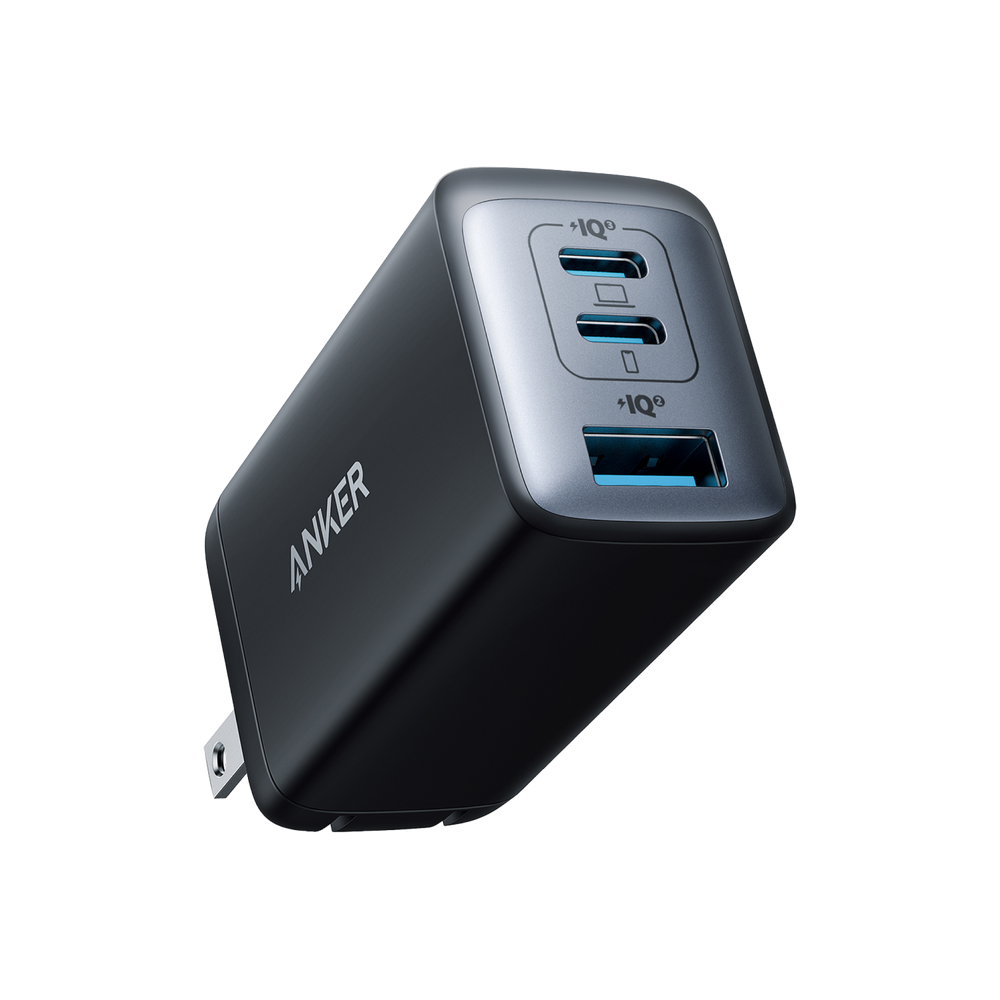
Anker's 735 Nano II at $29.99 delivers 65 W from a single USB-C port, which covers most thin laptops and every tablet, and Anker publishes the split when more ports are used: 40 W plus 12 W plus 12 W across three.
Before you buy: The published split is the whole story. A laptop that needs 65 W gets 40 W the moment a phone joins it, and a machine that draws over 65 W was never a match for this charger.
Price checked September 10, 2026. Retailer prices can change.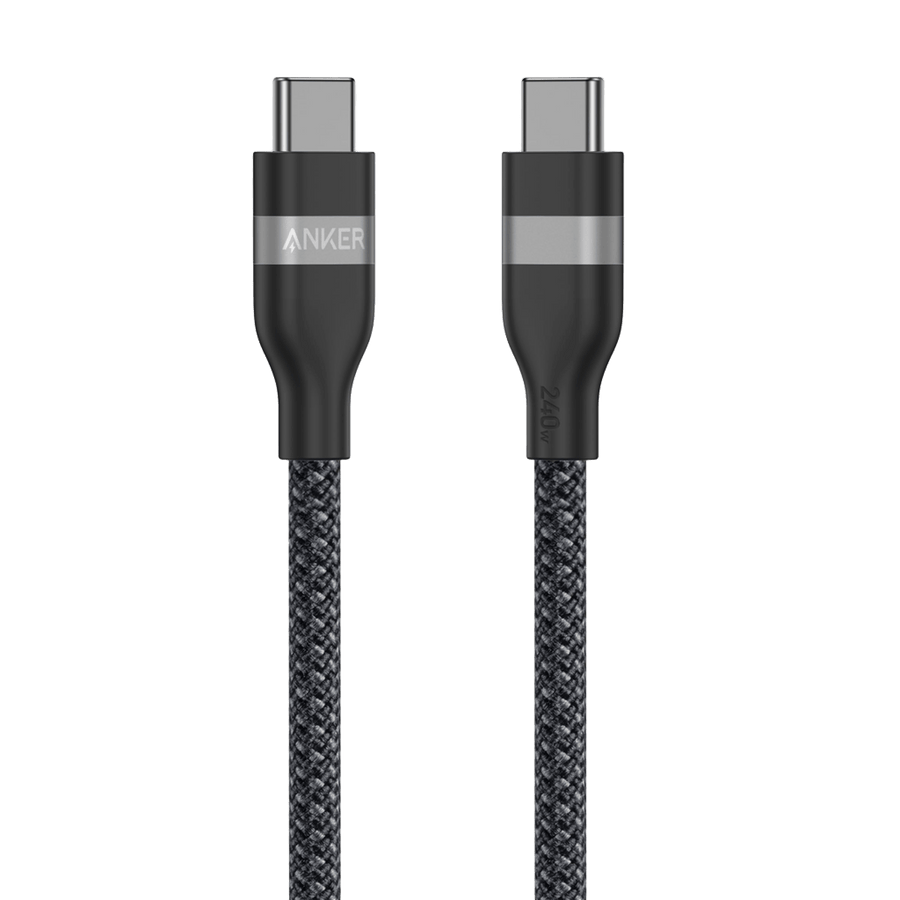
USB-C to USB-C Cable · 240W, Upcycled-Braided
Anker's 240 W braided cable at $19.99 is USB-IF certified well past any laptop's draw, which makes it the cable to keep on a machine that pulls more than the 60 W a basic cable carries.
Before you buy: It is a USB 2.0 data cable and does not carry video, so it will not drive a monitor from the laptop. Its rating is only worth paying for on a machine that exceeds 60 W.
Price checked September 11, 2026. Retailer prices can change.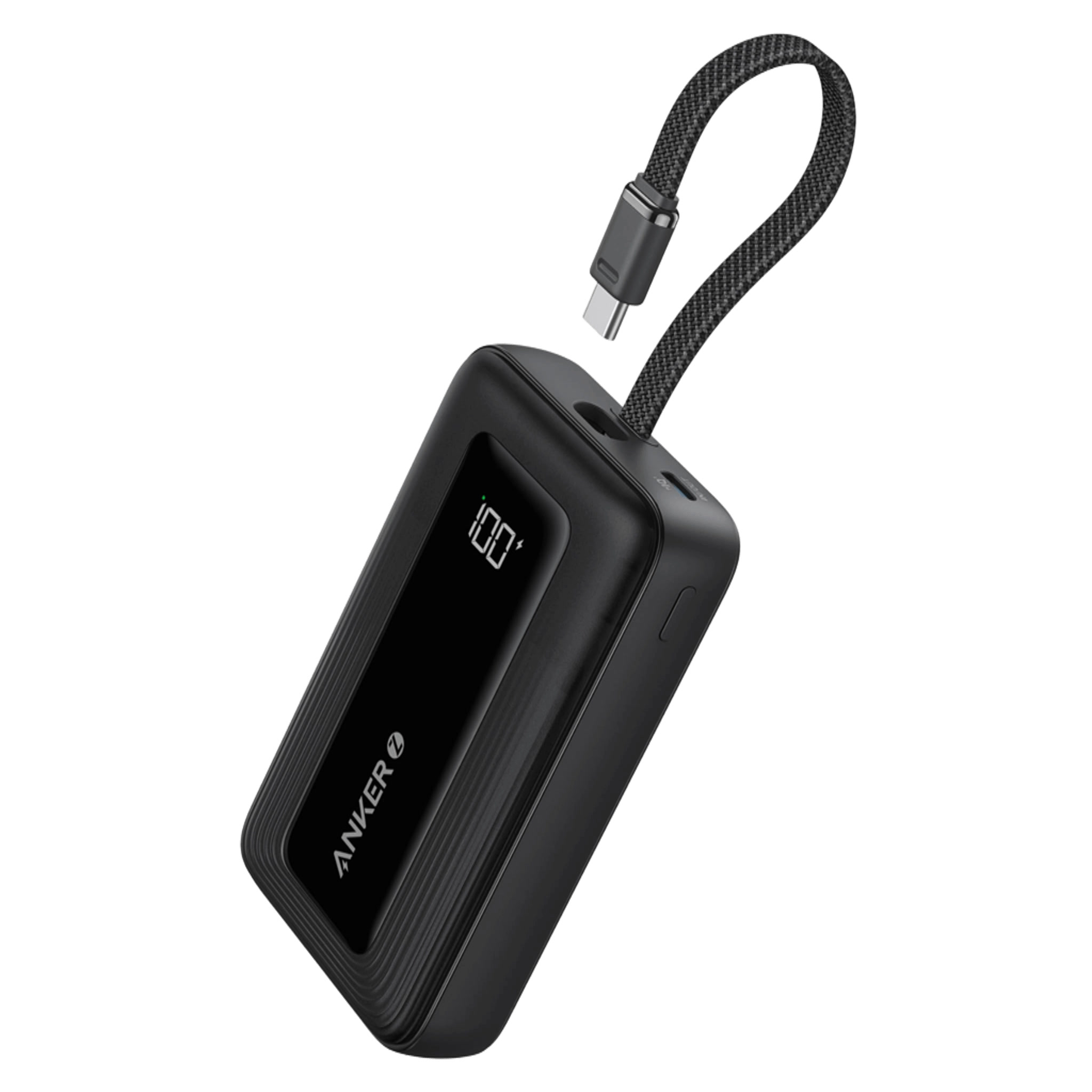
Zolo Power Bank · 10K, 30W, Built-In Cable
Anker's Zolo 10K at $29.99 outputs 30 W with a built-in cable and a 10,000 mAh label that Anker's own FAQ discounts to 5,500 to 7,000 usable, which is a phone and tablet bank by the maker's description.
Before you buy: Anker states that pass-through charging does not work for laptops and caps it at 5 V / 3 A. On a laptop that charges at 45 W or more, this bank slows the drain at best and does not charge.
Price checked September 11, 2026. Retailer prices can change.The laptop's charging wattage is the number to write down
Every laptop and tablet that charges over USB-C lists, somewhere on its specification page or on the charger it ships with, the wattage it draws. Common figures run from 20 W for a small tablet through 45 and 65 W for thin laptops to 100 W and above for large ones. That number is the filter for every accessory in this guide, because a charger, cable or bank rated below it will not keep the machine charged under load.
The method is to find that figure before buying anything else and to read every accessory's published wattage against it. Above the figure, the accessory works; below it, the accessory becomes a way to slow the drain rather than reverse it. The three products below sit at 65 W, 240 W and 30 W respectively, and each of those numbers puts it on one side of the line for a given machine.
A charger's headline wattage is for one port; the split is for real life
Anker's 735 Nano II costs $29.99 and delivers 65 W from a single USB-C port. Anker also publishes what happens when its three ports are used together: 40 W to the first, 12 W to each of the other two. For a laptop rated at 45 or 65 W that is two different chargers depending on whether a phone is plugged in beside it.
The published split is the honest specification and the one to shop by. A machine that needs 65 W is served only when it has the charger to itself; a machine that needs 45 W tolerates a phone alongside and drops to 40 W, which is close enough for most work. A laptop above 65 W is outside this charger's range in any configuration, and no port arrangement changes that. Our review of the charger reaches the same conclusion from the product's side.
The cable only matters once the laptop draws more than 60 W
Anker's 240 W braided cable lists at $19.99 with USB-IF certification, a 480 Mbps data rate and a note that it does not support screen mirroring. Basic USB-C cables are commonly rated at 60 W, and a laptop that draws more than that on a basic cable will negotiate down to the cable's limit rather than the charger's.
So the cable purchase depends on the same number as the charger. Below 60 W, any decent cable serves and the 240 W rating is unused headroom. Above 60 W, the higher-rated cable decides whether the laptop charges at its full rate or at the cable's, and $19.99 is a small price for that on a machine that costs many times more. The one thing this cable cannot do at any wattage is carry a display signal, which a laptop that docks needs from a different cable.
A 30 W bank is a phone bank, and Anker says so
Anker's Zolo 10K power bank is $29.99, outputs 30 W through a built-in cable, and carries a 10,000 mAh label that Anker's own FAQ converts to roughly 5,500 to 7,000 mAh of usable output. Anker also states that pass-through charging is capped at 5 V / 3 A and does not work for laptops. On a tablet that charges at 20 W it is a full recharge; on a laptop at 45 W or more it is a way to lose charge more slowly.
The lesson generalizes past this bank. A power bank's output wattage has to meet or exceed the laptop's charging figure to charge it under use, and most pocket banks publish outputs well below what a laptop draws. A buyer who needs to charge a laptop away from a wall should read the bank's output figure and its usable capacity together, and expect both numbers to be larger and the price to follow. This bank is the right purchase for the phone and tablet in the same bag, which Anker's page says in its own terms.
When the wattage does not decide the purchase
Skip this method for a laptop that charges through a proprietary barrel connector rather than USB-C. Its wattage still exists, but none of the three accessories here connect to it, and the charger that shipped in the box is the one to keep and replace like-for-like.
Leave it out for a machine that only ever charges overnight on its own charger. The wattage arithmetic matters when a laptop is charged during use, from a shared charger, or away from a wall; a machine that sits on a desk plugged into the charger it came with has already had the question answered by its maker.
How we put this together
Built from the product pages and listings below, without test scores or results we have not measured. Specifications and prices change, so check the original page for the exact model, current price, delivery, and returns.
- Anker: 735 Charger (Nano II 65W), model A2667 (opens in a new tab)
- Anker: USB-C to USB-C Cable (240W, Upcycled-Braided), model A82E2 (opens in a new tab)
- Anker: Zolo Power Bank (10K, 30W), model A1688 (opens in a new tab)