Product image supplied by the brand
In this guide
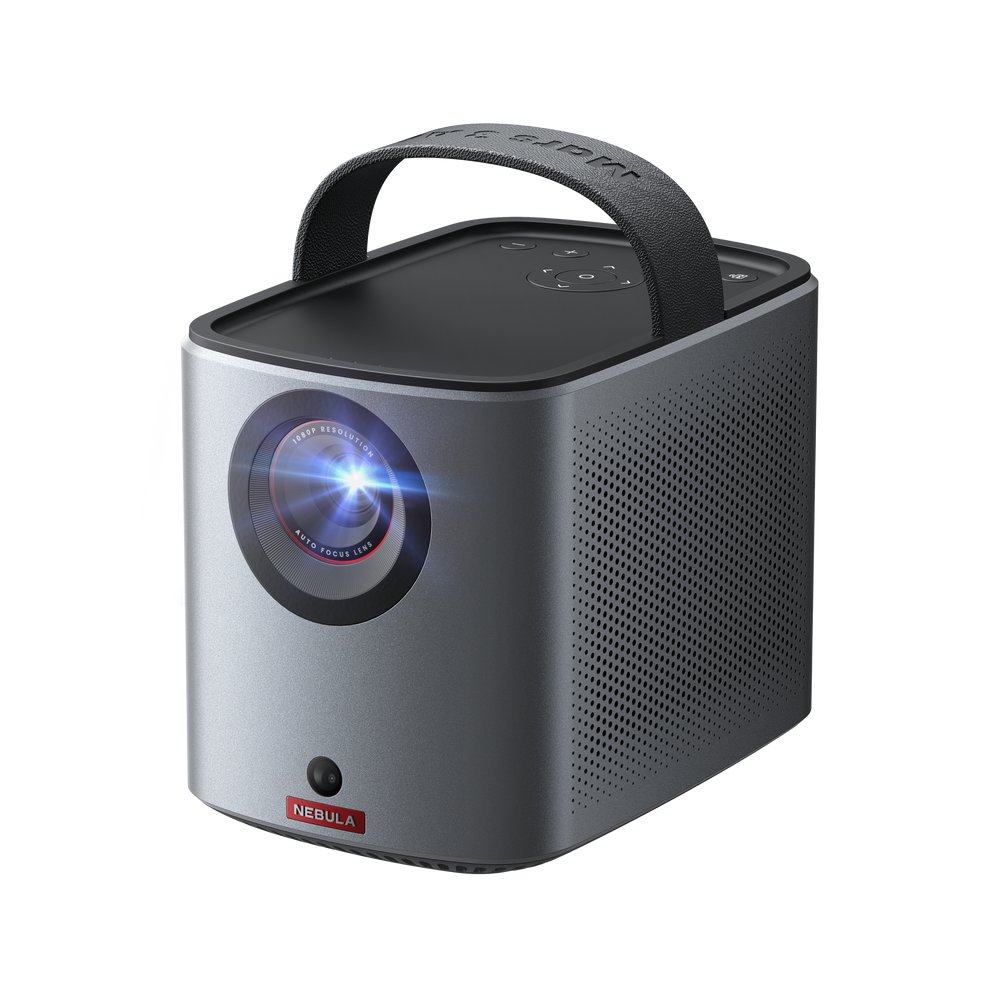
Nebula's portable line has a gap between the can-sized Capsule 3 and the full-size home models, and the Mars 3 Air is what fills it. Anker lists it at $599.99 on its soundcore store as a Google TV projector with Netflix built in, 400 ANSI lumens from an RGB LED source, a 1080p DLP engine and two 8 W speakers tuned for Dolby Audio. A rubberized handle folds over the top, and the complete unit weighs 1.693 kg.
This site already covers the Capsule 3 at $529.99, and the Mars 3 Air is best understood against it. The extra $70 buys twice the rated brightness, a second speaker, a larger maximum image and a handle, and it costs you the ability to stand the projector in a cup holder. The software, the throw ratio, the port and the runtime claim are the same. The rest of this piece works through what those numbers mean for a dark room, a patio and a warranty claim.
Our verdict
The Mars 3 Air is the Nebula to buy if the Capsule 3's 200 lumens felt thin: double the brightness, stereo speakers and a handle for $599.99, with the same Google TV software and the same 2.5-hour Eco mode battery claim.
- A good fit for
- A household after one projector for a dim living room and the occasional backyard evening, values built-in Netflix, and can live with a 1.7 kg unit instead of a can-sized one.
- We would skip it if
- You need it to last a full movie on battery at normal brightness, you want a picture in a lit room, or you prefer to put the money toward a laser model.
Reasons to consider it
- 400 ANSI lumens and a 30 to 150 inch image range, twice the Capsule 3's brightness at a 1.2:1 throw
- Two 8 W Dolby Audio speakers, HDMI 2.1 with ARC, Chromecast casting and Google TV with licensed Netflix
- Autofocus, auto keystone, screen fit and obstacle avoidance that Anker says settle in 3 seconds
The compromises
- The 2.5-hour battery figure is an Eco mode number, and 8 hours applies only to music playback
- At 1.693 kg and 178 mm tall this is a carry-handle projector, not a pocket one
- Projectors outside the X series get a 12-month warranty, and opened-but-unused returns can lose 10%
What we have not verified: The projector was not run here, so real brightness at the wall, fan noise against the under 28 dB claim, battery life outside Eco mode and the accuracy of the auto keystone were not measured. The spec rows list Android TV 11.0 while the title says Google TV, and Anker does not reconcile the two on the page.
The things in this guide
A closer look at the products, who they may suit, and what to check before buying.
Mars 3 Air Portable Google TV Projector (D2325)
400 ANSI lumens, a 1080p DLP engine, stereo 8 W Dolby Audio speakers, HDMI 2.1 with ARC and Google TV with Netflix in a 1.69 kg body with a handle, listed at $599.99 with an $80 code embedded through 2026-09-14.
Before you buy: 2.5 hours of video is an Eco mode figure, 400 lumens still wants a dim room, and the warranty for this model is 12 months against 2 years for the X series.
Price checked September 11, 2026. Retailer prices can change.400 lumens across 30 to 150 inches
Anker rates the Mars 3 Air at 400 ANSI lumens from an RGB LED source through a 0.23 inch DLP chip at 1920 x 1080, with a contrast ratio of 400:1 and a lamp life of 30,000 hours. The image range is 30 to 150 inches at a 1.2:1 throw ratio, so a 100-inch picture needs roughly 2.7 m of distance to the wall. The Capsule 3 shares the chip, the throw ratio and the 1080p output but is rated at 200 lumens and tops out at 120 inches, which is the cleanest way to state what the extra $70 buys.
Lumens spread across area, so the honest reading is that 400 lumens gives a watchable picture in a dim room at 80 to 100 inches and a dim one at 150. The description promises HDR, but the spec rows do not name an HDR format and the contrast figure is modest, so expect the benefit of HDR content to be in tone mapping, not in black levels. Anker's setup claim is that screen fit, keystone, focus and obstacle avoidance resolve in 3 seconds, a routine the smaller Capsule also advertises.
The 2.5-hour claim has the same footnote as before
The spec row reads Battery Life (Eco Mode): 2.5 Hrs, and the description says up to 2.5 hours of movies or up to 8 hours of music. Both are qualified numbers. Eco mode lowers brightness, and the music figure assumes the light engine is off and the unit is working as a Bluetooth speaker. Anker does not publish a runtime at full brightness, so a two-hour film on battery at 400 lumens is not something the page promises. Power is 19 V at 4.74 A through the supplied adapter, so a laptop charger is not a substitute.
Sound comes from two 8 W drivers with Dolby Audio processing, against a single 8 W driver in the Capsule 3, and the projector can run as a standalone speaker over Bluetooth 5.1. Inputs are a single HDMI 2.1 port with ARC, plus Chromecast casting from a phone and Wi-Fi for the Google TV apps. The operating system row says Android TV 11.0 while the title and imagery say Google TV, the same inconsistency the Capsule 3 page carries; in both cases the store states that Netflix is officially licensed, which matters because many cheap projectors cannot run it.
A handle, 1.7 kg, and an $80 code with a date on it
The Mars 3 Air measures 178 x 122 x 133 mm and weighs 1.693 kg, twice the Capsule 3's 0.85 kg, and it ships in a box of 229 x 200 x 223 mm. The rubberized handle is the intended carry; there is no tripod-friendly can shape here, and the outdoor use Anker pictures assumes a table or stand. Three bundles add a stand for $699.98, a 100-inch screen for $768.99, or both for $868.98, with the base unit at $599.99 and 218 units in stock at the time of this check.
Embedded in the page data is a code, WSTD2325US, worth $80 against the base variant, active from 2026-08-31 and expiring at 06:59:59 UTC on 2026-09-14, which brings the projector to $519.99 while it runs. Anker flags the code as matching an Amazon deal, and the store also lists a free tote bag as an automatic cart gift. Any price near $520 seen after mid-September is a new promotion rather than this one.
Twelve months, and a 10% cut if you open the box
Anker's warranty table splits projectors in two. The Nebula X1, X1S and X1 Pro get 2 years on the main unit; every other projector, the Mars 3 Air included, gets 12 months, and refurbished projectors get 3 months. The general paragraph lower on the same page describes an 18-month warranty on quality-related defects, but the table is the specific statement and the one to plan for. Claims need an order number or dated receipt, a serial number or photo of the fault, and possibly a return for inspection, and replacements may be factory-refurbished units of equal value.
Returns are 30 days from the order date for unused, undamaged projectors with all accessories and packaging. Anker reserves a 10% deduction on units that were opened but not used, and buyers pay return shipping when the reason is anything other than a proven defect. A projector is exactly the sort of purchase people open to test on their own wall, so the deduction is worth treating as part of the price if you are unsure about brightness in your room.
Skip it if the room has a window and the evening has a plan
Do not buy the Mars 3 Air for a room you cannot darken. Four hundred lumens is double the Capsule 3 and still a dim-room number, and a customer review on Anker's page says outdoor watching waits for night. If your use is a bright living room, the budget belongs in a brighter laser model, not in a bigger battery projector.
Also pass if battery independence is the whole point. The 2.5-hour figure is an Eco mode claim, the full-brightness runtime is unpublished, and a feature-length film at 400 lumens on battery is an experiment the page does not endorse. If a can that fits a cup holder is the priority, stay with the Capsule 3 and accept its 200 lumens; if the brightest picture in this size is the priority, look past both toward a laser light source.
How we put this together
Built from the product pages and listings below, without test scores or results we have not measured. Specifications and prices change, so check the original page for the exact model, current price, delivery, and returns.
- Anker soundcore: Nebula Mars 3 Air product page (opens in a new tab)
- Anker soundcore: refund policy and warranty terms (opens in a new tab)
- Anker soundcore: Nebula Capsule 3 product page (opens in a new tab)