Product image supplied by the brand
In this guide
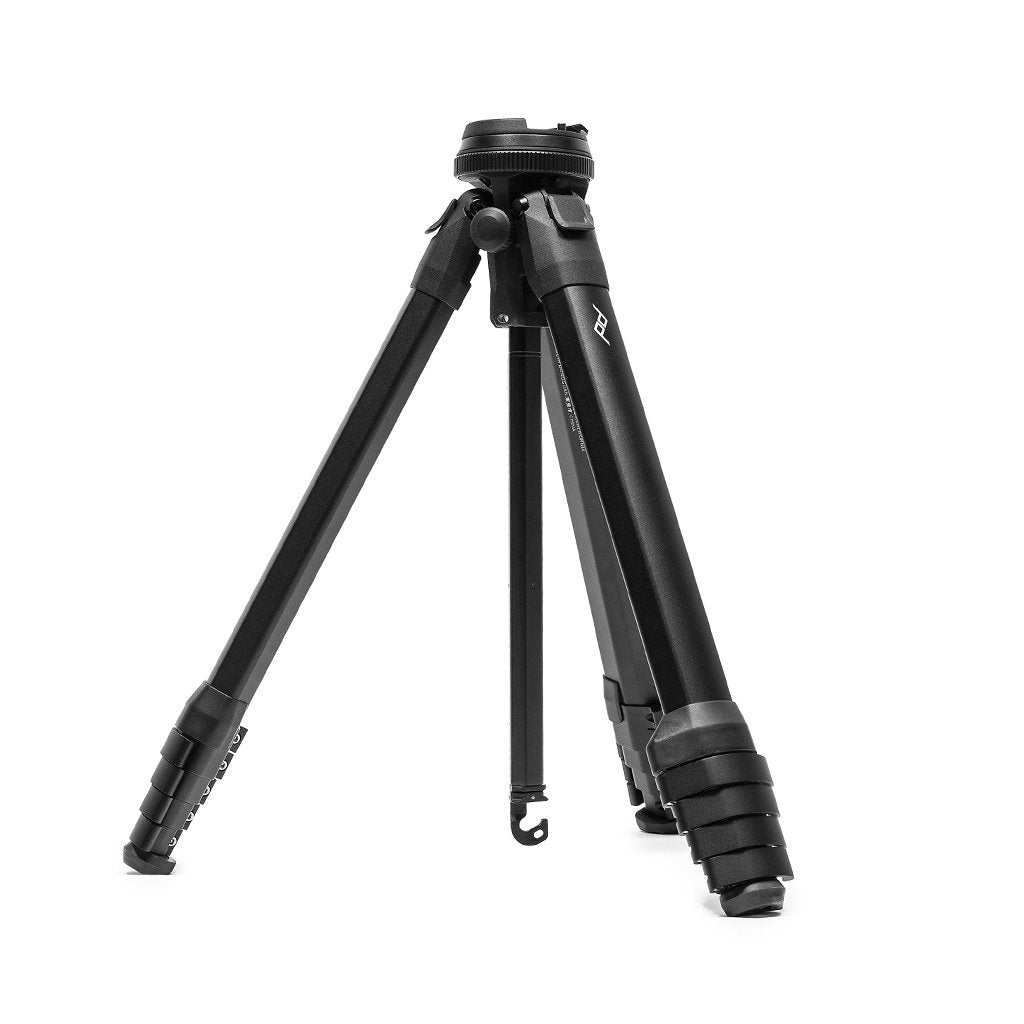
Peak Design sells the Travel Tripod at $399.95 in aluminum and $599.95 in carbon fiber. Folded, it is 15.5 inches long and 3.25 inches across, which Peak Design compares to the diameter of a water bottle, and the aluminum one weighs 3.44 lb. Unfolded, it reaches 60 inches with the center column up and holds 9.1 kg.
Those numbers carry the case. A tripod that fits inside a daypack comes on trips that a tripod strapped outside does not, and that is the entire case for paying $399.95 rather than buying a heavier, longer tripod for less. The counter-case is that folding this small takes five leg sections and twelve locks, and every setup pays for the packed size.
Our verdict
Buy the $399.95 aluminum version if the tripod travels inside a daypack or a bike bag and has to stand at full height under a full-frame camera. In a car or studio, the fold is dead weight.
- A good fit for
- A photographer who carries a tripod on foot or by bike, shoots full-frame with a telephoto, and packs it inside the bag rather than strapped outside.
- We would skip it if
- Studio or car-based work, video that needs a fluid head, or a camera light enough that 20 pounds of capacity and a 60-inch reach buy nothing.
Reasons to consider it
- 15.5 inches folded, 3.25 inches across, 9.1 kg (20 lb) capacity and 60 inches at full height, at 3.44 lb in aluminum.
- Five leg sections with aluminum cam locks, four per leg, and a ball head that locks with one adjustment ring.
- The box adds a soft case, a standard plate, a phone mount, a hex tool and a bushing tool to the tripod and head.
- Peak Design's lifetime cover takes in failures that stop the tripod working, not the scratches it collects.
The compromises
- Twelve cam locks mean twelve things to open and close before any shot, four on each leg.
- Carbon fiber saves 0.63 lb, 18 percent of the aluminum version's weight, for $200 more; the rating is 20 lb on each.
- The warranty excludes cosmetic blemishes, scratches, stains, misuse and accidents, and replacements can be refurbished stock.
- One ring locks the ball instead of the several knobs most heads use: one control to find, but coarse for a slow pan.
What we have not verified: Nothing published measures how much the aluminum and carbon legs differ in vibration, and twelve cam locks are a long-term wear question that no specification answers. The phone mount's fit with thick cases is also undocumented.
The things in this guide
A closer look at the products, who they may suit, and what to check before buying.
Travel Tripod · Aluminum
15.5 inches folded, 3.25 inches across, 60 inches at full height, a 20 lb capacity and a one-ring ball head at 3.44 lb in aluminum.
Before you buy: Twelve cam locks to set up, a lifetime warranty that excludes cosmetic wear, and a carbon version that costs $200 more to save 0.63 lb.
Price checked October 17, 2026. Retailer prices can change.What 15.5 inches changes
Packed, the tripod is a short cylinder: 15.5 inches long, 3.25 inches across. It goes along the back of a daypack, into a bike frame bag or into the bottom of a carry-on, and the soft case in the box is a sleeve for exactly that. A tripod strapped outside a bag takes the knocks a packed one avoids, and it has to be unstrapped whenever the bag is opened.
The packed diameter is the more interesting number. A 3.25-inch tube does not force a daypack open the way a wider folded bundle of head and legs does, so the bag keeps its shape and the tripod keeps its place. That is a small, physical advantage, and the packed size is what the price pays for.
Sixty inches, twelve locks
At full height the tripod reaches 60 inches with the center column up and 51.25 inches with it down. The raised column supplies the last 8.75 inches, and a raised column is the least rigid part of the design.
Five leg sections produce twelve locks: four on each leg, since each section above the lowest has one. Photographers who set up once at a location open them once. Anyone raising and lowering the tripod through an afternoon works all twelve each time.
Low mode drops the top of the tripod to 5.5 inches, which is how ground-level shots and product work get done. The 20 lb rating comes with Peak Design's note that the tripod is optimized up to a full-frame DSLR with a telephoto lens.
One ring, one plate, one phone
The ball head locks with one adjustment ring instead of the several knobs most heads carry. That means one control to find and fewer protrusions to catch on a strap. It is also coarser: a slow, level pan is easier on a head with separate controls, which is one reason this is a stills tripod first.
The plate clamps on top and the tripod ships with one standard plate. The box also holds a soft case, a phone mount, a hex tool with a clip and a bushing removal tool. A phone mount is included, so the same tripod holds the device most people actually shoot with; the load hook under the column is part of the tripod, not an accessory, and takes a bag in wind.
0.63 lb, or 18 percent
The carbon version costs $200 more and weighs 0.63 lb less, which is 18 percent of the aluminum tripod's 3.44 lb and 22 percent of its own 2.81 lb. Both are rated to 20 lb, fold to the same dimensions and use the same head. The legs differ, anodized 6061-T6 aluminum on one and carbon fiber on the other; the ball head, hub and load hook are powder-coated aluminum, and the locking ring is polycarbonate/ABS.
Whether that saving is worth $200 hinges on how the tripod travels. On a bike or a ten-mile hike, 0.63 lb is a saving carried every mile. In a car, it is $200 spent on weight nobody carries.
Lifetime warranty, minus the wear
Peak Design's lifetime warranty extends to defects in manufacture and to failures that stop the tripod working. It does not cover cosmetic blemishes, scratches, stains, misuse or accidents. Replacements come from open-box, gently used or refurbished stock when Peak Design has it.
For a tripod that lives on a bike or in a pack, the exclusions decide what the warranty is worth. A scuffed leg is wear, not a claim; a leg bent in a fall is not covered. A failed lock or a cracked hub is, and that is the failure that could send a $400 tripod to a shelf.
When the fold is dead weight
If the tripod lives in a car or a studio, the folded size answers a problem the owner does not have. A conventional three-section tripod sets up with fewer locks and reaches similar heights, and what the price adds is compactness, not more height or load capacity. The same is true for video: a fluid head with a pan handle is the proper fit, and this ball head is not it.
Buy the Travel Tripod when it has to come with you on foot, when the camera is full-frame with a telephoto, and when the bag has room for a 15.5-inch tube. Skip it when the tripod stays near the car or when the camera is light enough that 20 lb of capacity is irrelevant.
How we put this together
Built from the product pages and listings below, without test scores or results we have not measured. Specifications and prices change, so check the original page for the exact model, current price, delivery, and returns.
- Peak Design: Travel Tripod product page (US) (opens in a new tab)
- Peak Design: Lifetime Warranty (opens in a new tab)