Product image supplied by the brand
In this guide
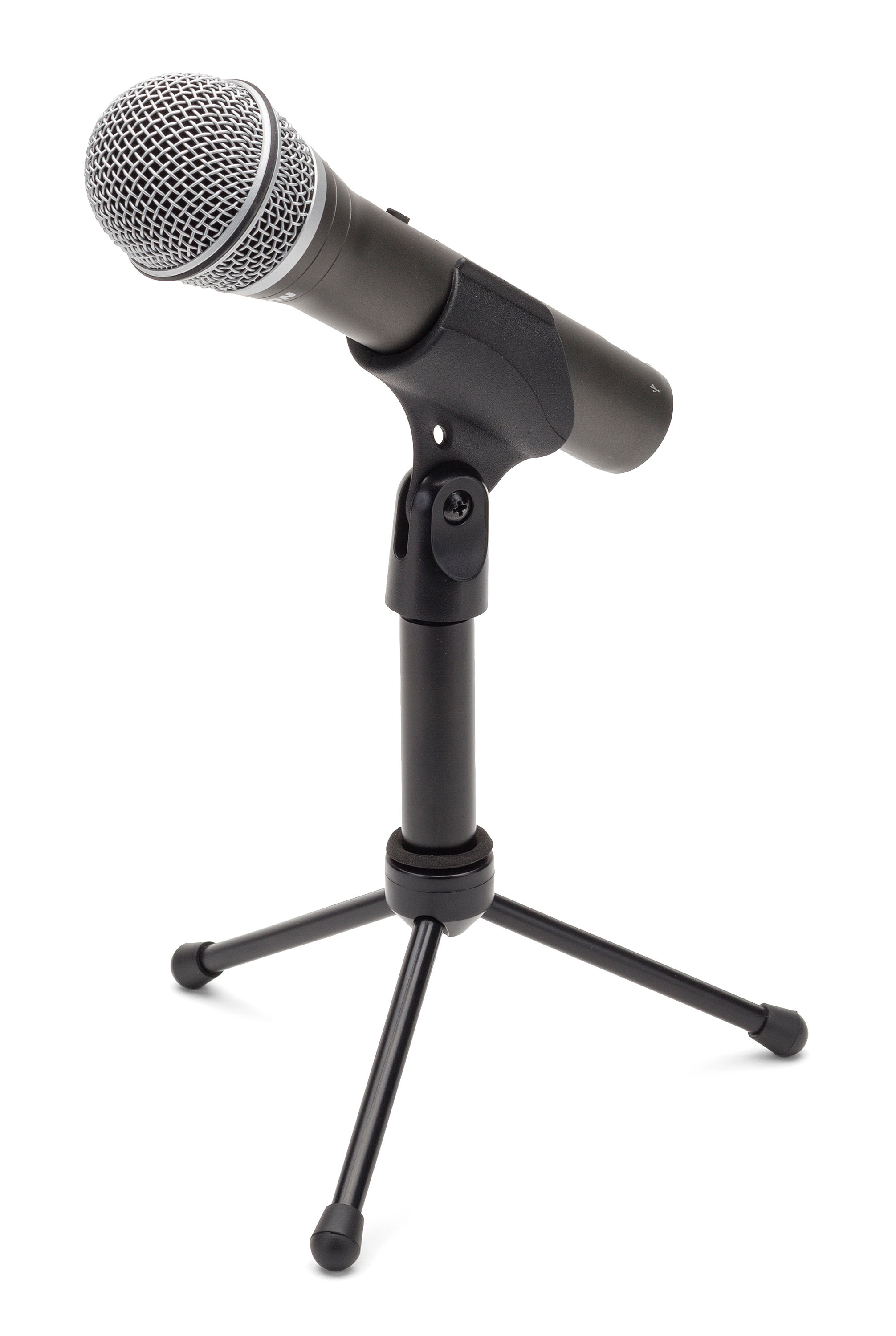
The Samson Q2U is a handheld dynamic microphone with two outputs on one body: USB-C for a computer and analog XLR for a mixer or audio interface. The Recording and Podcasting Pack — the box carrying the desktop tripod, stand extension, mic clip, foam windscreen, and both cables — read $79.99, In Stock, ships from Amazon and sold by Sustained Modulation when the listing was checked on 2026-09-28. Samson's own page carries no sticker; B&H, whose listing is labeled Authorized Dealer, had the same pack at $79.99 in stock that day.
Two claims decide this purchase. First, whether one microphone really serves a desk that runs on USB today and a proper preamp tomorrow; Samson answers it directly, saying both connections can run simultaneously. Second, whether a dynamic capsule is the right call in a room nobody treated with acoustic panels — that is where Samson's copy points, and the answer shapes how and where you can talk into it.
Our verdict
Shortlist the Q2U at $79.99 when one mic must record over USB-C now and through XLR after an interface arrives; buy it from an authorized dealer such as B&H at that price, and know the 16-bit/48 kHz cap.
- A good fit for
- A podcaster, streamer, meeting host, or home vocalist recording one voice at a desk, wanting no driver today and keeping the same microphone when a mixer or interface joins later.
- We would skip it if
- You want the simplest plug-and-forget USB mic and will never add hardware, need stereo or two voices from one microphone, or already record past 16-bit/48 kHz — that plan needs an interface first.
Reasons to consider it
- USB-C and XLR outputs both carry audio, and Samson says they can run at the same time — one microphone covers the computer desk now and a mixer or interface later
- The dynamic cardioid capsule is Samson's own pick for untreated rooms: the product page calls it less sensitive to background noise and says the pattern rejects sound from rear and sides
- Complete at $79.99 in the pack: desktop tripod with extension, mic clip, foam windscreen, and both cables arrive with it, and the 3.5mm headphone jack monitors without latency
The compromises
- The digital side stops at 44.1/48 kHz and 16-bit — past that ceiling the only road forward is XLR plus an interface bought separately
- The manual sets vocals 4 to 18 inches out to pick up the voice while minimizing ambient noise, with bass rising the closer the capsule gets; separately, output is -54 dBV/Pa and gain lives in the operating system
- The on/off switch cuts USB and XLR together, so muting for a cough also drops a live feed running on the analog side
What we have not verified: No independent bench measurement of the Q2U — no rig data, no measured response curve — surfaced on 2026-09-28, so the 50Hz-15kHz response and -54 dBV/Pa sensitivity have no third-party number behind them, and Samson's own documents disagree once: the page's compare table prints 20Hz-18kHz while the manual still describes a mini-B USB jack where the current page says USB-C. A bench test, or a box shipping the older connector, would change what to tell a first-time buyer.
The things in this guide
A closer look at the products, who they may suit, and what to check before buying.
Q2U USB/XLR Dynamic Microphone, Recording and Podcasting Pack
B&H, an authorized dealer by its own listing, and Amazon's third-party buy box both read $79.99 for the pack on 2026-09-28. USB-C runs driver-free on a Mac, PC, or Chromebook; a 3.5mm headphone jack monitors the live signal without latency; and the kit includes the tripod, extension, clip, windscreen, and both cables, so the desk is complete on day one. The same microphone then plugs into a mixer or interface whenever the XLR cable gets its use — Samson even allows both outputs at once.
Before you buy: The USB path stops at 16-bit and 48 kHz, the manual places vocals 4 to 18 inches from the mouth, and gain is set in the operating system rather than on the microphone.
Price checked September 28, 2026. Retailer prices can change.One capsule, two ways out
On the digital side, the Q2U presents itself as a plain USB-C audio device: Samson lists Mac, PC, and Chromebook support with no driver installation, says the onboard converters handle the analog-to-digital step inside the mic, and claims compatibility with most computer-based recording software. Samson also says the USB link reaches mobile devices. The printed ceiling for that path is 44.1 or 48 kHz at 16-bit.
On the analog side it is an ordinary dynamic microphone: a male XLR connector the manual tells you to feed into a standard microphone preamp, whether that sits in a PA mixer or a desktop audio interface. The maker's mixer guide is three steps — cable in, switch to ON, set the level per the preamp's own instructions — and nowhere mentions phantom power; the only power requirement printed anywhere in the manual is 5 V DC over USB. Samson states both outputs can run simultaneously, which is the live-sound case: one voice, recorded and reinforced from the same capsule.
One version check before ordering: Samson's current PDF manual still describes a mini-B USB jack, while the live page and the Amazon listing both say USB-C and list a USB-C cable among the contents. The listing matches the current page; a buyer receiving older stock would need a different cable than the one the spec sheet implies.
What a dynamic capsule changes in a room nobody treated
Samson's positioning for the Q2U is explicit: the dynamic capsule 'is less sensitive to background noise and other distracting sounds, making the Q2U great for recording in untreated rooms,' and the cardioid pattern focuses pickup in front while rejecting the rear and sides. That is the maker's claim, not a measurement. It also frames the lineup: in Samson's own compare table, six of its eight USB microphones are condensers, and the Q2U is one of only two dynamics.
The manual's reason for the working distance is what the capsule hears: vocals 4 to 18 inches ahead 'will pickup the voice while minimizing unwanted background or ambient noise,' with bass building as the mouth approaches and highs dulling off-axis. The same document gives the pattern that job — a unidirectional pick-up pattern 'minimizes ambient and background noise' — standard cardioid behavior rather than a Q2U special. The electrical figures stand apart from that placement advice: -54 dBV/Pa sensitivity, a 148 dB maximum SPL ceiling, and input gain the computer sets. Room tolerance is bought with placement discipline, not with permission to set the mic anywhere on the desk.
The printed numbers, including where the maker's pages disagree
The printed spec sheet and the manual agree on the figures that matter: dynamic element, cardioid pattern, 50Hz-15kHz response, -54 dBV/Pa sensitivity, 148 dB maximum SPL, 44.1/48 kHz at 16-bit over USB, a 3.5mm headphone output, an on/off switch covering both outputs, and a body 7.5 inches long by 2.2 inches across weighing 0.7 lb. Nothing there asks for a shockmount, a pop filter, or a phantom supply to start recording.
Two of Samson's own records conflict with that pair. The compare table on the same product page prints 20Hz-18kHz for the Q2U — a wider band than the 50Hz-15kHz in its printed specs and manual; the two dedicated documents are the record used here. And the manual's mini-B connector description trails the page's USB-C, as above.
The control layout follows the same paper trail. There is no gain knob on the microphone: input level is set in the operating system — the Levels tab on Windows, the Input slider on macOS — and the maker's clipping rule is to turn that control down until the LED stops flashing red. The buttons on the body drive the headphone mix, which carries the direct mic signal and computer playback together at 10mW into 16 ohms, and the manual notes the same jack can feed active desktop monitors. The on/off switch, by contrast, is blunt: it cuts USB and XLR together.
In the box, and what day one costs
Per Samson's feature list, the pack ships a mic clip, the desktop tripod stand, a stand extension that raises the capsule toward the mouth, a foam windscreen, a 2.25m USB cable, and a 3m XLR cable. Against the $79.99 buybox read on 2026-09-28, nothing else is required to record a first episode or stream a first meeting; the mic clip takes a standard stand or boom arm whenever the tripod graduates.
Samson's own terms run two years from the date of purchase against defects in material and workmanship, and the Amazon item details print the same term. The conditions matter more than the length: service needs proof of original ownership and the sales receipt, the warranty does not transfer, it 'applies only to products sold in the USA,' and the unit 'must be purchased from an authorized Samson Audio dealer.' Amazon's buy box on 2026-09-28 was Sold by Sustained Modulation, a third party the listing never calls authorized. B&H, whose listing carries an Authorized Dealer label and a two-year manufacturer warranty line, had the same pack at $79.99 in stock that day, so the covered route costs nothing extra.
Skip it if the computer is where the signal path ends
Three reader types do not fit this mic. Someone certain they will never add hardware is paying for an XLR output that stays in the drawer, and a plain USB-only microphone is the simpler answer for a desk that will never grow an interface. Someone tracking stereo or two voices into one input is asking one capsule to do a two-input job — the Q2U is a single cardioid capsule, and the manual's quick start sets up one mono track. And someone whose recordings already outgrow 16-bit capture needs the analog output plus an interface, which makes the interface, not the microphone, the purchase to plan first.
For the rest of the first-mic bracket, two questions stay open. No independent bench measurement of the Q2U turned up on 2026-09-28, so response and sensitivity stand as maker figures — figures whose own source disagrees once on the frequency band. If a measurement showed the USB converters thin against same-price condensers, or a delivered box carried the older mini-B wiring the manual still describes, the advice above would need reworking.
How we put this together
Built from the product pages and listings below, without test scores or results we have not measured. Specifications and prices change, so check the original page for the exact model, current price, delivery, and returns.
- Samson: Q2U USB/XLR Dynamic Microphone product page (opens in a new tab)
- Samson: Q2U Owner's Manual (Q2U_OM_5L_v7, PDF) (opens in a new tab)
- Samson: Q2U support guide — Using the mic with a mixer/PA system (opens in a new tab)
- Samson: Q2U support guide — Using Q2U with Apple Computers (opens in a new tab)
- Samson: Q2U support guide — Getting Started on Windows Computers (opens in a new tab)
- Amazon: Samson Q2U Recording and Podcasting Pack listing (ASIN B001R747SG) (opens in a new tab)
- Samson: warranty information (opens in a new tab)
- B&H Photo: Samson Q2U Recording & Podcasting Pack (B&H # SAQ2UP, MFR # SAQ2U) (opens in a new tab)
- Sweetwater: Samson Q2U Recording and Podcasting Pack (search listing) (opens in a new tab)