Product image supplied by the brand
In this guide
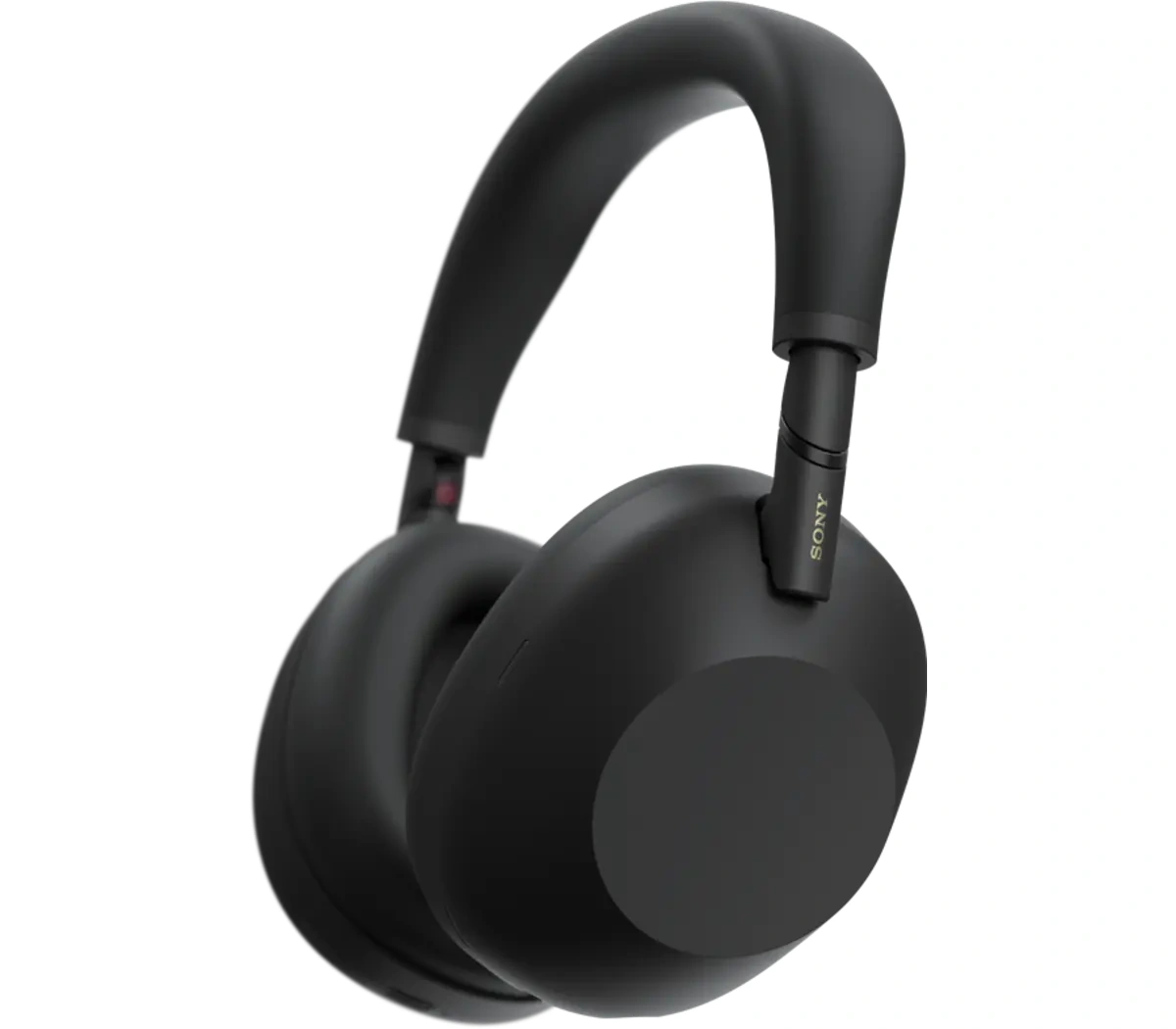
Sony sells the WH-1000XM6 in five colors — Black, Midnight Blue, Platinum Silver, Sand Pink and Sandstone — and Sony's American store lists the black pair at $379.99 against an original price of $459.99, printed as an $80.00 saving. It is a closed over-ear at 254 g, and it ships with a carrying case, a detachable headphone cable and its own charging cable. Sony's headline parts are a QN3 noise-cancelling processor it says is seven times faster than the QN1 in the WH-1000XM5, and an array of 12 microphones that processor drives in real time.
The three headphones that frame this decision sit in different slots. The soundcore Space One is a $99.99-list over-ear — soundcore's own store showed $79.99 on 6 October 2026 — with three call microphones, 40 hours of cancelling on a charge and an 18-month warranty. The AirPods Pro 3 is a $249 in-ear with a hearing test, a heart-rate sensor and 8 hours of cancelling. The WH-1000XM6 is a $379.99 over-ear with 12 microphones, 30 hours of cancelling and a one-year warranty. Two hours a day on a commute, a flight or in an open office is where those differences stop being academic.
Our verdict
Buy it if you wear headphones for hours a day and want Sony's most adaptive cancelling; $379.99 is the store price against a $459.99 list. For quiet on a budget the $99.99 Space One runs longer on a charge.
- A good fit for
- A commuter, flyer or open-office worker who wears headphones two or more hours a day, takes calls on them, and wants Sony's 12-microphone adaptive cancelling and LE Audio.
- We would skip it if
- You listen mostly in quiet, or the $99.99 Space One is already on your shelf and you value battery hours and an 18-month warranty over the last notch of noise cancelling.
Reasons to consider it
- A 12-microphone array run by the QN3 processor, which Sony says is 7 times faster than the QN1 in the WH-1000XM5, with an Adaptive NC Optimizer that adjusts to air pressure and how you wear them
- SBC, AAC, LDAC and LC3 over Bluetooth 5.3, with multipoint, DSEE Extreme, and a cable mode that keeps noise cancelling running with the power on
- 30 hours of music with noise cancelling on (AAC, SBC or LC3), a 3.5-hour charge, and 3 minutes of charging for about an hour of playback at 5 V/1.5 A
The compromises
- Battery with noise cancelling on is 30 hours on AAC but 26 on LDAC, against 40 hours for the $99.99 Space One; the flagship runs shorter on the number people plan a flight around
- The warranty is one year for the United States and Canada and needs a dated purchase receipt, where soundcore lists 18 months on its headphones
- At $379.99 the store price is $80 under the $459.99 list, and the $280 gap to the Space One does not buy more features to point at: both fold and both take two devices.
What we have not verified: How much quieter the 12-microphone array is than the 3-microphone Space One in a real cabin is unknown: Sony supplies neither a decibel figure nor a method, and if that gap is small the $280 rests on LE Audio and build alone.
The things in this guide
A closer look at the products, who they may suit, and what to check before buying.
WH-1000XM6
A 12-microphone array with the QN3 processor and an Adaptive NC Optimizer, SBC/AAC/LDAC/LC3 over Bluetooth 5.3, multipoint, DSEE Extreme, and 30 hours of music with cancelling on (26 on LDAC) from a 3.5-hour charge, in a closed over-ear at 254 g with a case and both cables in the box.
Before you buy: One-year warranty for US buyers against the $99.99 Space One's 18 months, 30 hours of cancelling battery against its 40, and no published decibel figure to show how much quieter the 12-microphone array actually is.
Price checked October 7, 2026. Retailer prices can change.A 12-microphone array, and what it replaces
Sony's case for the WH-1000XM6 rests on two numbers it publishes: a QN3 noise-cancelling processor it says runs seven times faster than the QN1 in the WH-1000XM5, and an array of 12 microphones that processor adjusts in real time. An Adaptive NC Optimizer tracks external noise, air pressure and how the headphones sit on your head, including over a hat or a pair of glasses. Against the $99.99 soundcore Space One, which soundcore describes as three microphones with AI enhancement, that is four times the count, and the array is the part the cheaper pair scales down hardest: three microphones against twelve.
What Sony does not publish is a decibel figure. Some makers put a reduction percentage on the box; Sony's store and support pages carry no such number and describe no procedure, so the claim that the array cancels more is a parts-count argument rather than a measured result. A louder, more crowded cabin is where that would show up, and it is the one thing a specification sheet cannot settle.
30 hours with cancelling, 26 on LDAC, and fewer than the $99 pair
Sony quotes the battery in two places and they do not use one lens. The support spec sheet prints a flat Max. 30 hrs (NC ON) and Max. 40 hrs (NC OFF) for music. The help guide breaks the same cell down by codec: AAC, SBC and LC3 all reach 30 hours with cancelling on and 40 with it off, but LDAC drops to 26 hours of cancelling and 36 without. Use the number for the codec you will actually stream; on LDAC the flagship runs four hours under its own headline.
Talk time is a separate column: 24 hours with cancelling on and 28 with it off. Connect the supplied cable with the power on and the headset becomes a wired noise-cancelling pair, rated 28 hours with cancelling. Charging takes about 3.5 hours, and three minutes buys roughly an hour of playback at 5 V/1.5 A, or about three hours on a USB PD charger at 9 V/2.3 A. The $99.99 Space One is rated 40 hours with cancelling on.
The price is a store price, and the warranty is one year
Sony's American store lists the black pair at $379.99 against an original price of $459.99, an $80.00 saving, and the store takes the order today: its FAQ says every order ships free and most products bought directly from the store may return within 30 days of the day they arrive or are picked up, refunded minus any return shipping cost. The product's FAQ calls $459.99 the MSRP, so a store price and a list price are two different numbers here, not one permanent markdown. The page also offers a trade-in credit for eligible headphones and a three-month Audible trial that needs purchase and registration; neither changes what the headphone costs, and neither belongs in a tier comparison.
The warranty runs shorter than the cheaper pair's. Sony's own limited warranty covers the United States and Canada for one year and warrants the product against defects in material or workmanship for the original owner and any later owner from the date of purchase; service means delivering the product with a dated purchase receipt. Soundcore's published table lists 18 months on its headphones. Anyone buying the XM6 for peace of mind is buying six fewer months of cover than the $99.99 pair carries.
Against the $249 in-ear, a different job
The AirPods Pro 3 is a different shape for a different day. Apple's pair is $249 at Apple, sits in the ear, and is rated 8 hours of listening with cancelling on; it adds a hearing test, a hearing-aid mode and a heart-rate sensor for workouts. The XM6 runs 30 hours with cancelling on and rests over the ear rather than in it, with no health features at all. If one pair has to cover a two-hour commute and a long flight, the 30-hour figure is the one that survives a transatlantic flight without hunting for a charger.
The AirPods Pro 3 answers a different part of the day. It slips into a pocket where the XM6 rides in a case, 254 g on the head, and the hearing features have no counterpart on the Sony. Anyone after one device for the office, the gym and a hearing check is not choosing between these two; that is two purchases, and the money splits differently.
When to keep the $99.99 pair
Skip the XM6 if the listening is mostly quiet. Both the XM6 and the Space One fold and connect to two devices, so at a desk the two are separated by clamping force, weight and the QN3 array, none of which shows up in a silent room. Someone who works from home, listens to albums at night, or has the Space One on the shelf is paying about $280 for cancellation with nothing to cancel.
Battery life settles it for a second group. The flagship's 30 hours with cancelling on, 26 on LDAC, are ten to fourteen fewer than the $99.99 pair's 40, and the warranty is six months shorter. What justifies the higher price is the 12-microphone array and the LE Audio codec, and the array remains the part Sony never put a number on. Until a decibel figure or an independent cabin test exists, the premium is easier to justify as a comfort and build decision than as a quiet one.
How we put this together
Built from the product pages and listings below, without test scores or results we have not measured. Specifications and prices change, so check the original page for the exact model, current price, delivery, and returns.
- Sony: WH-1000XM6 product page (US store) (opens in a new tab)
- Sony: WH-1000XM6 specifications (US support) (opens in a new tab)
- Sony: WH-1000XM6 Help Guide, Available operating time (opens in a new tab)
- Sony: WH-1000XM6 Help Guide, Supported codecs (opens in a new tab)
- Sony: WH-1000XM6 Help Guide, Multipoint connection (opens in a new tab)
- Sony: WH-1000XM6 Help Guide, Using the supplied headphone cable (opens in a new tab)
- Sony: limited warranty, WH-1000XM6 (PDF) (opens in a new tab)
- Sony: WH-1000XM6 Reference Guide (PDF) (opens in a new tab)
- Sony: WH-1000XM6 support and downloads (opens in a new tab)
- soundcore: Space One product page (US) (opens in a new tab)
- soundcore: warranty and return policy (opens in a new tab)
- Apple: AirPods Pro 3 technical specifications (US) (opens in a new tab)
- Apple: Buy AirPods Pro 3 (US store) (opens in a new tab)
- Sony: Sony Store FAQ (shipping and returns) (opens in a new tab)