Product image supplied by the brand
In this guide
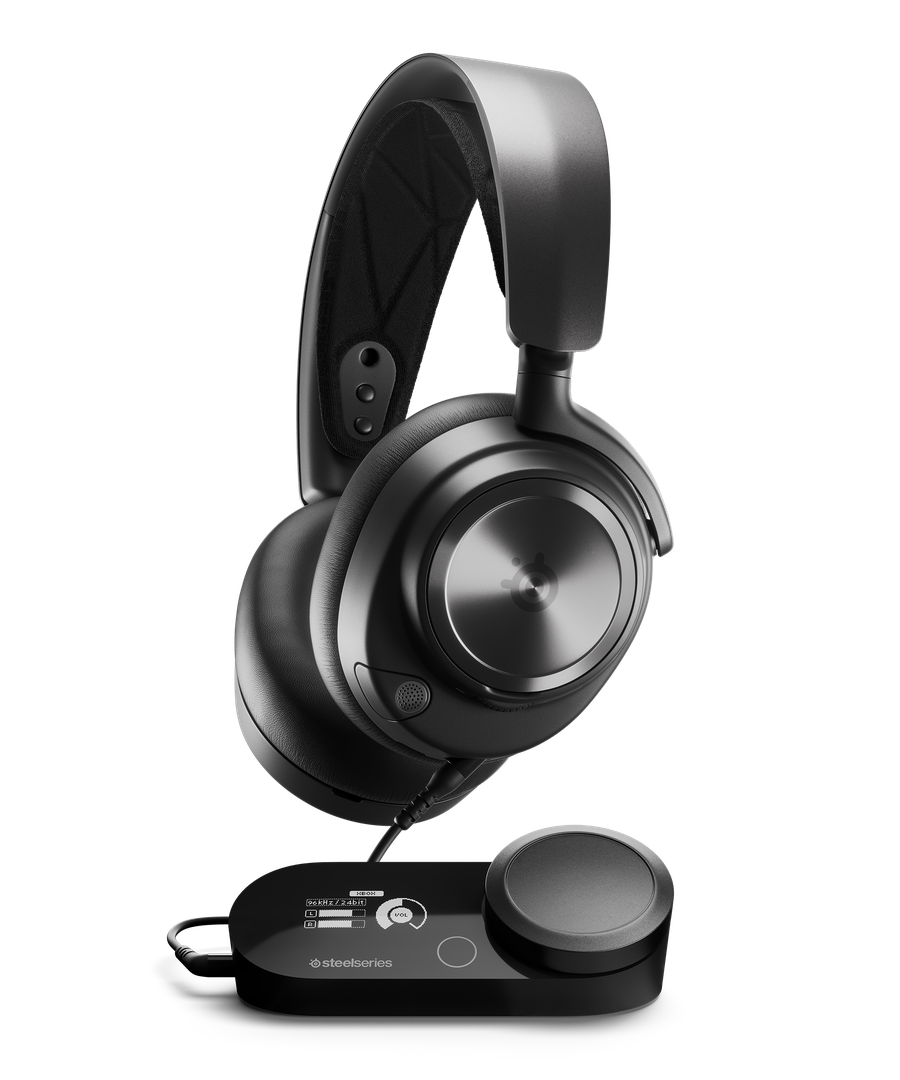
SteelSeries sells the Arctis Nova Pro for Xbox at $214.99 in the US, direct from the brand with a 3-5 day shipping estimate, in a box holding more than a headset: a GameDAC Gen 2 desk unit, two USB-C to USB-A cables, a 4 ft 3.5 mm cable, a pop filter and two magnetic ear plates. The wireless Nova Pro sits on that page too, at $299.99. Two variants share one name.
That makes the buying question narrow. A cheap wired headset already plays game audio through a controller. The $214.99 buys a DAC that processes the signal outside the console, two system inputs that stay connected at once, and a 3.5 mm input for a source the console never sees. Beyond the box, the argument is the headset itself, and the spec sheet leaves its weight and materials out.
Our verdict
Buy the $214.99 wired Arctis Nova Pro if you game at a desk and your Xbox shares it with a second machine; the DAC and its two inputs are the reason. Pass if you play away from the desk.
- A good fit for
- A player with an Xbox at a desk who also runs a PC, PlayStation or handheld at the same desk and is tired of swapping headsets or re-plugging cables.
- We would skip it if
- Skip it if your console time happens on a couch, or if a cable from your head to a desk box is a dealbreaker.
Reasons to consider it
- The GameDAC Gen 2 handles audio outside the console: an ESS Sabre 9218PQ40 stage rated at 96 kHz/24 bit, 5-40,000 Hz and 111 dB SNR, with the headset's own 40 mm drivers rated 10-40,000 Hz and certified Hi-Res.
- Two USB-C system inputs sit on the box, one of them the dedicated Xbox port, so an Xbox and a PC can both stay plugged in and the OLED menu swaps between them.
- A 3.5 mm input on the DAC takes a second source, which is how game audio and a call from a phone end up in the same pair of ears.
- The microphone is a retractable bidirectional noise-cancelling boom, and two magnetic ear plates and a pop filter are in the box.
The compromises
- The headset is wired and the DAC is a desk device; everything runs through a cable, and the page does not list the length of the lead from the headset to the DAC.
- ChatMix, the feature that balances game and voice on the fly, needs Windows 10 or newer through SteelSeries' GG or Sonar software, so an Xbox-only setup cannot use it.
- No weight or ear-cup material for the headset is on record, so the fit has to be judged in person.
What we have not verified: No weight, ear-cup material list or measured isolation figure for this variant is on record, so how it presses after four hours cannot be answered from the spec sheet. Nor is a replacement price listed for the ear pads or the headset cable.
The things in this guide
A closer look at the products, who they may suit, and what to check before buying.
Arctis Nova Pro for Xbox
A wired headset sold with the GameDAC Gen 2: an ESS Sabre 9218PQ40 stage rated 96 kHz/24 bit with 111 dB SNR, a dedicated Xbox port plus a second USB-C input, a 3.5 mm line-in, 40 mm drivers and a retractable noise-cancelling microphone.
Before you buy: It is a cable to a desk box, ChatMix needs Windows 10 or newer, and the headset's weight and ear-cup materials are unpublished.
Price checked October 15, 2026. Retailer prices can change.The headset is the smaller half of the box
Most gaming headsets put the conversion inside a dongle, a controller or the console. This one hands it to a box on the desk. SteelSeries lists the GameDAC Gen 2 as an ESS Sabre 9218PQ40 with a maximum audio format of 96 kHz/24 bit, a 5-40,000 Hz response and 111 dB SNR. The headset's own drivers are 40 mm neodymium units rated at 10-40,000 Hz, 93 dBSPL and 38 Ohm, with Hi-Res Audio certification attached to the pair.
Whether a game soundtrack truly carries anything above a CD-rate signal is another argument, and one the spec sheet does not settle. What the box changes is where the volume dial and the settings live. Volume and input switching sit on the desk within reach of a hand, not inside a console menu reached with a controller.
The microphone follows the same pattern of putting the tool where the hand is. It is a bidirectional noise-cancelling boom that retracts fully into the ear cup, with a rated response of 100-10,000 Hz and a sensitivity of -38 dBV/Pa. A pop filter is in the box.
Two systems stay connected, and the dial picks one
The GameDAC has two USB-C system connections, and SteelSeries specifies that one of them is dedicated to Xbox. The second accepts PC, PlayStation, Switch and Mac, and the FAQ sets out the routine plainly: connect with the supplied USB-C to USB-A cables, then use the OLED menu to pick whichever device is live. So an Xbox and a PC can both stay plugged in, and switching is a menu selection rather than a crawl behind the desk.
The alternative is a second headset or a cable swap whenever the machine changes. One headset that hears both machines removes that step, provided both sit within reach of the box, which is what the second port is for.
A 3.5 mm line-in and line-out also sit on the box. A phone on speaker, a handheld or another computer can therefore feed the same ears the console is feeding.
What you give up for the cable
Wired means wired. The headset runs to the desk box, and the desk box runs to the console or PC, so the reach from chair to desk belongs to the product. The box lists a 4 ft 3.5 mm cable and two 5 ft USB-C to USB-A cables, but not the length of the headset's own lead. If your console sits under a television on the far wall, this product is ruled out before any of the audio arguments start.
The wireless Nova Pro costs $299.99 on the same page. The FAQ ties the dedicated Xbox port to the wireless model, but the spec table on this wired listing shows the same split on its GameDAC Gen 2: a dedicated Xbox port plus a second USB-C port for PC, PlayStation, Switch or Mac. The wired version at $214.99 suits a desk where a cable is acceptable, and it undercuts the wireless model by $85.
One more condition applies if you play on Xbox alone. ChatMix, which rebalances game and voice audio without leaving the game, is documented as needing Windows 10 or newer through SteelSeries' GG or Sonar software. On an Xbox-only desk it does not exist, so leave it out of the decision.
The numbers SteelSeries does not print
The specs cover driver size, frequency response, sensitivity, impedance, microphone pattern and DAC internals. They do not list the headset's weight, the ear-cup material, or measured isolation. Those are the figures behind comfort over a four-hour session, and their absence is the largest hole in the evidence behind any recommendation here.
The omission matters more at this price than on a budget headset, because the reason to spend $214.99 is partly that you intend to keep wearing it. If you can, try the headset on in a store. If you cannot, read the seller's return terms before ordering, since fit is the one question the page cannot answer.
Who should not buy the wired Nova Pro
If you play from the couch, look elsewhere. Every feature in this box assumes a desk: the DAC needs a shelf, the cables need a run, and the second input only earns its place if another machine is within reach. A wireless headset, such as the $299.99 Nova Pro Wireless, or a cheaper wired set straight into the controller fits that room better.
Likewise if one headset must serve the commute and the console both. Everything this one adds lives in the desk box, and away from the desk it is a wired headset without its DAC.
Buy it when the desk is the venue, the Xbox is one of two things on it, and a cable to the desk box is a fair trade for paying $85 less than the wireless model.
How we put this together
Built from the product pages and listings below, without test scores or results we have not measured. Specifications and prices change, so check the original page for the exact model, current price, delivery, and returns.
- SteelSeries: Arctis Nova Pro for Xbox product page (US) (opens in a new tab)
- SteelSeries: Arctis Nova Pro Wireless - Black product page (US) (opens in a new tab)