Product image supplied by the brand
In this guide
All three boxes have a row of outlets, and they answer different failures. A surge strip clamps voltage spikes and holds no energy, so its outlets go dark the instant the grid does. A UPS carries a small lead-acid battery, switches to it within milliseconds and can tell a computer to shut down. A portable power station carries a lithium battery sized in watt-hours, and each maker attaches its own conditions to how quickly it takes over.
Five current products give those categories hard edges: the Tripp Lite Isobar6Ultra strip, APC's standby BE600M1 and line-interactive Back-UPS Pro BR1500MS2, and two kilowatt-hour stations, Anker's SOLIX C1000 Gen 2 and Jackery's Explorer 1000 v2. Choose in buying order: add up the watts, settle on minutes or hours, then check switchover and waveform, the combinations the makers' terms rule out and what each box costs to keep.
The things in this guide
A closer look at the products, who they may suit, and what to check before buying.
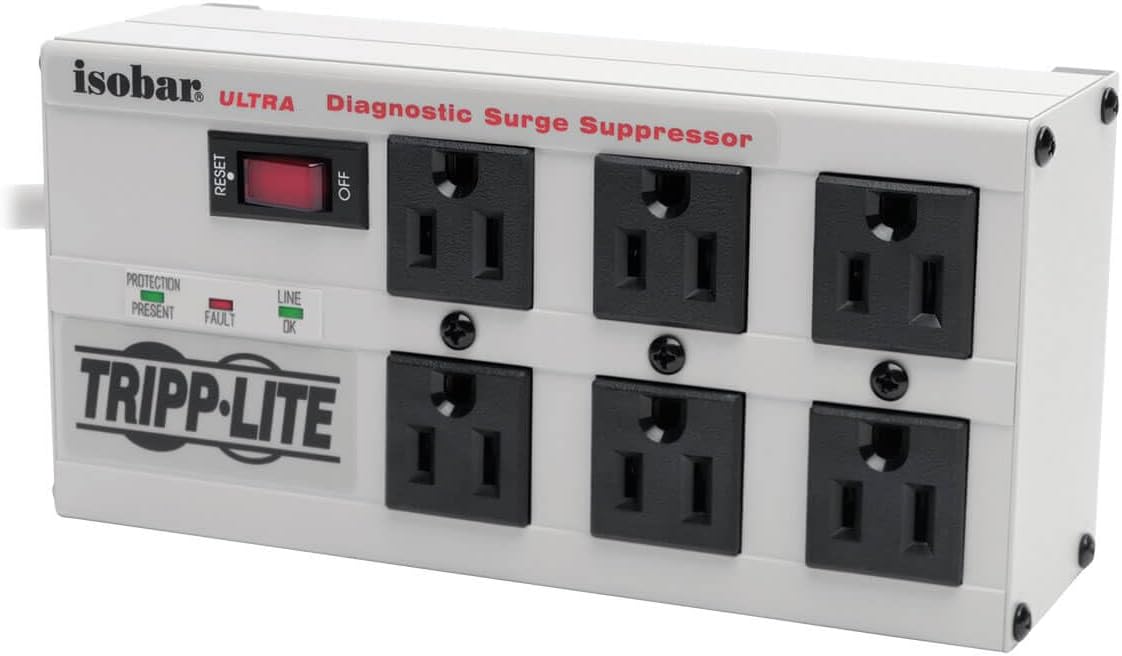
Isobar Ultra Surge Protector (6 outlet)
A 3,330-joule metal strip with a 330-volt let-through rating, wiring-fault LEDs and $50,000 of conditional equipment insurance. Amazon itself sold it at $89.99 on 2026-10-04; on 2026-11-04 Amazon had no featured seller, its one marketplace offer was Triplenet Pricing at $133.51, and B&H and Staples both showed it out of stock.
Before you buy: No battery at all, a 1,440-watt breaker ceiling, and Tripp Lite voids its warranty if the strip is plugged into a UPS output; compare sellers before paying the marketplace price.
Price checked November 4, 2026. Retailer prices can change.Back-UPS BE600M1 600VA Battery Backup and Surge Protector
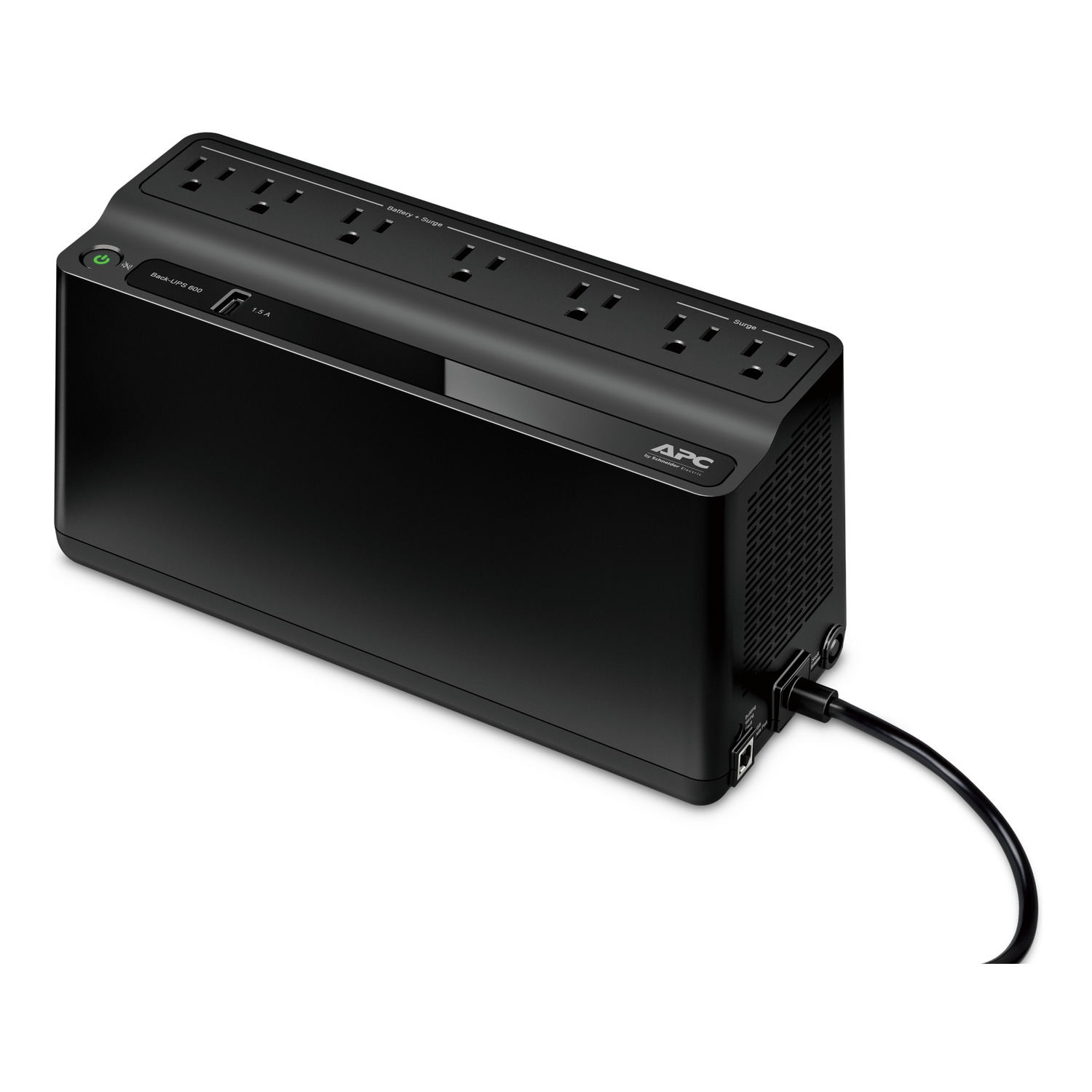
$83.99 with Amazon as the seller on 2026-11-04 buys 330 watts across five battery outlets, two surge-only outlets for a printer or scanner, and a USB data port that can trigger an unattended shutdown.
Before you buy: Stepped-sine output, a listed 23 minutes at 100 watts, and an $81.68 genuine cartridge due every 3 to 5 years.
Price checked November 4, 2026. Retailer prices can change.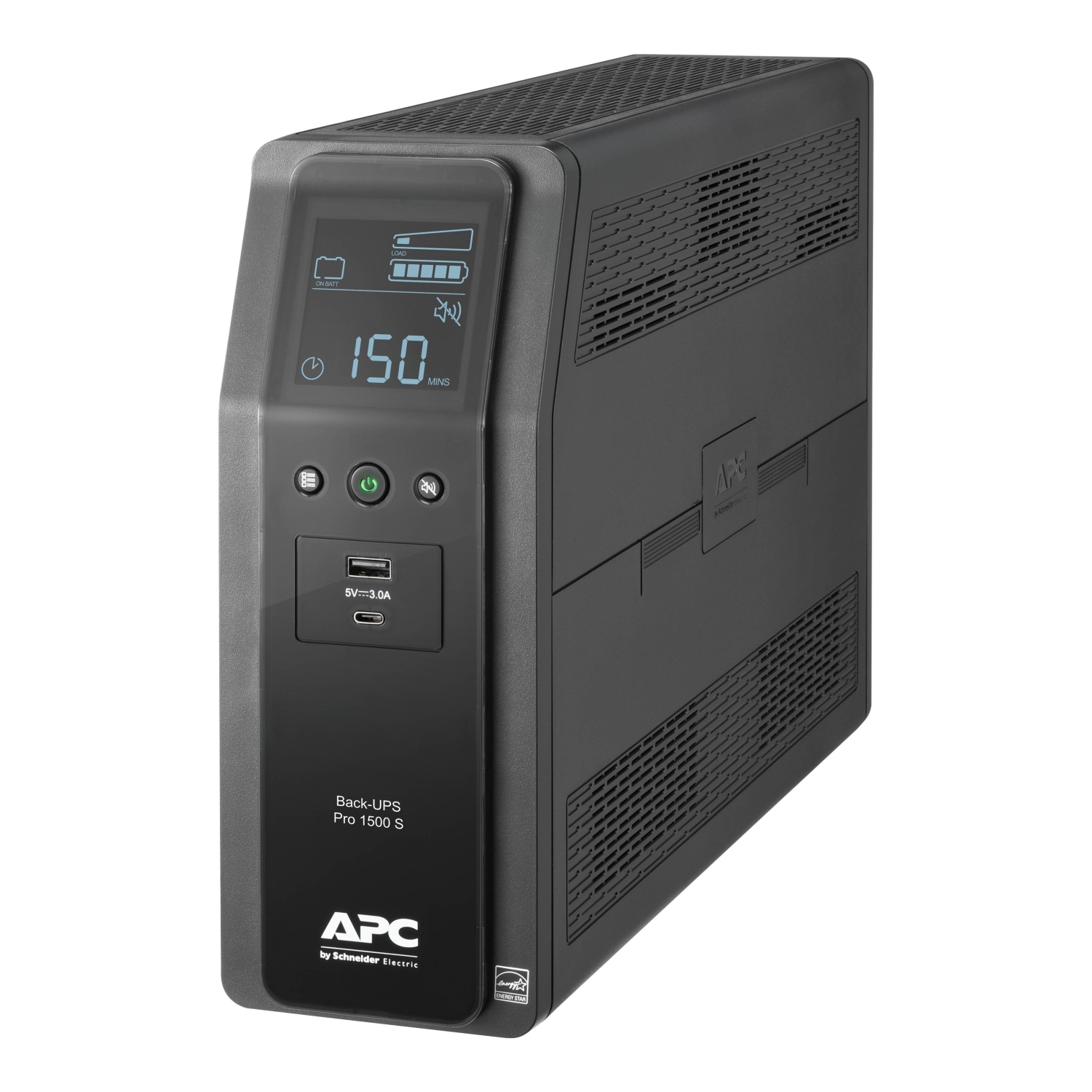
Back-UPS Pro BR1500MS2 1500VA Sine Wave Battery Backup and Surge Protector
$299.99 from Amazon directly on 2026-11-04, against a $339.99 list, buys 900 watts of line-interactive backup with sine-wave output and voltage boost and trim, and APC's table gives 1 hour 13 minutes at 100 watts.
Before you buy: Still a minutes device under a real desktop load: 22 minutes at 300 watts and about 3 at 900 in APC's own table, with a $123.99 cartridge to budget.
Price checked November 4, 2026. Retailer prices can change.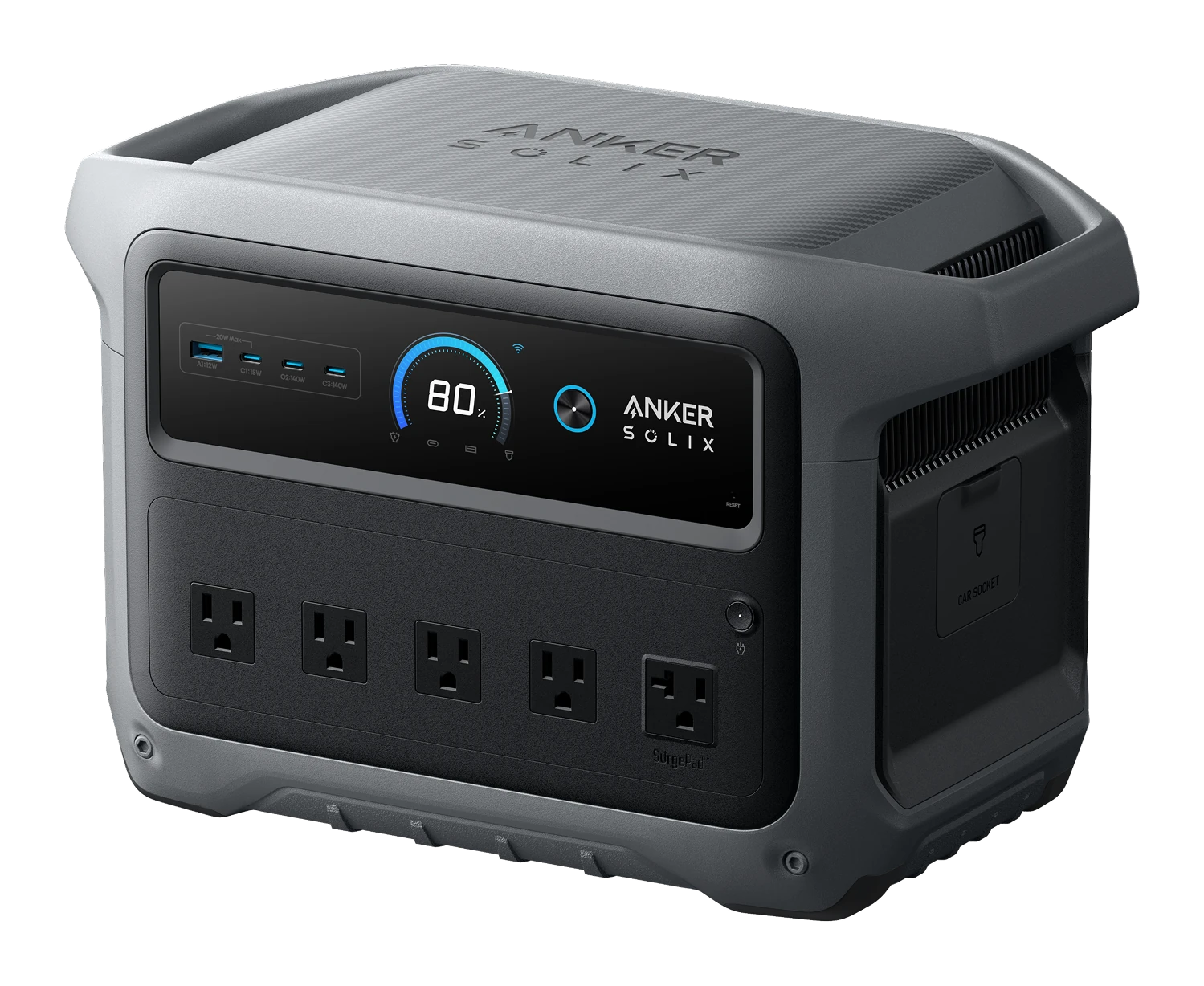
SOLIX C1000 Gen 2 Portable Power Station · A1763
$549.99 at Anker's US store and from AnkerDirect on Amazon on 2026-11-04 buys 1,024Wh of LiFePO4 rated for 4,000 cycles to 80 percent, 2,000 watts of continuous output and a 10 ms switchover while plugged into the wall.
Before you buy: Anker's user guide describes no data link for computer shutdown and its US documents print no surge-suppression rating; Amazon marks the order non-returnable.
Price checked November 4, 2026. Retailer prices can change.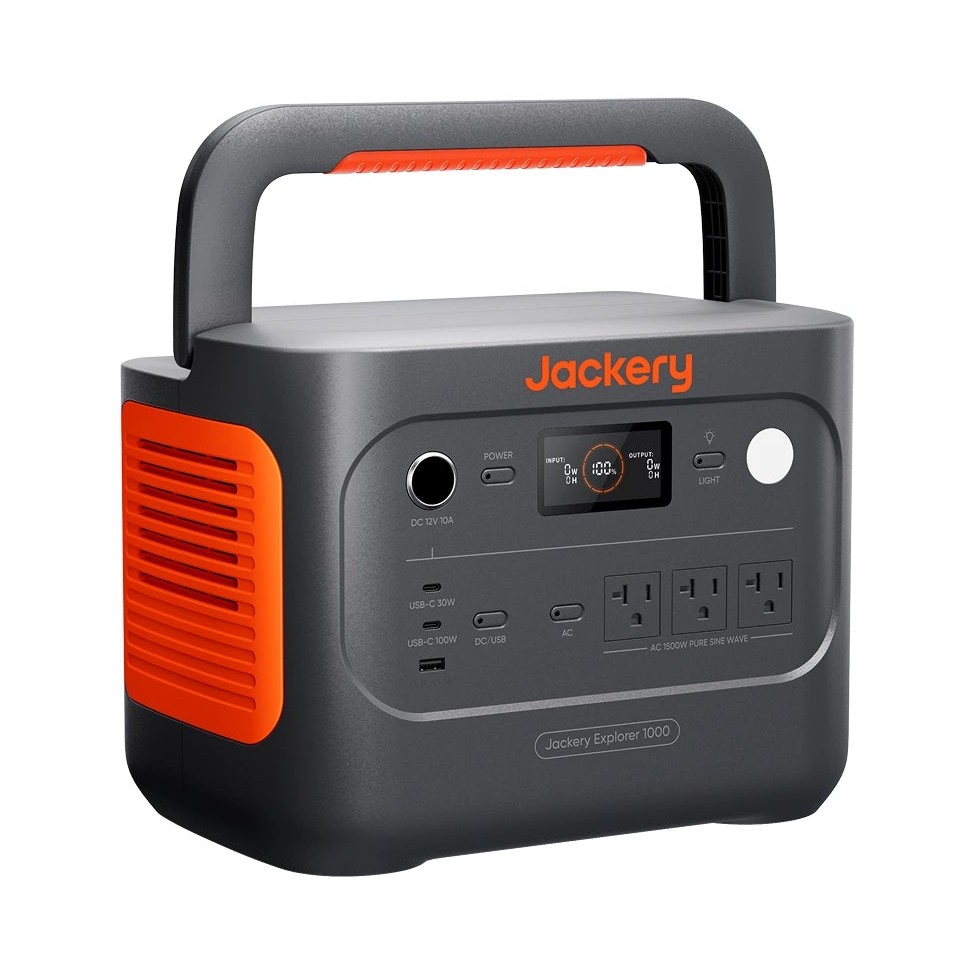
Explorer 1000 v2 Portable Power Station · JE-1000D
$559 from jackery.com on 2026-11-04 buys 1,070Wh of LiFePO4 in a 23.8 lb case, 1.1 lb under the Anker's 24.9 lb, with the listing's 3+2-year warranty applied to jackery.com orders.
Before you buy: Jackery rates the switchover within 20 ms, not zero, asks that data servers and workstations stay off its UPS mode, and does not recommend it for medical devices.
Price checked November 4, 2026. Retailer prices can change.What each box does when the grid drops
A surge strip handles one failure: spikes. The Isobar6Ultra is rated at 3,330 joules with a 330-volt let-through, and its 12-amp breaker caps the strip at 1,440 watts, but it stores no energy: in a blackout every outlet on it loses power at once. That suits a TV, a console or an audio rack, where an outage is an annoyance and a surge is a repair bill. A desktop on the same strip loses unsaved work exactly as it would on the bare wall.
A UPS buys minutes. APC's BE600M1 holds 330 watts on five battery outlets, and Amazon lists about 23 minutes at 100 watts for it. The larger BR1500MS2 stretches to 1 hour 13 minutes at 100 watts in APC's own table but falls to 22 minutes at 300 and about 3 at its full 900. APC's footnote calls those figures a curve fit to measured data, taken with new batteries on a resistive load. In both units the battery is sized to keep a router up and give a computer time to close files and shut down.
A station buys stored energy. Anker's C1000 Gen 2 holds 1,024Wh and Jackery's Explorer 1000 v2 1,070Wh on its US spec table, while the BE600M1's 12-volt, 6.5-amp-hour cartridge works out to 78Wh nominal, about a thirteenth of the Anker's. Stored energy is not a promise of hours: Jackery gives no runtime-by-load table and calls its appliance runtimes reference figures, Anker's runtime examples assume one device at a time, and Jackery lists 18 watts of standby draw. When the plan is a fridge, a modem and lamps through an evening outage, this category is the place to start.
Decide in this order: watts, then minutes or hours
Start with a list of everything that must keep running and its measured draw, taken with a plug-in watt meter while the gear does its heaviest normal work. Set the total against each ceiling: 330 watts for the BE600M1's battery outlets, 900 for the BR1500MS2, 1,500 shared across the Jackery's three AC outlets, 2,000 for the Anker, and 1,440 for the Isobar, which only passes mains power through. A total above a box's ceiling rules it out, however short the outage you expect.
Then decide what staying on means. If the goal is to save open work and power down cleanly, a UPS sized to the load is enough, and its minutes only need to cover the shutdown plus a buffer. If the router should keep the house online for hours, or a fridge has to ride out the night, move to a station and size it by watt-hours. A home that needs both buys two boxes: a UPS under the desk and a station for the kitchen, $83.99 plus $549.99, or $633.98, at the cheapest pairing here.
Switchover, waveform and shutdown: where a station falls short of a UPS
The two APC units use different UPS designs. The BE600M1 is standby: it runs on mains until input falls below about 92 volts or rises above 139 at default sensitivity, then switches in 6 ms typical, 10 maximum, and its battery output is a stepped approximation of a sine wave. The BR1500MS2 is line-interactive: it boosts or trims input by 11.5 percent before touching the battery, transfers in 8 ms typical, and outputs a sine wave. Buy the second design when line voltage often sags or runs high, or the power supply's maker specifies sine-wave backup.
The stations attach conditions. Anker rates its switchover at 10 ms, the BE600M1's maximum, provided the station is plugged into the wall with its supplied cable and the AC output is switched on. Jackery says within 20 ms, states that it is not a zero-millisecond UPS, warns against data servers and workstations, and its manual recommends testing several times and running one device in that mode. Neither station's user guide describes a data link that tells a computer to shut down, which both APC units provide over USB. For a desktop that may lose power while nobody is home, that link matters more than capacity.
Two station terms also look like surge protection and are not. Anker's SurgePad lets the inverter deliver up to 2,400 watts to high-wattage devices and, by Anker's own description, does not support precision instruments; Jackery's 3,000-watt surge peak is an output figure too. Neither station's US documents print a joule rating or a UL 1449 let-through, while the Isobar prints 3,330 joules and the APCs list 490 and 1,080. Plan on a station supplying power, and leave surge clamping to a strip or a UPS.
Stacking them: what the makers' own terms rule out
The tempting setup is a UPS plugged into a good surge strip, and APC's manuals rule it out. The BE600M1 manual directs owners to run the UPS power cable straight to the wall receptacle, and the Back-UPS Pro manual adds: 'Do not use surge protectors or extension cords.' Schneider's surge-strip FAQ explains the input side: a strip can cause frequent switches to battery and may compromise the ground connection. Keep the Isobar out of the line between the wall and an APC UPS.
Reversing it is also out. The same FAQ recommends against any surge protector, power strip or extension cord on a UPS output, since filtering can hide part of the load from the UPS, and says a non-APC strip there could void the Equipment Protection Policy, which APC values at up to $500,000 on the BR1500MS2, while the standard three-year product warranty stays. Tripp Lite's manual voids the Isobar's warranty when it hangs off any UPS. When a desk runs short of outlets, put the printer and scanner on the UPS's own surge-only sockets, two on the BE600M1 and four on the BR1500MS2, and give the Isobar its own wall receptacle.
A strip on a station falls in a gap that neither Anker nor Tripp Lite documents. Anker's guide says its AC output uses a floating ground and suggests a ground-neutral plug for devices that need a neutral-ground bond; Jackery's FAQ answers 'floating' for its neutral too. The Isobar asks for a 3-wire grounded outlet, flags a missing ground on its Line Fault LED, and pays insurance claims only when it was plugged into a properly wired, grounded outlet. Do not count on that insurance for equipment on a strip fed by a station, and in Jackery's UPS mode keep to the single device its manual recommends.
What each box costs to keep
A UPS comes with a recurring bill. APC rates its lead-acid batteries at three to five years and says every 8 °C above 20-25 °C halves that, so a warm cupboard shortens the interval. The BE600M1's genuine APCRBC154 was $81.68 at Staples and the BR1500MS2's APCRBC163 $123.99 from Amazon, as the direct seller, on 2026-11-04. Spread across three to five years, the first works out to $16.34-$27.23 a year and the second to $24.80-$41.33. APC's data sheets give each UPS 36 months of warranty but cover the battery inside for 12.
The strip has no consumable. Its lifetime limited warranty and $50,000 insurance come with the grounded-outlet and 30-day claim conditions above, and the replacement trigger is printed on the unit: a dark Protection Present LED means the suppression components are no longer working.
The stations put nearly all of their cost up front. Anker rates its cells for 4,000 cycles to at least 80 percent and Jackery for 4,000 to 70 percent; at one full cycle a week, 4,000 cycles is about 77 years, so for outage duty the warranty is the figure to compare. Anker's US page lists five years. Jackery's listing promises 3+2 years on jackery.com orders, though its service policy lists 2+1 for the '1000 Series', and it excludes the cells unless they are fully charged in the first seven days after buying and then at intervals of no more than six months. Amazon marks the Anker order non-returnable under hazardous-materials rules.
When none of the three is the answer, and the short list when one is
All five boxes feed only what is plugged into them. Keeping a furnace blower, a well pump or hardwired circuits alive needs a system connected at the electrical panel, which is an electrician's job and a separate project. Medical equipment is a second exit: Jackery advises against medical and life-support devices, so the backup to use is the one the device's maker approves. A household load above 2,000 watts also passes every ceiling covered here.
Otherwise the choice is short. Surges only, with outages tolerable: the Isobar6Ultra, once a seller has stock. On 2026-11-04 Amazon offered only a $133.51 marketplace listing, where it had sold the strip itself at $89.99 on 2026-10-04, and B&H and Staples showed it out of stock. Minutes for a router and a desktop under 330 watts: the $83.99 BE600M1. Between 330 and 900 watts, or a sine-wave requirement: the $299.99 BR1500MS2. Hours: the $549.99 Anker for loads up to 2,000 watts and the faster switchover, or the $559 Jackery when everything stays under 1,500 watts and a lighter case matters.
How we put this together
Built from the product pages and listings below, without test scores or results we have not measured. Specifications and prices change, so check the original page for the exact model, current price, delivery, and returns.
- Tripp Lite: ISOBAR6ULTRA specification sheet (PDF) (opens in a new tab)
- Tripp Lite: Isobar surge suppressor owner's manual (maker document on Amazon's image server, PDF) (opens in a new tab)
- Amazon: Tripp Lite ISOBAR6ULTRA listing (ASIN B0000513US) (opens in a new tab)
- APC by Schneider Electric: Back-UPS BE600M1 / BN650M1 / BE670M1 user manual (990-5679E, PDF) (opens in a new tab)
- APC by Schneider Electric: BE600M1 product data sheet (generated by se.com September 28, 2026) (opens in a new tab)
- Amazon: APC Back-UPS BE600M1 listing (ASIN B01FWAZEIU) (opens in a new tab)
- APC by Schneider Electric: Back-UPS Pro 120 Vac user manual (JPT92208, 04/2026, PDF) (opens in a new tab)
- APC by Schneider Electric: BR1500MS2 product data sheet (generated Nov 3, 2026) (opens in a new tab)
- APC by Schneider Electric: BR1500MS2 runtime graph and table (opens in a new tab)
- Amazon: APC Back-UPS Pro BR1500MS2 listing (ASIN B08GRY1W93) (opens in a new tab)
- Schneider Electric FAQ FA158852: Using surge strips with APC's Back-UPS and Smart-UPS products (opens in a new tab)
- Schneider Electric: Equipment Protection Policy (APC 120 V products) (opens in a new tab)
- Schneider Electric FAQ FA158934: What is the expected life of my APC UPS VRLA battery? (opens in a new tab)
- APC by Schneider Electric: APCRBC154 replacement battery cartridge (opens in a new tab)
- Staples: APC UPS Replacement Battery APCRBC154 (opens in a new tab)
- Amazon: APC Genuine UPS Replacement Battery APCRBC163 (ASIN B07TH7JPV4) (opens in a new tab)
- Anker SOLIX: C1000 Gen 2 Portable Power Station (US store) (opens in a new tab)
- Anker SOLIX: C1000 Gen 2 user guide (US edition A17631A1, V2, 2025-07-18, PDF) (opens in a new tab)
- Amazon: Anker SOLIX C1000 Gen 2 listing (ASIN B0FN7MSY4L) (opens in a new tab)
- Jackery: Explorer 1000 v2 Portable Power Station (US store) (opens in a new tab)
- Jackery: Explorer 1000 V2 Basic Information (support FAQ, updated October 15, 2026) (opens in a new tab)
- Jackery: Explorer 1000 (JE-1000D) user manual, Australian edition (Jackery PDF hosted by retailer Mr. Solar) (opens in a new tab)
- Jackery: Service Policy (US store) (opens in a new tab)
- B&H Photo: Tripp Lite ISOBAR6ULTRA search results (opens in a new tab)
- Staples: Tripp Lite ISOBAR6ULTRA (opens in a new tab)